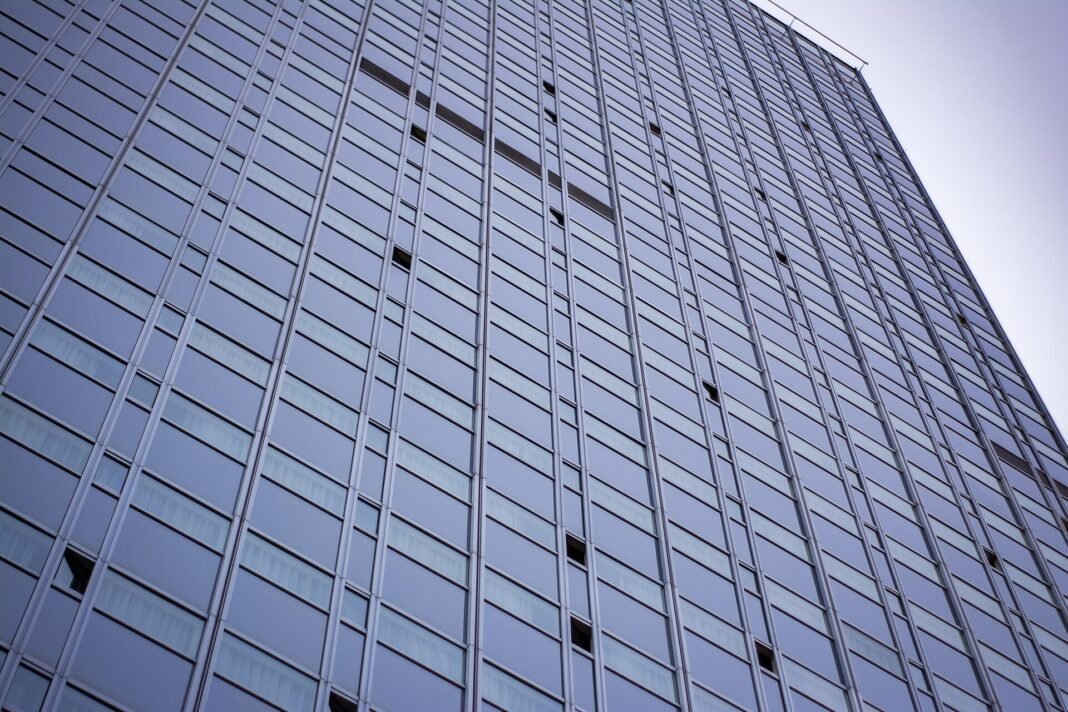
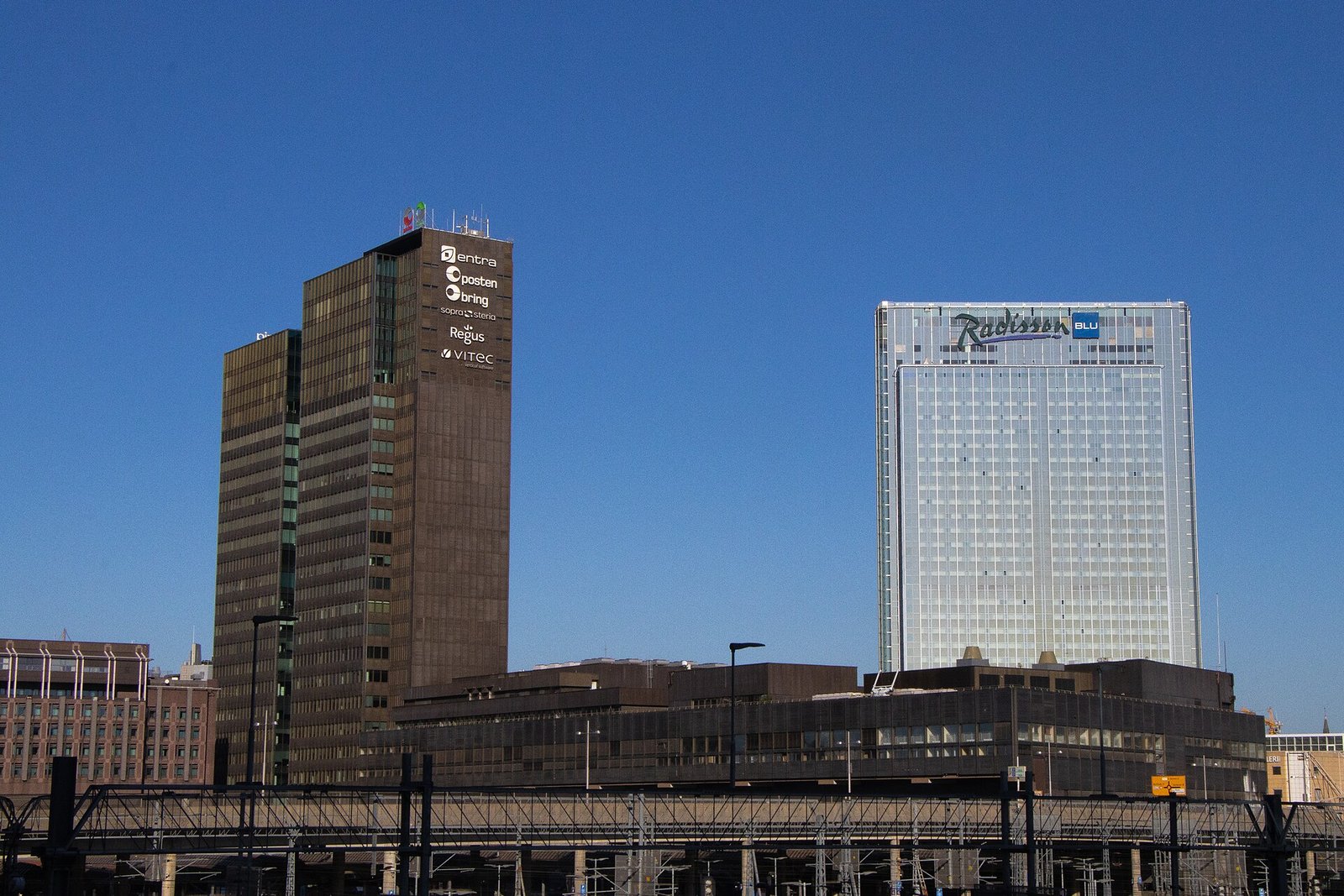
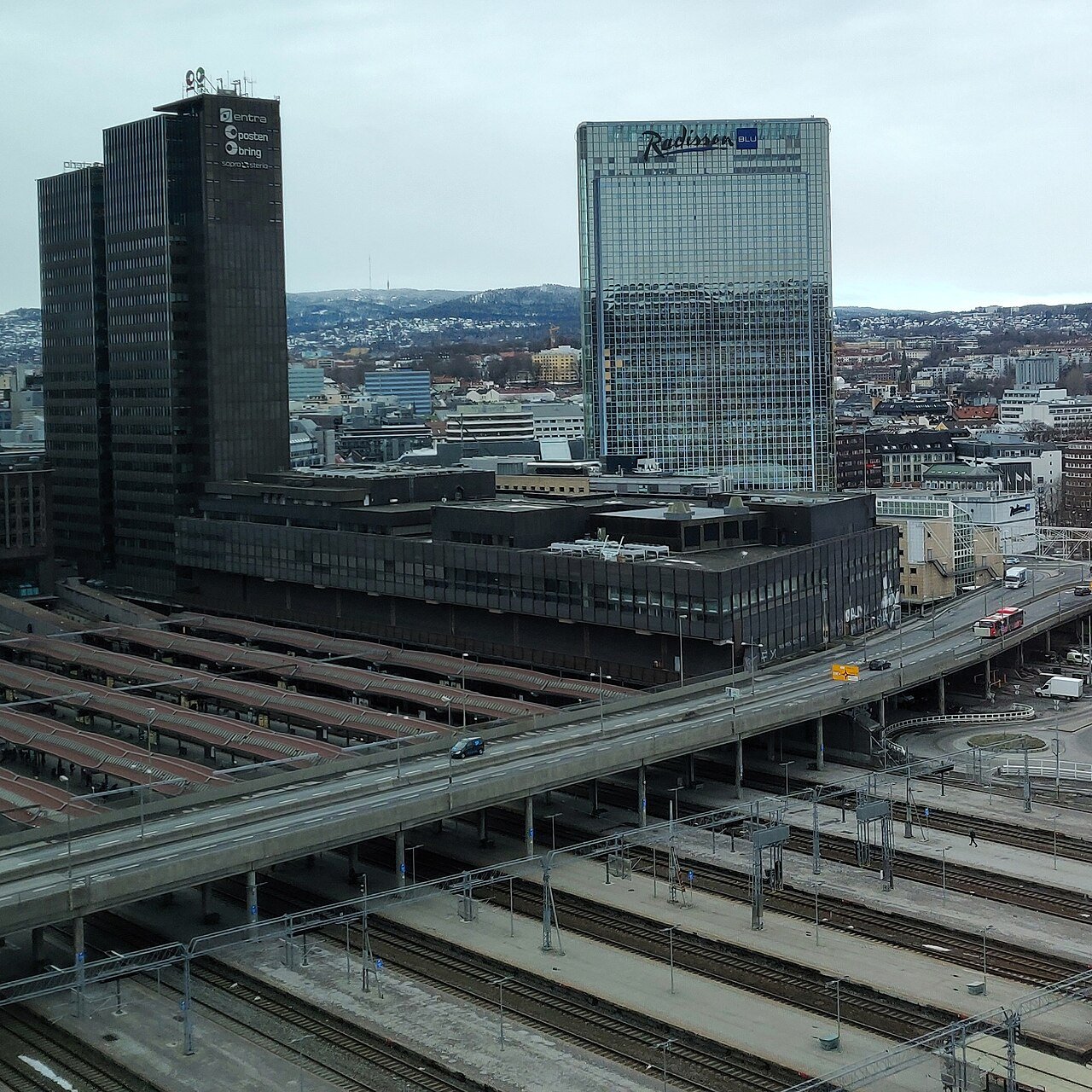
On the evening of Saturday 3 June 1995, a security guard knocked on the door of room 2805 at the Oslo Plaza, the tower hotel beside Oslo’s central station. From inside came a gunshot. Fifteen minutes later the head of security opened the door and found a young woman dead on the bed, a pistol in her right hand. She had checked in as “Jennifer Fairgate”. The name was false, and more than three decades on, nobody has been able to say who she really was.
This is what is known, what is disputed, and why the questions remain.
The Woman Who Checked In
On Wednesday 31 May 1995, a woman telephoned the Oslo Plaza, brought her arrival forward to that evening and said there would be two guests, naming her companion as Lois Fergate. At about 22:40 she filled in a registration card at reception.
The hotel recorded her surname as Fairgate, but she signed “Fergate”, the spelling used by VG, the Norwegian newspaper that has followed the case longest. She gave her age as 21, an address at Rue de la Stehde 148 in Verlaine, Belgium, a postcode, a telephone number and an employer called “Cerbis”.
Almost every detail was wrong. Verlaine is a real village near Liège, but the street does not exist there, the postcode was invalid, the area code was incorrect, and no firm called Cerbis could be found. Belgian police confirmed the same night she was found that neither Jennifer nor Lois Fergate existed. Against the hotel’s own rules, she was asked for neither identification nor a credit card. One receptionist was sure she had seen the woman with a dark-haired man aged 35 to 40; nobody else ever reported a man in room 2805.
The room’s electronic lock logged every key-card entry: 22:44 and 00:21 on the first night, 08:34 on Thursday 1 June, then nothing until 08:50 on Friday 2 June, when she extended her stay to Sunday. Where she spent those 20-odd hours has never been established. The card was last used at 11:03 on Friday, after a housekeeper saw her hang the “Do Not Disturb” sign on the door.
At 20:06 on Friday she ordered bratwurst and potato salad from room service. The shift leader who delivered it remembered a room so tidy it seemed sterile, and a 50-kroner tip, the only money ever connected to the case. Meanwhile reception was chasing an unpaid bill, sending reminders to the television screen in 2805 on Thursday, Friday and again at 19:36 on Saturday. Each was acknowledged from the room and ignored. Some accounts say her registration card indicated cash payment; VG states flatly that she stayed three days without paying. When the receptionist learned the sign had hung on the door for two days, she sent a guard upstairs.
What the Police Found in Room 2805
The shot came at roughly 19:50, moments after the guard knocked. He did not go in but fetched the head of security, and the room stood unwatched for a quarter of an hour before the door was opened at 20:04. It had been double-locked from the inside, and both key cards were in the room.
The woman lay on her back in black clothing and heeled shoes, shot through the forehead. A 9 mm Browning Hi-Power rested in her right hand, which lay on her chest. The grip was strange: thumb on the trigger, four fingers around the back of the handle, the reverse of how a pistol is normally held.
Two shots had been fired. The first had gone through the pillow and mattress before stopping against the concrete floor. The pillow had then been turned over, because its soot marks were on the underside, and the fatal round was fired with the same pillow beneath her head. Why the first shot was fired is one of the case’s enduring questions.
Blood had sprayed across the pillow, the telephone and up the wall to the ceiling. Yet the pathologist recorded no blood or soot on her hands, and samples from both hands found no gunshot residue. Forensic pathologist Torleiv Ole Rognum later told VG he found this striking, given that her thumb was still on the trigger. Bernd Karger of the University of Münster’s forensic institute called the absence of blood and residue “surprising” and said he would have urged further investigation, while stopping short of ruling out suicide. According to VG’s review of the files, the pistol carried no usable fingerprints at all.
The serial number had been etched away in what Kripos, Norway’s national criminal investigation service, called very professional work; technicians recovered only part of it. A black Braun Büffel attaché case held 25 further rounds and nothing else. Weapons experts consulted by VG in 2017 concluded the gun was probably not a Belgian Browning at all but an older Hungarian copy made at the FEG factory during the Cold War.
Then there was everything that was missing: no passport, wallet, keys, toiletries, make-up or handbag. Every label had been removed from her clothes, some unpicked stitch by stitch, except one on a grey René Lezard blazer that could not be cut out without destroying the lining. There were no skirts or trousers in the room. The only personal item was a bottle of men’s cologne. On the desk lay a USA Today in a bag marked for room 2816, bearing a fingerprint never identified. On her wrist was a Citizen Aqualand diving watch whose batteries had been hand-marked “W395”, almost certainly by a watchmaker who fitted them in March 1995. Police never found him.
The Suicide Ruling
The pathologist estimated her age at around 30, give or take five years: blue eyes, short dark hair, 159 cm, with expensive dental work of a kind common in the United States and parts of Europe. Staff said she spoke English and German; later accounts mention an East German accent.
She had tried to telephone two Belgian numbers differing by a single digit. Neither existed, but the closest matches all lay in Grâce-Hollogne and Seraing, near Liège. Her fingerprints were unknown to Interpol, and nobody matching her description was reported missing.
After a year the Oslo police closed the file as suicide, a conclusion later summarised on television as “99.9 per cent” certain. The reasoning was simple: the door was locked from within, there was no sign of a struggle and the weapon was in her hand. In June 1996 she was buried in an unmarked grave at Vestre gravlund cemetery in Oslo, with no ceremony and no mourners.
Readers who know the case will recognise the echoes in the story of the Isdal Woman, another unidentified woman whose clothing labels had been removed.
VG Reopens the Case (2016 to 2018)
Lars Christian Wegner had covered the death for VG in 1995 and never let it go. Two decades later he returned to the files and asked whether modern science could do what 1995 could not. In November 2016 the grave was opened and samples of teeth and bone taken.
The reinvestigation, published in June 2017, surfaced details that had never been public. A Belgian guest in room 2804, opposite 2805, told VG he had been asked about a woman found dead when he checked out on Saturday morning, half a day before the body was discovered. The bedding had been thrown away within hours, so any traces it held were lost.
In November 2020 Wegner examined whether the door could have been double-locked by someone leaving the room; Unsolved Mysteries co-creator Terry Dunn Meurer said investigators had tested it and found it could be done.
What the Isotopes Said
Mitochondrial DNA confirmed European ancestry, and a nearly complete DNA profile was built, though it matched nothing in police databases. Kripos then had strontium isotopes in her tooth enamel analysed, with the results interpreted at a university in Australia, which produced three maps of where she could have lived up to her mid-teens. They pointed to Germany, and VG reported on 15 November 2017 that the Plaza woman “may be German”.
Accounts of where in Germany vary. The Netflix episode and coverage of it describe East Germany, citing the accent remembered by hotel staff; other retellings suggest a move in her teens towards the region where Germany meets Belgium, Luxembourg and France. VG itself has said only that “the traces point to Germany”.
Her age was settled by a method that measures radioactive carbon from Cold War nuclear tests trapped in tooth enamel. In March 2018 Professor Henrik Druid of the Karolinska Institute concluded she was 24, with a margin of 1.1 years, so born in or around 1971: neither the 21 she claimed nor the 30 the pathologist had guessed. On 24 September 2021 she was reburied in the same grave, which now has permanent protection.
The Theories
Suicide. The official finding has genuine support. The locked door, the absence of any struggle and the sterile room all fit; a woman intent on ending her life anonymously might well strip labels and abandon identification. Against it stand the clean hands, the reversed grip, the second bullet, the 25 spare rounds and the fact that she was dressed to go out.
Espionage. Ola Kaldager, a former head of the Norwegian intelligence unit E14, told Unsolved Mysteries that the removed labels, the erased serial number, the false papers and her languages were consistent with intelligence tradecraft, and that the scene looked to him like a well-executed operation. What the theory lacks is hard evidence: no agency has ever claimed her, and the same details could describe someone in organised crime.
Contract killing. A third view holds that she was killed by someone she knew, perhaps the man seen at reception, and the scene staged. It would explain the unwatched fifteen minutes and the untouched hands, but it requires a second person nobody saw leave.
Norway has seen this pattern before: readers will recognise the echoes in the story of the Isdal Woman, another unidentified woman whose clothing labels had been removed. The same unsettling absence of a missing-person report surrounds Lars Mittank’s disappearance from Varna airport, where a person simply steps out of the frame.
The same unsettling absence of a missing-person report surrounds Lars Mittank’s disappearance from Varna airport, where a person simply steps out of the frame.
Has Jennifer Fairgate Been Identified?
No. As of September 2026 the woman known as Jennifer Fairgate remains unidentified. Her DNA profile and fingerprints have matched nothing available to Norwegian police, and Norway has not so far pursued the genetic genealogy that has solved comparable cases elsewhere. VG’s appeal for information remains open.
Somewhere there was a family, a dentist who fitted gold crowns, a watchmaker with the initial W. The Oslo Plaza still rises above the central station, and room 2805 is still let to guests. The woman who called herself Jennifer Fairgate lies in a protected grave a few kilometres away, still waiting for her name.
FAQ
Who was Jennifer Fairgate? Jennifer Fairgate, or Fergate as she signed it, was the alias of an unidentified woman found shot dead in room 2805 of the Oslo Plaza hotel on 3 June 1995. Tests after her 2016 exhumation showed she was about 24 and probably grew up in Germany. Her real name is unknown.
Was the Oslo Plaza woman’s death a suicide or murder? Oslo police ruled it suicide because the door was locked from inside, the gun was in her hand and there was no sign of a struggle. Experts have since pointed to the lack of blood and gunshot residue on her hands, the unusual grip and a second bullet as reasons for doubt. No alternative has been proven.
Which Unsolved Mysteries episode covers the case? “A Death in Oslo”, in Volume 2 of Netflix’s Unsolved Mysteries, released on 19 October 2020. It features VG journalist Lars Christian Wegner, pathologist Torleiv Ole Rognum, former intelligence officer Ola Kaldager and Professor Henrik Druid.
Has anyone come forward since the Netflix episode? Tips reached VG and the police after the episode, but none has led to an identification. The case remains unsolved.
Sources
- VG, “Mystery at the Oslo Plaza” (English feature by Lars Chr. Wegner): https://www.vg.no/nyheter/innenriks/i/xRjoWp/mystery-at-the-oslo-plaza
- VG, “Hvem var den døde Plaza-kvinnen?” (2017 investigative special, Norwegian): https://www.vg.no/spesial/2017/plaza/
- VG, “Ny analyse i uløst mysterium: Plaza-kvinnen kan være tysk” (15 November 2017): https://www.vg.no/nyheter/i/p0oxR/ny-analyse-i-uloest-mysterium-plaza-kvinnen-kan-vaere-tysk
- VG, “Ny teknologi ga svar: Plaza-kvinnen var trolig 24 år” (5 March 2018): https://www.vg.no/nyheter/i/kaB7RL/ny-teknologi-ga-svar-plaza-kvinnen-var-trolig-24-aar
- VG, “Plaza-mysteriet: Begravet for andre gang” (reburial, 2021): https://www.vg.no/nyheter/i/JxlVA6/plaza-mysteriet-begravet-for-andre-gang
- VG, “Plaza Mystery: Was this how the hotel door was locked?” (12 November 2020): https://www.vg.no/nyheter/i/nAAknQ/plaza-mystery-was-this-how-the-hotel-door-was-locked
- Wikipedia, “Jennifer Fairgate case”: https://en.wikipedia.org/wiki/Jennifer_Fairgate_case
- Refinery29, “Unsolved Mysteries Left a Few Jennifer Fairgate Details Out” (23 October 2020): https://www.refinery29.com/en-us/2020/10/10063608/unsolved-mysteries-who-is-jennifer-post-series-updates
- Unsolved.com, “Death in Oslo” case page: https://unsolved.com/gallery/death-in-oslo/
- Watches of Espionage, “A Mystery Death in Oslo, an Intelligence Op Gone Wrong?” (20 February 2024): https://www.watchesofespionage.com/blogs/woe-dispatch/a-mystery-death-in-oslo-an-intelligence-op-gone-wrong