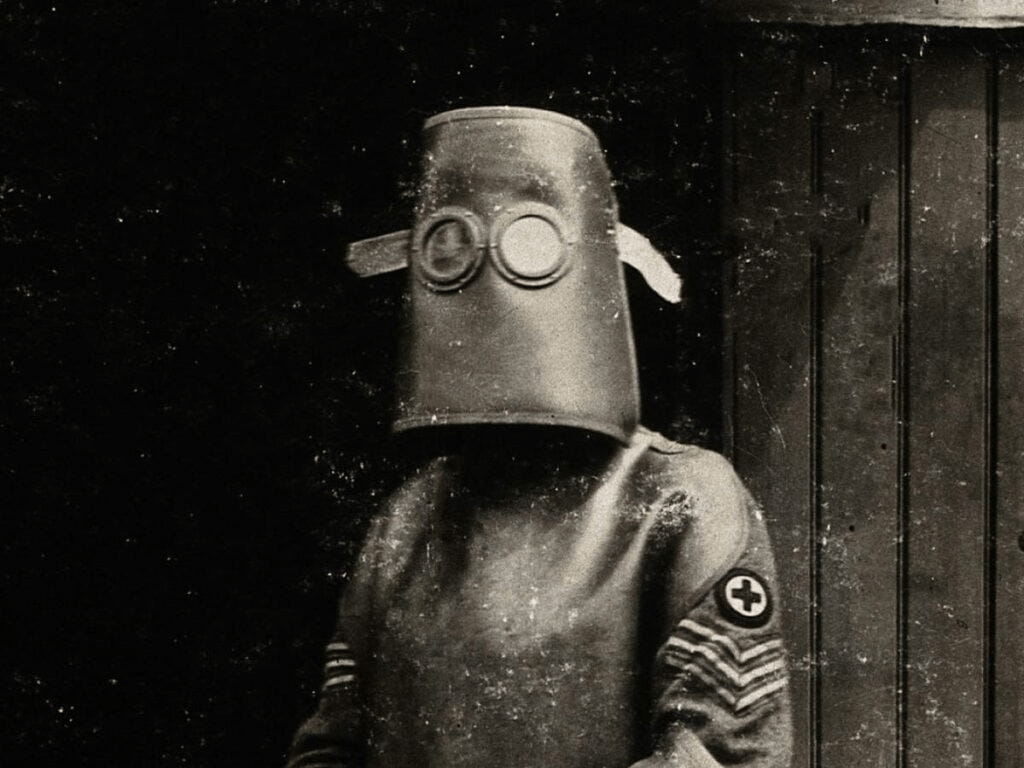
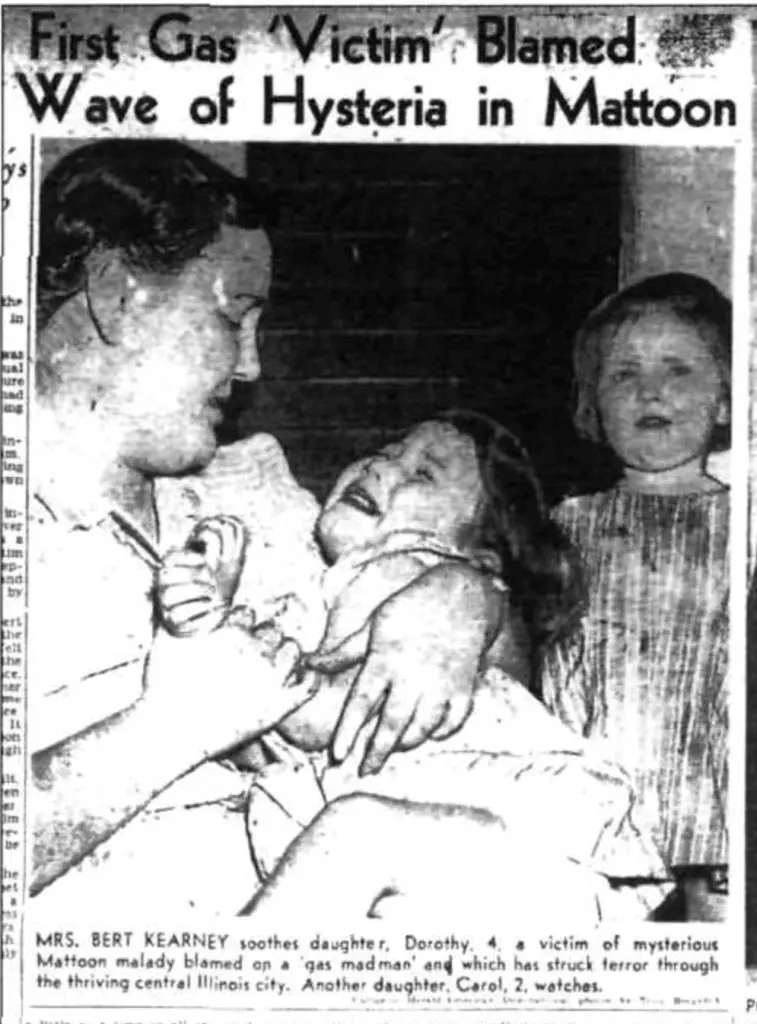
In the late summer of 1944, fear swept through the quiet town of Mattoon, Illinois. Residents reported waking in the middle of the night after smelling a strange sweet odour, only to experience dizziness, nausea, temporary paralysis, and difficulty breathing. As reports mounted, rumours spread that a Phantom Anesthetist, widely known as the Mad Gasser. It was roaming in the neighbourhood, pumping poisonous gas into homes under the cover of darkness.
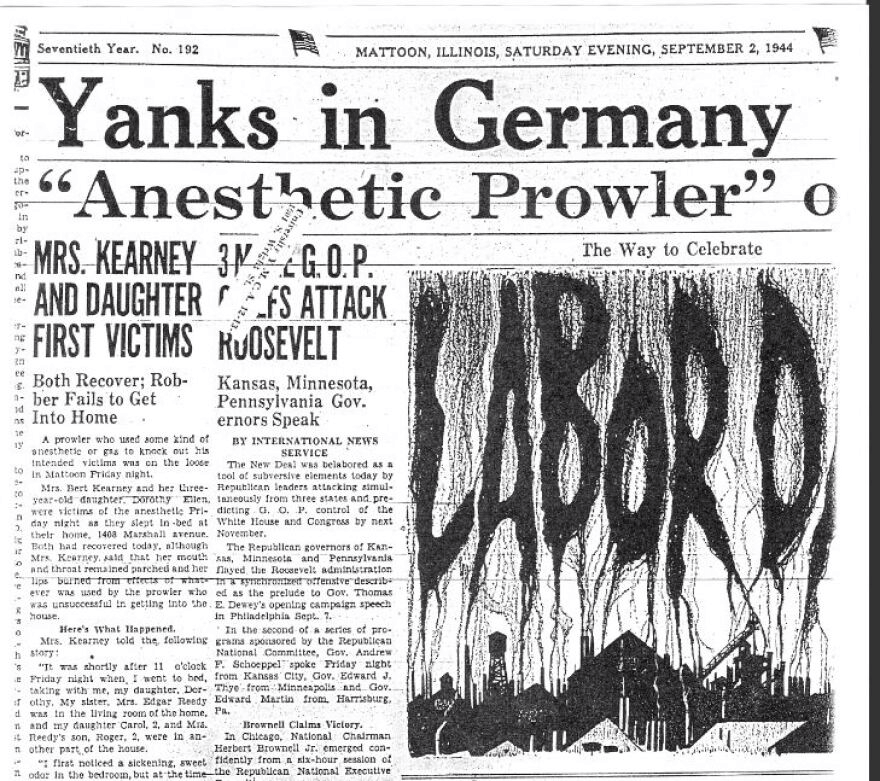
This is the story of the Mad Gasser of Mattoon, one of America’s strangest true crime stories. Yet, more than 80 years later, many historians and psychologists believe the elusive attacker may never have existed at all.
Also read: Mary Celeste: Fact, Fiction and Mystery
The Terror in the Town of Mattoon
The first widely reported incident occurred on August 31, 1944, when members of the Urban Raef household reported smelling an unusual odour before experiencing nausea and partial paralysis. Within a day, another family claimed a similar attack. Soon afterwards, a woman reported that a sweet-smelling gas entered her bedroom through an open window, leaving her legs numb and her throat burning.
Eventually, the number of people having the same strange experience began to surge. By late 1944, more than two dozen separate police reports were filed. Police increased patrols, armed citizens guarded their neighbourhoods, and state investigators joined the search. Newspapers published dramatic headlines referring to a “Mad Anaesthetist” and later the “Mad Gasser,” fueling public anxiety. Despite the growing number of reports, investigators never found gas canisters. Nor chemical residue or fingerprints. No suspect was linked to the alleged attacks.
Theories Behind the Mystery
A Serial Gas Attacker
At first, authorities believed someone might actually be using an anaesthetic or chemical agent to frighten residents. Witnesses occasionally reported seeing shadowy figures near windows, lurking through the neighbourhood. According to a September 1944 report published by Time magazine, the attacker was described by the complainants as “a tall, thin man who wears a black skullcap, and carries an instrument not unlike a Flit gun.” However, the attacker’s actual existence and intentions remain unknown.
Source: CRIME: At Night in Mattoon
Industrial Chemicals
Police also considered whether fumes from nearby local war plants could have drifted into residential neighbourhoods. Chemicals such as carbon tetrachloride and trichloroethylene were discussed because they can produce sweet odours and the same physical symptoms. However, investigators found no convincing evidence that factory emissions caused the incidents, and local industries denied any significant chemical leaks.
Mass Psychogenic Illness
Today, this is the explanation most commonly accepted by historians and psychologists. As sensational newspaper coverage increased, frightened residents became increasingly alert to unfamiliar smells, nighttime noises, and shadows. According to this theory, anxiety amplified ordinary experiences into genuine physical symptoms, resulting in a phenomenon known as mass psychogenic illness, widely known as mass hysteria.
In 1945, psychologist Donald M. Johnson published “The ‘Phantom Anaesthetist’ of Mattoon: A Field Study of Mass Hysteria”, arguing that fear and rumour played a central role in the outbreak.
Source: The Mad Gasser of Mattoon
Was the “Mad Gasser” Real?
There is no definitive answer. Some researchers argue that one or more early incidents may have involved a real prowler before widespread panic transformed later reports into a community-wide scare. Others believe there never was a criminal at all. What is clear is that investigators never identified a suspect, recovered evidence of a chemical weapon, or proved that a single individual carried out the attacks. Because of this lack of evidence, the mass psychogenic illness explanation has become the prevailing interpretation among historians studying the case.
The Mad Gasser of Mattoon remains one of America’s most unusual mysteries because it sits at the intersection of true crime, psychology, and media influence. Whether the town experienced a fugitive criminal, industrial odours mistaken for attacks, or a powerful episode of collective fear, the events demonstrate how uncertainty can shape public perception. More than eight decades later, the Mad Gasser continues to fascinate researchers. Not because the mystery has been solved, but because it illustrates how quickly fear can spread through an entire community.
Also read: The Sinister Murder of Dan Markel