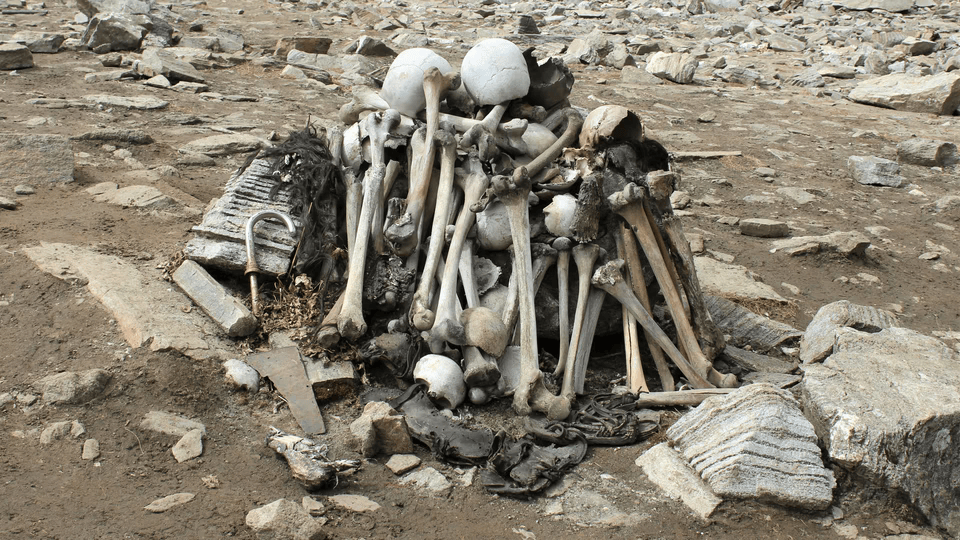
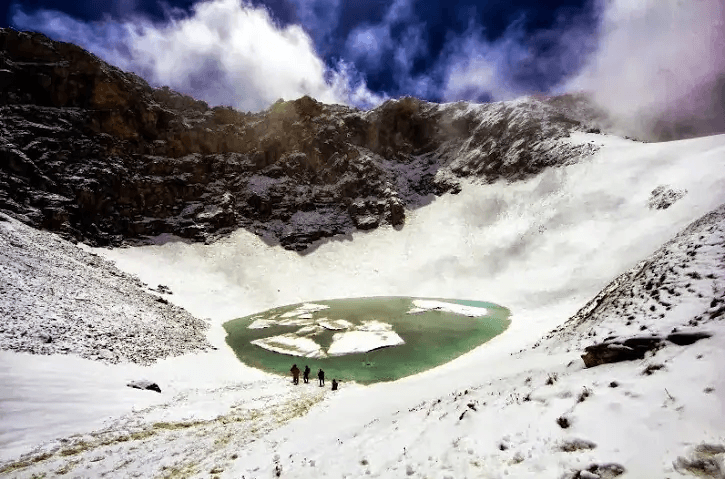
High in the mountains of Uttarakhand, beyond forests and steep Himalayan trails, lies a small glacial lake surrounded by one of India’s strangest archaeological mysteries. When the ice retreats, human bones appear along the rocky edges of the lake.
Scattered across the cold, barren landscape, they raised a question that has haunted researchers ever since: What happened here? There were no witnesses to tell the story. No clear record explaining the remains. Only a mysterious lake, a remote mountain trail, and fragments of a past that seemed to have vanished without an explanation.
Also Read: The Black Monk of Pontefract: The Ghost That Wouldn’t Leave
The Lake of Skeletons
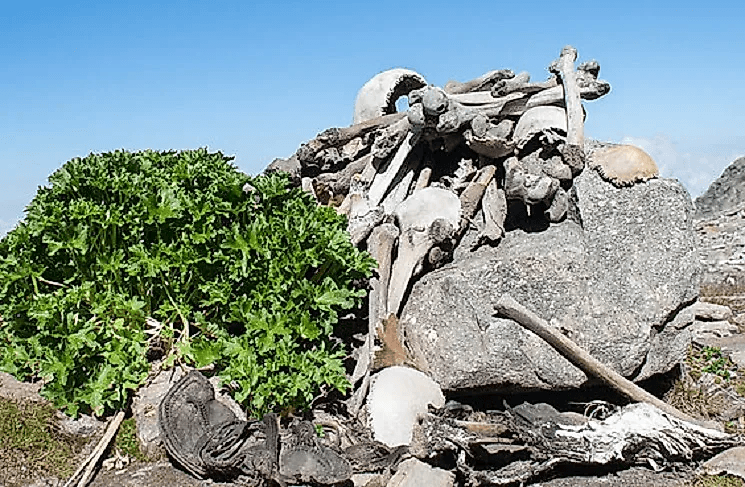
Roopkund, also known as the Skeleton Lake, sits at roughly 5,000 metres above sea level in the Chamoli district of Uttarakhand. The lake is small and surrounded by dramatic Himalayan terrain. For much of the year, it remains frozen. But when the ice melts, bones can become visible around the lake. What made Roopkund especially unsettling was the sheer number of human remains scattered around the lake. At first glance, it seemed as though an entire group of people had died there. But archaeology would eventually reveal a far more complicated story.
Who discovered Roopkund?
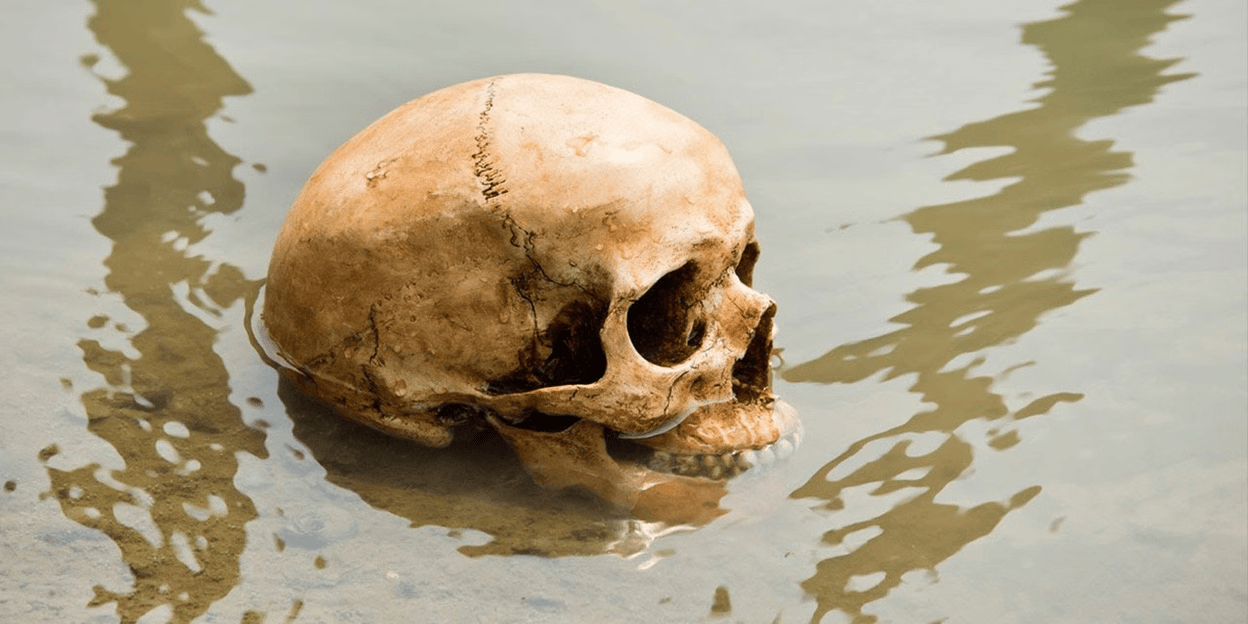
Roopkund was already known to local people and shepherds long before it became famous. However, the human remains at Roopkund were reportedly noticed by forest officials in the late 19th century. The site became known to wider authorities during the British period. Another story says that a British forest ranger encountered the skeletons in 1942, when the lake’s exposed remains attracted attention.
During World War II, British authorities initially became concerned that the remains might belong to Japanese soldiers who had entered India. Investigations reportedly established that the skeletons were much older. That helped turn Roopkund from a remote Himalayan lake into an archaeological mystery.
Who are They?
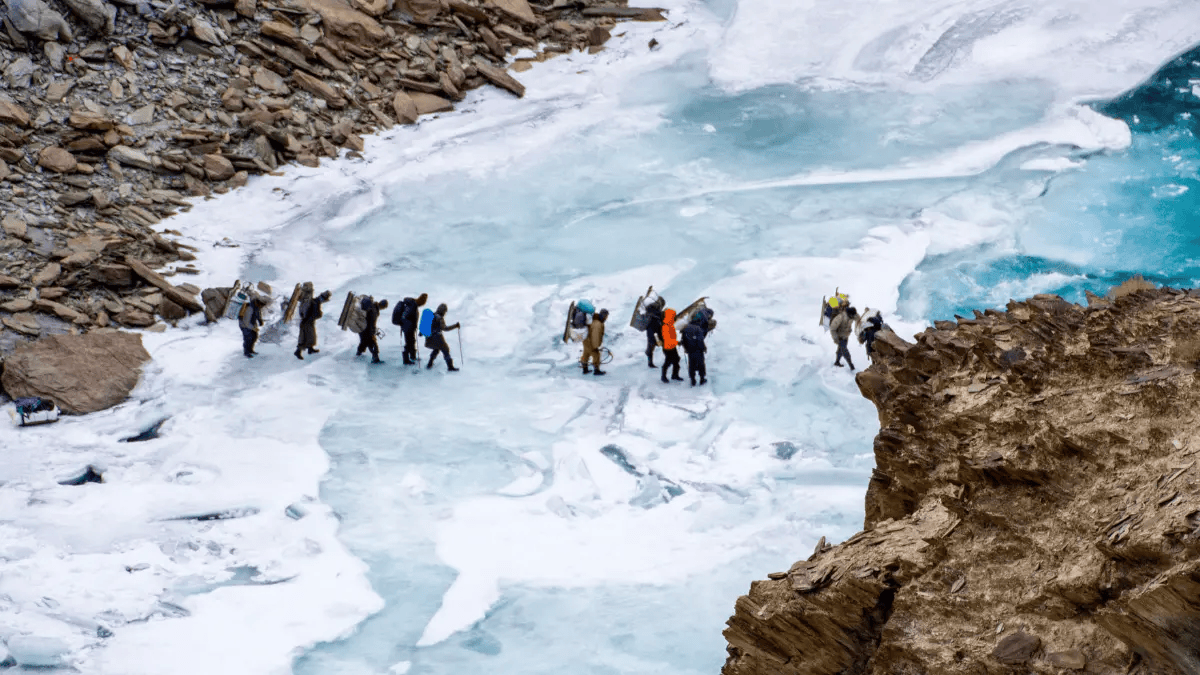
One of the earliest theories suggested that the skeletons belonged to soldiers who had been caught in a catastrophic Himalayan event. Another popular explanation connected them to pilgrims travelling through the mountains. The region around the lake has long been associated with Himalayan pilgrimage traditions, and a large annual pilgrimage known as Nanda Devi Raj Jat passes through the wider area. The bones did not provide a simple answer. Researchers discovered evidence suggesting that the people represented different populations and different periods of history. That meant Roopkund may not have been the scene of one single disaster.
The Ancient DNA Discovery
One of the biggest breakthroughs came from genetic research. A 2019 study published in Nature Communications examined the genomes of 38 individuals from Roopkund. The results were astonishing. The remains did not represent one genetically uniform population. Researchers identified approximately 23 individuals with ancestry related to present-day South Asian populations. 14 individuals had ancestry associated with the eastern Mediterranean, and 1 individual had ancestry linked to Southeast Asia.
The South Asian individuals were generally dated to around 800 CE. The eastern Mediterranean individuals were much more recent, dating to roughly 1,800 years ago. This created a major problem for the traditional “one catastrophic event” theory. If the dating is correct, these people could not all have died in the same disaster.
Source: Roopkund Lake Mystery
Were They Victims of a Massive Hailstorm?
This theory proposes that a group of travellers was caught in an extreme hailstorm. The surrounding Himalayan landscape offers little shelter, and enormous hailstones could potentially cause severe injuries. Researchers found evidence of blunt-force trauma to some skulls. They also found similar injuries that have been interpreted as consistent with impacts from objects falling from above.
However, the evidence of impact injuries does not automatically prove that a hailstorm killed everyone at Roopkund. There can be other reasons as well. The remains represent multiple individuals, and the site has experienced centuries of environmental changes. So while a violent weather event remains one possible explanation, it doesn’t solve the entire mystery.
An Army Lost in the Himalayas?
Another popular story claims that an army entered the mountains and was destroyed. The soldiers travelling through an unforgiving Himalayan landscape encounter a sudden storm, and none survive. But again, archaeological and genetic evidence does not provide strong support for a single lost army. The different genetic backgrounds and radiocarbon dates make the theory difficult to reconcile with the evidence. Roopkund appears to be considerably more complicated than a battlefield.
Travellers From Far Away
The strangest discovery concerns the people with eastern Mediterranean ancestry. How did individuals with ancestry associated with the Mediterranean end up at an isolated Himalayan lake? Were they travellers? Perhaps they were descendants of people who had travelled eastward centuries earlier. Or maybe they were part of a journey that has long since disappeared from the pages of history. Whatever brought them to Roopkund remains unknown.
More Than One Disaster
This may be the most scientifically plausible way to understand the evidence. Rather than one mysterious event, the lake could have accumulated human remains from separate incidents occurring centuries apart. For example, a group may have died there around the 8th or 9th century. Another group may have reached the area much later. The lake’s changing environment could then have brought bones to the surface repeatedly. What looks like one mass-death mystery may actually be several different stories layered on top of one another.
If two groups died roughly a thousand years apart, they obviously couldn’t have been victims of the same storm. This means the skeletons may represent different episodes of death and deposition. It also means that some of the legends surrounding the lake may have conflated unrelated events into a single dramatic story. The mountain only preserved the evidence.
Source: The secret behind how Uttarakhand’s Roopkund became ‘Skeleton Lake’
What Happened to the People?
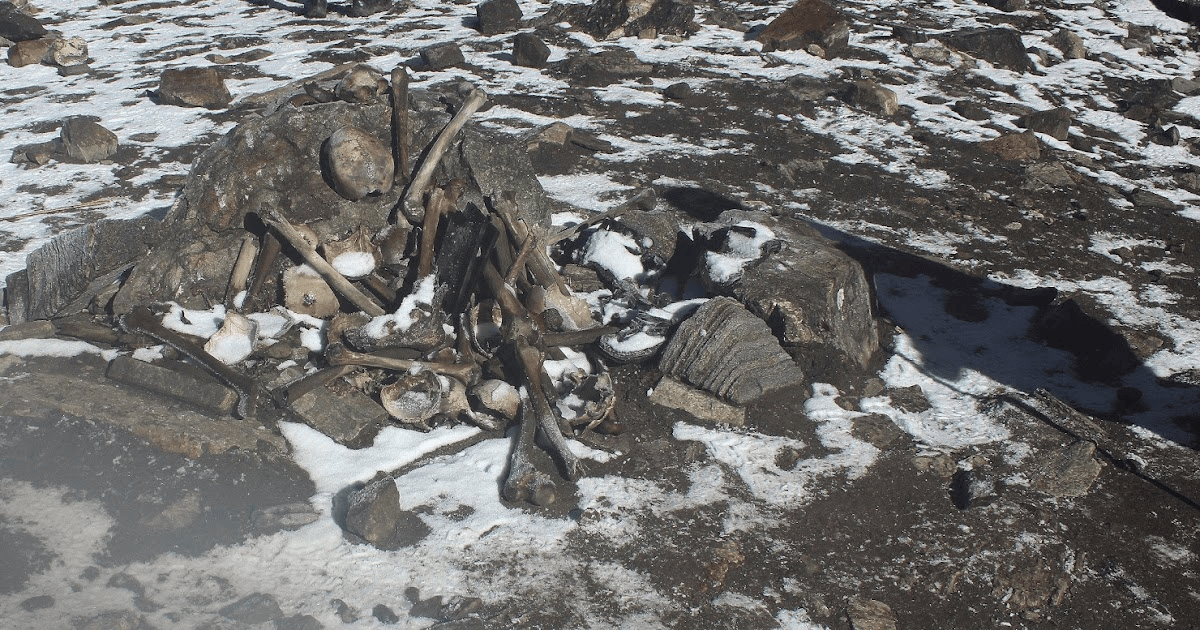
The answer remains uncertain. The available evidence suggests that different groups reached the lake at different times, but why they were there and exactly how they died is still unresolved. Possible explanations include Extreme weather, pilgrimage journeys, and accidental deaths in dangerous terrain. There might be other events that have left no surviving historical record. The evidence does not currently allow researchers to choose one explanation for everyone at the site confidently.
Also Read: Yara-ma-yha-who: The Eerie Creature of Aboriginal Folklore