Four teenagers rode out of Helsinki on motorcycles on a Saturday in early June, pitched a tent on a quiet lakeshore in Espoo, swam, drank a little, and went to sleep. By the following morning three of them were dead. The Lake Bodom murders have never been solved, and more than six decades on they remain the most famous criminal mystery in Finland: a case with a surviving victim, a dozen theories, a trial that ended in acquittal, and a killer who has never been named.
The Night of 4 June 1960
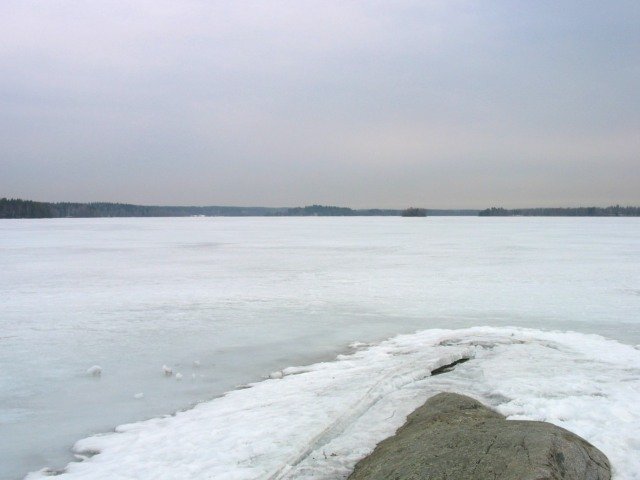
Lake Bodom (Bodominjärvi in Finnish) lies in a wooded part of Espoo, a short distance west of Helsinki. In 1960 it was a popular spot for weekend campers, and the southern shore near the Oittaa manor was well used.
On Saturday 4 June 1960, the Pentecost weekend, four young people arrived there on motorcycles. Seppo Antero Boisman, 18, and Anja Tuulikki Mäki, 15, had been a couple for some time. Nils Wilhelm Gustafsson, 18, and Maila Irmeli Björklund, 15, had only recently begun seeing each other.
They set up a tent, swam and drank. In the small hours Boisman and Gustafsson went out to fish; a note Björklund wrote in a songbook, quoted by Finnish media decades later, records that the boys were drunk and that she was awake at around 2 a.m. while “Sepi” fished. Then the four went back into the tent to sleep.
The Discovery
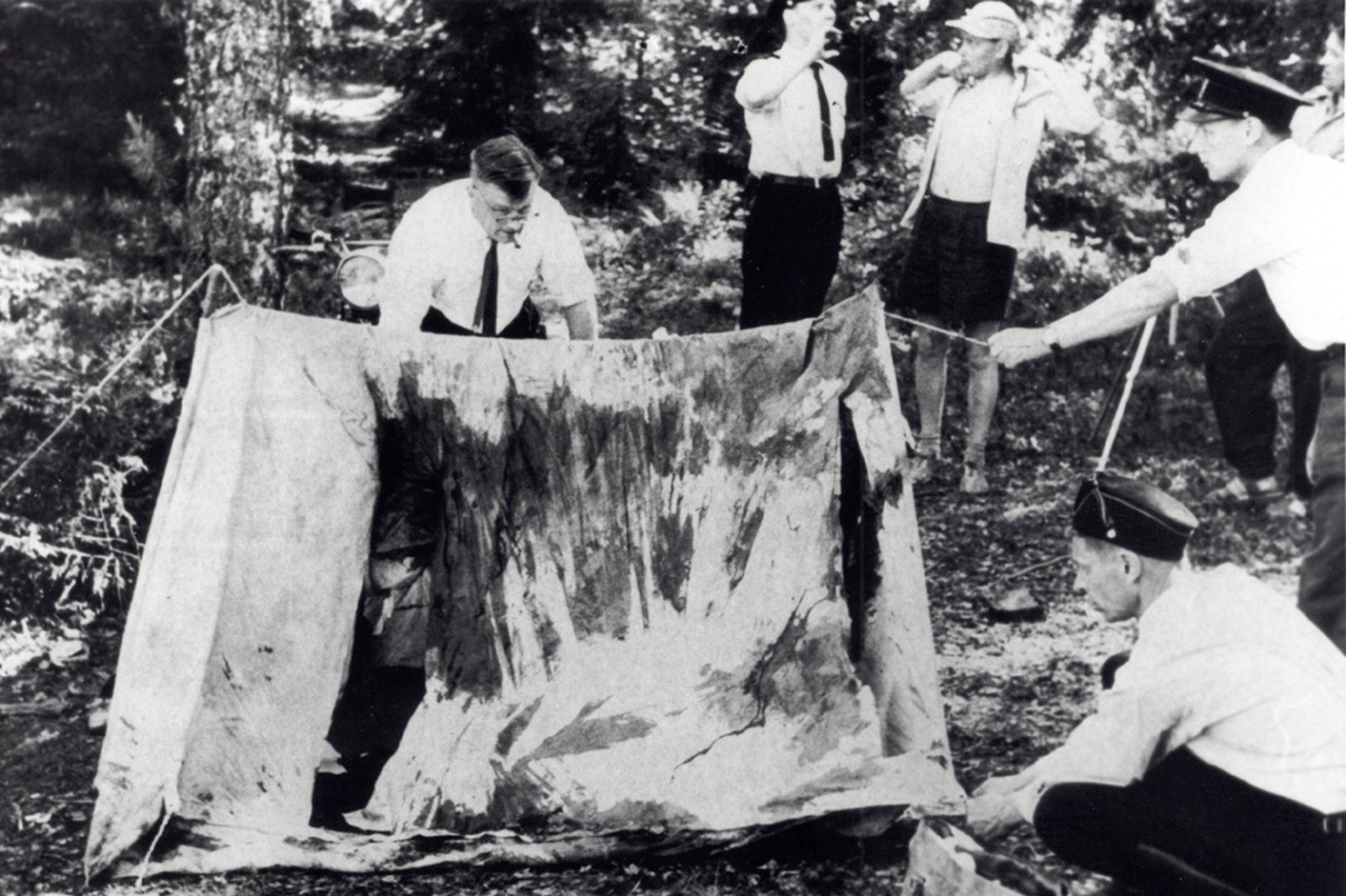
Investigators believe the attack came between roughly 4 a.m. and 6 a.m. on Sunday 5 June 1960. The killer did not go inside the tent. Instead, the occupants were struck through the canvas from outside with a blunt object, most likely a heavy stone, and stabbed with a knife. The tent’s guy ropes were cut and the structure collapsed onto the people inside.
Accounts of who found them differ. English-language summaries name a carpenter, Esko Oiva Johansson, at about 11 a.m.; Finnish sources speak more generally of local people arriving at the beach that morning. All agree on what they saw: three bodies, and a fourth teenager, Gustafsson, lying across the back of the collapsed tent, badly injured but alive.
The three dead were Björklund, Mäki and Boisman. The primary cause of death in each case was a fractured skull. Björklund had suffered by far the worst violence, including more than ten stab wounds, and had been partly undressed. Gustafsson had multiple facial fractures, including to the jaw, and stab wounds. He was taken to hospital semi-conscious and would later say he had glimpsed an attacker dressed in black, and that he remembered almost nothing else.
Several things were missing: wallets, some clothing, and the motorcycle keys. Some clothing was later found several hundred metres away (450–500 metres in some accounts, further in others). Gustafsson’s own shoes were also found at a distance from the tent, a detail that would matter greatly forty-four years later. The weapons and the stolen items were never recovered.
A tent slashed open from outside, in the small hours, with the occupants still inside, inevitably recalls the Dyatlov Pass incident in the Urals only sixteen months earlier, though there the mountain, not a man, is the leading suspect.
The Investigation
The response was on a scale Finland had not seen before. Police and volunteers combed the surrounding forests in what Finnish reports describe as the largest ground search in the country’s history; dozens of people with outstanding warrants were swept up without any being linked to the crime.
Witnesses had been in the area that morning. Birdwatchers reportedly saw the tent collapse at around 6 a.m. and a fair-haired man walking away. Others described a man fleeing into the trees, and police later appealed for information about a man seen pushing a bicycle with a bag on the handlebars resembling the stolen property.
From these accounts investigators built a description: a man aged roughly 20 to 30, about 173–174 centimetres tall, blond, with acne on his forehead and cheeks. Police even used hypnosis on Gustafsson and on at least one witness. None of it produced a suspect who could be charged.
The Lake Bodom Murders Suspects
Over the years three names have come to dominate discussion of the Lake Bodom murders, alongside a fourth, shapeless candidate: the unknown outsider.
Karl Valdemar Gyllström ran a kiosk at Oittaa and was known locally for his hostility to campers. He is said to have confessed while drunk, and after he drowned in Lake Bodom in 1969 his wife reportedly claimed he had threatened to kill her if she told the truth. Police, however, stated that Gyllström had an alibi from that same wife. A 2016 book by a local politician, Ulf Johansson, argued that people in the area had long believed the kiosk keeper was guilty. No physical evidence has ever connected him to the tent.
Hans Assmann is the most cinematic of the theories. A German-born Finnish citizen who lived about five kilometres from the lake, Assmann appeared at a Helsinki surgical hospital on 6 June 1960, dirty, agitated, with blackened fingernails and clothing stained red. A doctor who saw him, Jorma Palo, became convinced he was the killer and later wrote three books arguing that Assmann was a KGB agent shielded for reasons of Cold War diplomacy. Assmann also matched the police description and cut his blond hair short soon after it was published.
The police version is far less dramatic. Documents released in 2005 gave Assmann an alibi: he had spent the night at his girlfriend’s flat in Helsinki, where flatmates saw him at breakfast at 9 a.m. The red stains, police said, were paint from a job he had been doing, and his behaviour was the result of drink. Police have publicly described Palo’s books as fiction. Assmann died in 1998.
Pentti Soininen, a violent and troubled young man, confessed while in prison in the mid-1960s, claiming he had absconded from a reform school to commit the killings. He would have been about 14 in June 1960. Police dismissed the confession, and Soininen took his own life during a prisoner transfer in 1969.
The 2005 Trial of Nils Gustafsson
For four decades the survivor had been treated as exactly that. Then, in 2003, the case was quietly reopened under National Bureau of Investigation detective Tero Haapala, and in late March 2004 Nils Gustafsson, by then retired, was arrested. On 2 April 2004 Espoo District Court ordered him held on three counts of murder.
The prosecution’s theory was that Gustafsson, drunk and jealous, had killed his three companions and staged the scene. Its centrepiece was DNA and bloodstain analysis of the shoes found away from the tent: they carried the blood of all three victims but none of Gustafsson’s own, which prosecutors said showed he had been walking about after the others were dead. The defence answered that his injuries were so severe that he could not have carried out a sustained attack on three people and then hidden evidence hundreds of metres away.
The trial opened at Espoo District Court on 4 August 2005, with prosecutors Tom Ifström and Heli Haapalehto seeking life imprisonment. On 7 October 2005 the court acquitted Gustafsson on all counts. In its reasoning, the court said the long lapse of time made it difficult to form an accurate picture of events, and, crucially, that eyewitness evidence from the morning of the murders supported the defence’s contention that an outsider had been at the scene. It also found that an ambiguous remark Gustafsson was alleged to have made, “tehty mitä tehty” (“what’s done is done”), could not be treated as a confession in the circumstances.
The prosecution did not appeal. Gustafsson, who had spent 59 days in custody, was awarded €44,900 in compensation for wrongful detention and suffering. His own summary, as reported in Finland, was blunt: “Olen syytön ja sillä sipuli” – “I’m innocent, and that’s that.”
The Theories Today
Set the trial aside and the Lake Bodom murders reduce to the question the first detectives faced: who walks up to a tent at dawn and kills three sleeping teenagers?
The “unknown outsider” theory is the one the court effectively endorsed. It fits the collapsed tent, the attack from outside, the fleeing man, the bicycle and the missing property. Its weakness is that it has no name attached.
The Gyllström theory fits the location and his temper, but it rests on hearsay and a drinker’s reported boasts. The Assmann theory refuses to die, largely because Palo’s books gave it a narrative shape a bare police file cannot match; yet the alibi released in 2005 is specific, and the police explanation for his appearance is mundane. Where the sources disagree, it is worth saying plainly: the doctor believed one thing, the police another, and the documentary record sides with the police.
Newer work continues. A 2020 Finnish television series, Murhan DNA, revisited the evidence with forensic geneticist Jari Louhelainen, and a 2024 book by Haapala and a colleague drew on the reinvestigation files. Neither has produced a chargeable suspect.
Why It Still Matters
In 1960 Finland was a place where teenagers camped by lakes without a second thought. The Lake Bodom murders punctured that, and the fact that the killer was never identified left the wound open. The case has become a reference point in Finnish culture in a way few crimes anywhere have.
Its most unusual legacy is musical. The Espoo metal band Children of Bodom, formed in 1993 under the name Inearthed, took their new name from the lake after finding it in a local telephone directory and reading about the murders. They played a final show on 15 December 2019, having introduced the case to a generation of listeners who had never heard of Espoo.
In 2016 director Taneli Mustonen released Bodom, distributed abroad as Lake Bodom, a slasher film about young people who return to the lake to recreate the killings. It was inspired by, rather than based on, the real events, and was showcased at the Cannes Marché du Film before its Finnish release on 19 August 2016.
The physical evidence has become heritage. In 2023 the tent was cleaned and conserved at the Police Museum in Tampere, with the blood stains deliberately preserved. And in 2019 archaeology students from the University of Helsinki dug at the campsite, not for clues but for what decades of visitors had left behind; their leader suspected people had been camping there on the anniversary. That is the strange afterlife of an unsolved case: it becomes a place people go to.
Like Norway’s Isdal Woman, found in a Bergen valley a decade later, Bodom has become one of those Nordic cases where the absence of an answer is itself the story.
FAQ
Were the Lake Bodom murders ever solved? No. Three teenagers were killed on 5 June 1960 and no one has ever been convicted. The only person tried, survivor Nils Gustafsson, was acquitted by Espoo District Court on 7 October 2005, and the prosecution did not appeal.
Who were the main Lake Bodom murders suspects? The three most discussed are Karl Valdemar Gyllström, a local kiosk keeper who disliked campers; Hans Assmann, a German-born man later accused of being a KGB agent; and Pentti Soininen, a prisoner who confessed but was only about 14 at the time. Police found no evidence against Gyllström, accepted Assmann’s alibi, and dismissed Soininen’s confession.
Why was Nils Gustafsson put on trial in 2005? A reinvestigation begun in 2003 used DNA and bloodstain analysis that found the victims’ blood, but not his own, on his shoes, which had been found some distance from the tent. Prosecutors argued he had killed his friends and staged the scene. The court ruled that eyewitness evidence pointed to an outsider and that his injuries were consistent with being a victim.
What is the connection between Children of Bodom and the murders? The Finnish metal band, formed in Espoo in 1993, took its name from the lake and the 1960 killings after finding “Bodom” in a phone book. It has no other connection to the case, but its popularity carried the story to audiences worldwide.
The Lake Bodom murders remain what they have been since 1960: three deaths, one survivor, and a name that nobody has been able to fill in.
Sources
- Lake Bodom murders – Wikipedia (English): https://en.wikipedia.org/wiki/Lake_Bodom_murders
- Bodominjärven murhat – Wikipedia (Finnish): https://fi.wikipedia.org/wiki/Bodominj%C3%A4rven_murhat
- “Not Guilty Verdict in Bodom Murder Trial”, Yle News, 7 October 2005: https://yle.fi/a/3-5219456
- “Archaeology students plan dig at Lake Bodom murder site”, Yle News, 13 May 2019: https://yle.fi/a/3-10780763
- “Bodominjärven surmat – kansakunta etsii murhaajaa”, Yle Elävä arkisto: https://yle.fi/a/20-171265
- “Bodomin murhateltta puhdistettiin, mutta verijäljet eivät lähde mihinkään”, Yle, 15 June 2023: https://yle.fi/a/74-20036589
- “Bodominjärven murhat – Tällaiset olivat uhrien viimeiset hetket”, Seura, 7 June 2024: https://seura.fi/ilmiot/mysteerit/uutuuskirja-valottaa-bodomijarven-uhrien-viimeisa-hetkia/
- Children of Bodom – Wikipedia: https://en.wikipedia.org/wiki/Children_of_Bodom
- Lake Bodom (film) – Wikipedia: https://en.wikipedia.org/wiki/Lake_Bodom_(film