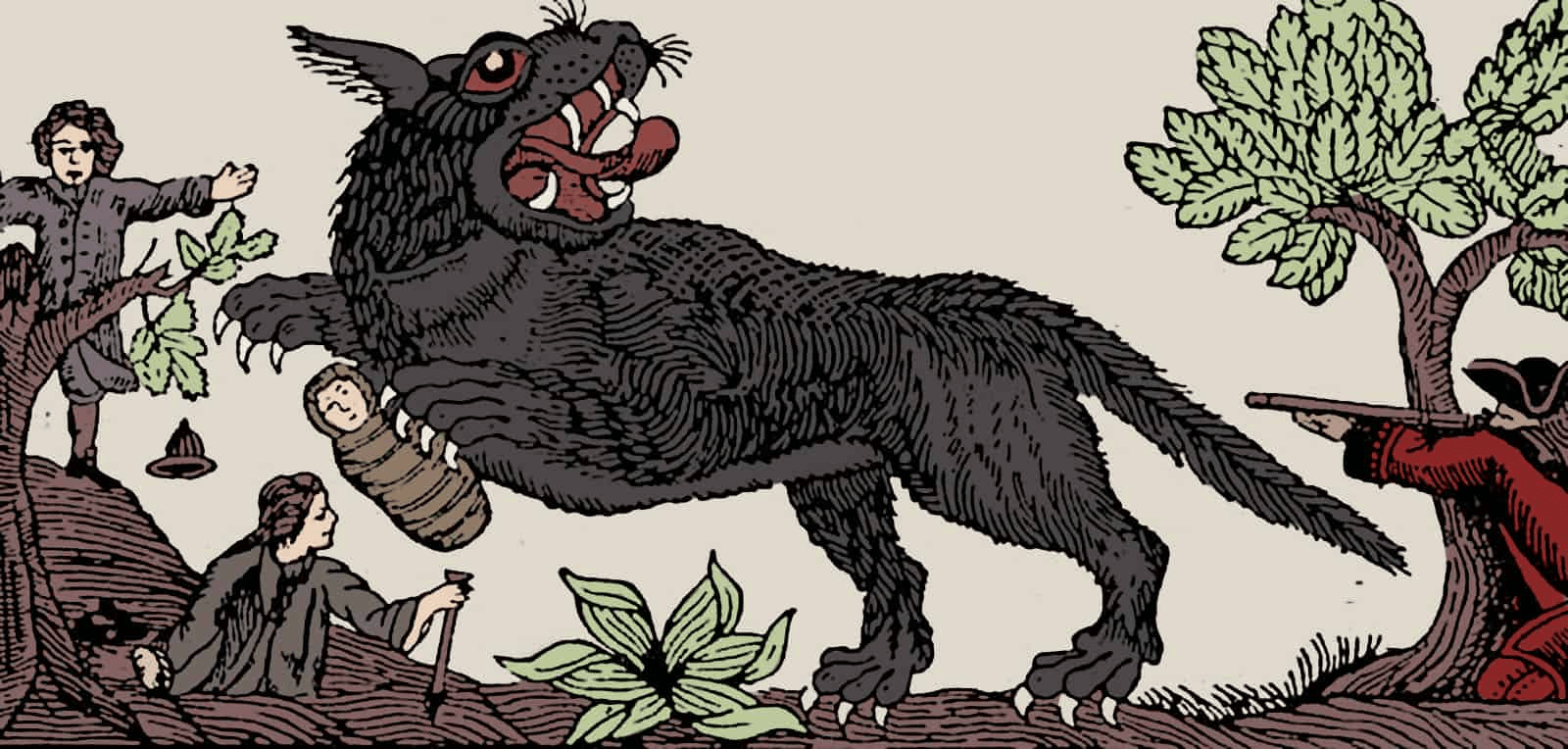
Stories tell of monsters hiding in forests. And then there are stories about something much harder to explain: a creature that appears on an ordinary road, beside an old church, or in the darkness just outside your home. For centuries, people in eastern England have whispered about a huge black dog known as the Black Shuck. It was said to be enormous, sometimes larger than an ordinary dog, with dark fur and eyes that seemed to glow in the night. But the most frightening part of the legend wasn’t what the creature looked like. It was what its appearance was believed to mean. Death was coming.
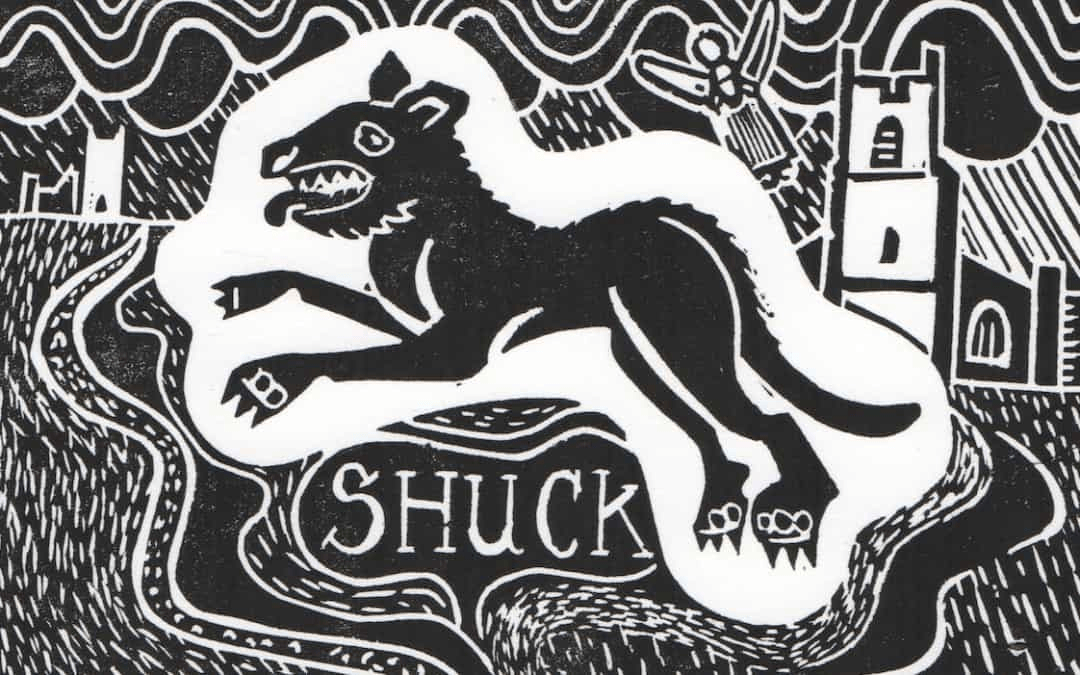
The legend of the Black Shuck is particularly associated with East Anglia, especially Norfolk and Suffolk. Back then, nightfall meant something very different. Once the sun disappeared, roads and fields could vanish into almost total darkness. A lone traveler walking home might see nothing beyond the narrow path beneath their feet. Until something moved. A shadow at the edge of the road or a strange sound coming from the trees. And then, two eyes staring back from the darkness.
Also Read: The Mysterious Green Children of Woolpit
The Mystery of the “Black Shuck”
Even the creature’s name carries uncertainty. The word “Shuck” has been connected by researchers to old regional words describing something shaggy or hairy. The name eventually became attached to stories of supernatural black dogs throughout parts of eastern England. Some accounts described it as a terrifying beast. Others depicted a spectral dog that simply appeared and disappeared. In certain traditions, supernatural black dogs weren’t necessarily evil. They could act as guardians or protectors. However, the Black Shuck became particularly famous for its association with death.
Source: The Black Dog of East Anglia
The Storm of 1577
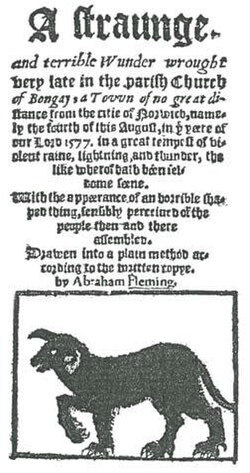
On 4 August 1577, a violent storm struck parts of Suffolk. Lightning, thunder, and powerful winds caused considerable damage. But in the aftermath, two churches became connected with one of Britain’s most famous supernatural legends. The first was St Mary’s Church in Bungay. According to a contemporary account by clergyman Abraham Fleming, a strange black dog appeared during a storm and caused panic inside the church.
Another tradition connects a similar apparition with Holy Trinity Church at Blythburgh, where people reportedly saw a black dog during the same storm. The stories became intertwined with deaths and destruction associated with the events of that day. Over time, the creature became part of local folklore as the Black Shuck. But there is an important distinction. The storm, the churches, the deaths, and the damage were real.
Source: Black Shuck
There are several possible explanations for the Black Shuck stories. Medieval and early-modern England had plenty of large dogs. In darkness, especially during a violent storm, an unfamiliar animal could easily appear enormous and frightening. A frightening encounter could then become exaggerated as the story was retold. On the other hand, black dogs appear throughout British folklore. They frequently represent danger, death, or the unknown. The Black Shuck may therefore have been part of a much older tradition in which mysterious animals served as supernatural warnings.
The Phantom Dog Returns
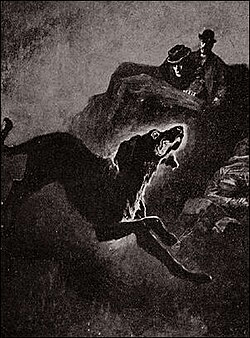
The Black Shuck didn’t disappear after 1577. Stories of enormous black dogs continued appearing throughout East Anglia. Some were reportedly seen on isolated roads. Others were associated with churches, fields, and coastal areas. From time to time, the details, locations, and the witnesses changed. But one element remained remarkably consistent. A large, dark, mysterious dog appearing where no ordinary dog seemed to belong. And for people who already knew the old stories, seeing such an animal could be deeply unsettling.
Monster or Memory?
Perhaps Black Shuck was never one creature. Perhaps hundreds of ordinary encounters with dogs, shadows, wildlife, storms, and frightened travelers slowly merged into a single legendary figure. Or perhaps the story served another purpose. In a world where death could arrive suddenly and without warning, people needed ways to make sense of the unknown. A mysterious black dog appearing at night became the perfect symbol. If the Black Shuck appeared, something terrible might be close behind. The old stories remain attached to the landscapes where they were born: the churches, country lanes, villages, and fields of East Anglia. The Black Shuck remains exactly where folklore is most powerful, somewhere between history, fear, and the unexplained.
Also Read: The Tarasque: The Monster That Terrorized Medieval France