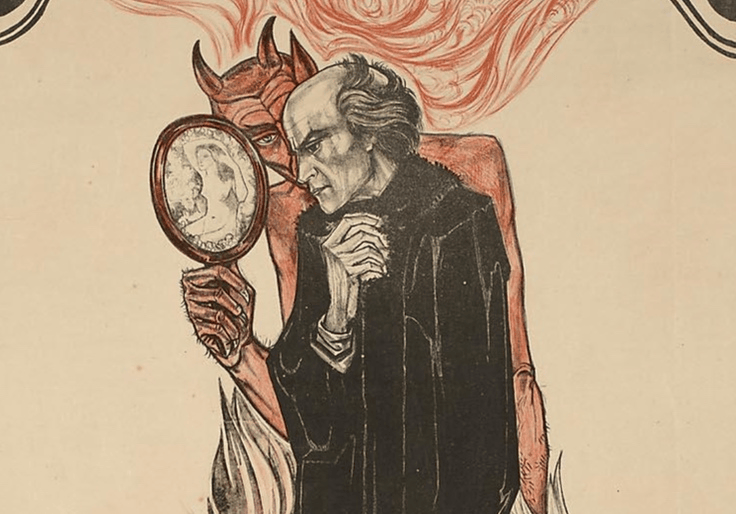
The Devil’s Bridge tells stories of ancient bridges surrounded by impossible bargains, mysterious builders, and warnings that have survived for generations. Bridges hidden among the mountains and forests of Central Europe seem almost too perfect to have been built by human hands. Some cling to cliffs. Others cross deep ravines where construction would once have seemed nearly impossible. And around many of them, an unsettling story survives. According to local legends, when human builders could not complete a bridge, someone or something offered to finish the work. The price was said to be a human soul. That figure came to be known simply as the Devil.
Also Read: Black Annis: The Blue-Faced Witch of the English Hills
Why Did the Devil Build Bridges?
There may be a surprisingly practical explanation for the popularity of these legends. Bridges were dangerous structures to build. A collapsed arch could kill workers, and floods could destroy foundations. A project could consume enormous amounts of labor and money. For communities living before modern engineering, an impressive bridge represented a remarkable technological achievement. Instead of asking how humans accomplished it, folklore sometimes offered another answer: Perhaps humans didn’t build it alone. The Devil became a convenient explanation for extraordinary craftsmanship.
When Architecture Became Legend
Medieval bridge construction was an extraordinary undertaking. Builders had to work with heavy stone, difficult terrain, and primitive engineering equipment. A bridge spanning a gorge or rushing river could take years to complete. For ordinary villagers, the finished structure could appear almost miraculous. Folklore often stepped into the gap between what people could explain and what seemed impossible. A bridge that appeared to defy the landscape could become evidence of supernatural intervention. In many versions, a desperate builder made a bargain with the Devil.
Source: Teufelsbrücke, The Devil’s Bridge in Switzerland
He promised to construct the bridge before a certain deadline. But there was a condition. He would receive the first living soul to cross it. The builder accepted. Then, depending on the version, the villagers found a clever way around the bargain. Sometimes a person crossed first. Sometimes an animal was sent across. And sometimes the Devil was tricked entirely.
The Devil’s Bridge of Kromlau
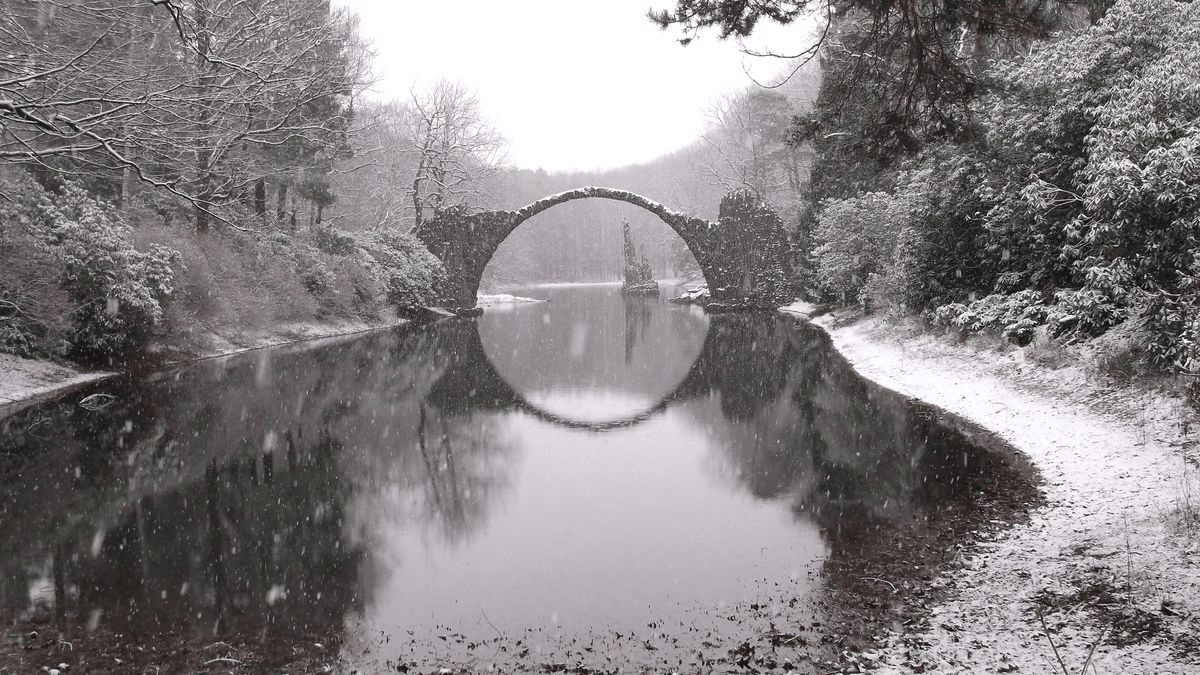
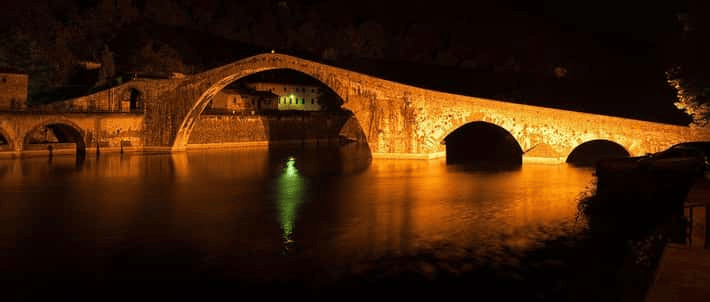
One of the most visually striking examples is Rakotzbrücke, better known as the Devil’s Bridge, in Kromlau, Germany. The bridge was constructed in the 19th century on the grounds of Kromlau Park. Its unusual curved design creates an almost perfect circular reflection when the water beneath it is calm. The result is so symmetrical that the bridge appears to form a complete stone ring. It is easy to understand how a structure like this could inspire supernatural stories.
Rakotzbrücke was not actually a medieval bridge built by the Devil. It was commissioned in the 19th century by Friedrich Hermann Rötschke and constructed between 1866 and 1875. The name belongs to the broader European tradition of “Devil’s Bridges,” rather than being evidence of an actual medieval supernatural bargain. Today, the bridge is protected, and visitors are generally not permitted to walk across it. Its strange silhouette, however, continues to make it one of Europe’s most recognizable bridges associated with the Devil.
Source: The Devil’s Bridge in Germany’s Kromlau Park is designed to reflect a perfect circle in the water
The Devil’s Bridge of Andermatt
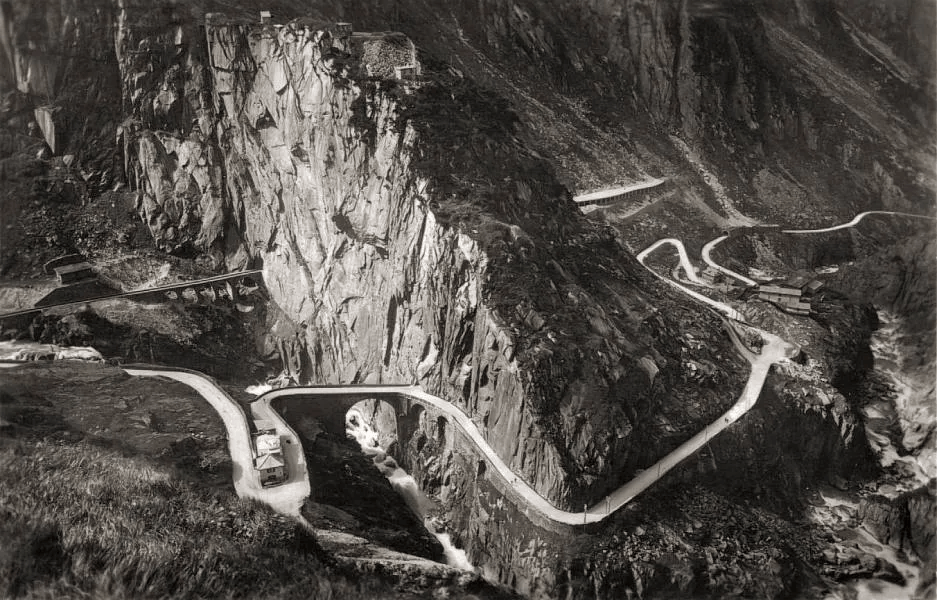
Farther south, in Switzerland, another dramatic structure carries the same name. The Teufelsbrücke, or Devil’s Bridge, crosses the Reuss River near Andermatt in the Swiss Alps. The landscape itself seems designed for a legend. The river cuts through the narrow Schöllenen Gorge, surrounded by steep mountains and rocky slopes. According to the traditional story, the gorge was so difficult to cross that local people could not find a way to build a bridge.
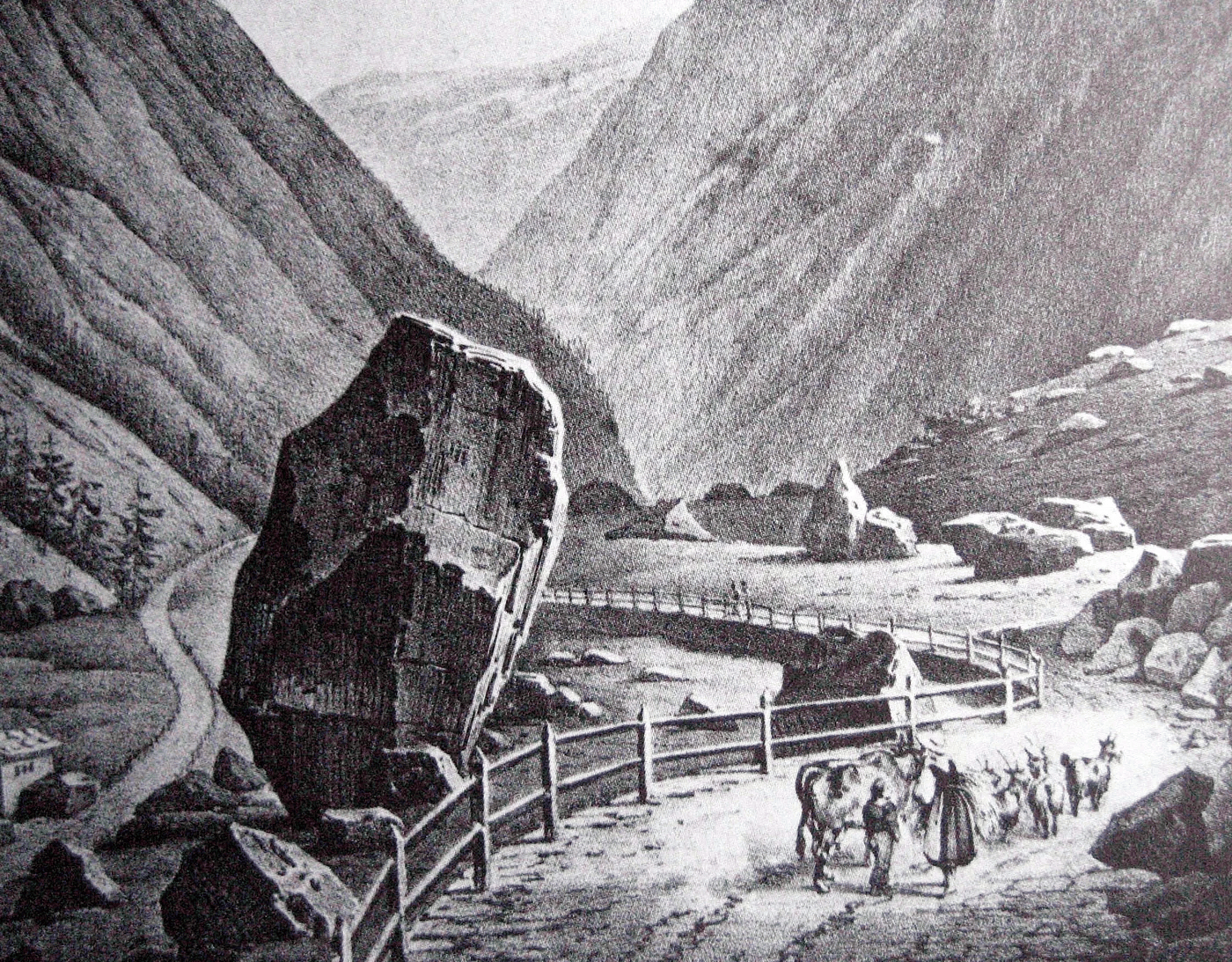
Then the Devil appeared. He offered to construct one, but again, there was a price. He demanded the soul of the first person who crossed the completed bridge, and the villagers agreed. Then they supposedly outsmarted him. Rather than sending a person across first, they sent a goat. The Devil, furious at being deceived, attempted to destroy the bridge by throwing a massive stone toward it. According to legend, an old woman intervened and marked the stone with a cross, preventing the Devil from completing his revenge. The enormous boulder became known as the Devil’s Stone.
The Devil’s Bridge at Rattlesden And a Pattern Across Europe
Stories of supernatural bridge builders aren’t limited to Switzerland or Germany. Variants appear throughout Europe. In some traditions, the Devil isn’t necessarily an embodiment of absolute evil. Instead, he functions as a supernatural figure who possesses knowledge and abilities beyond those of ordinary humans. He builds what humans ask for and expects payment. The stories are separated by geography, language, and local history, yet many follow almost the same narrative structure: An impossible bridge, a desperate builder, and a supernatural bargain. And finally, a trick.
What Really Happened?
There is no historical evidence that supernatural beings constructed these bridges. The documented structures were built by human engineers, architects, and laborers, sometimes over many years. The supernatural element belongs to folklore. But that doesn’t make the stories unimportant. A dangerous gorge became the Devil’s territory. An extraordinary bridge became evidence of a supernatural bargain. And an imposing piece of architecture became something people could explain through a story passed from one generation to another. Perhaps the mystery isn’t whether the Devil really built these bridges. Perhaps it is why humans repeatedly needed the Devil to explain them.
Also Read: The Banshee: Haunting Cry of Irish Folklore