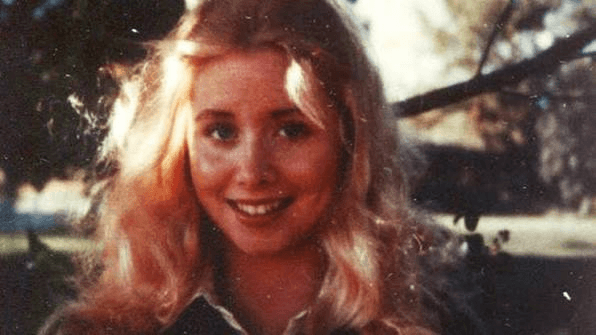
On December 19, 1979, 18-year-old Michelle Martinko went to a mall in Cedar Rapids, Iowa. She never made it home that night. By the next morning, her family and investigators were facing a devastating discovery that would lead to one of Iowa’s most enduring cold cases.

For years, the investigation produced suspects, tips and theories, but no definitive answer. Then advances in DNA technology changed the direction of the case. Nearly 39 years after Michelle’s death, investigators were able to use genetic genealogy to narrow their search to a family and eventually to a single man.
Lesen Sie auch:YOGTZE Case: The Mystery of Günther Stoll
The Murder of Michelle Martinko
Michelle Martinko was a senior at Kennedy High School in Cedar Rapids. On the evening of December 19, she went to Westdale Mall to shop for a new coat. Her family became concerned when she did not return home. The next morning, December 20, Michelle was found dead inside her family’s 1972 Buick in the Westdale Mall parking lot. She had been stabbed multiple times, and investigators determined that she had fought with her attacker owing to the defensive wounds found on her hands. Police collected evidence from the scene, including Michelle’s bloodstained clothing, but the investigation initially failed to identify the person responsible.
The case quickly became one of Cedar Rapids’ most difficult unsolved homicides. Investigators interviewed numerous people and followed leads, but none produced a definitive suspect. A composite image was eventually created using descriptions from witnesses, and a reward was offered for information that could identify the killer. Yet the case remained cold.
A DNA Breakthrough
Decades later, the investigation was reopened with the help of advances in forensic science. In 2006, a cold-case investigator reviewing the files identified previously examined evidence that could provide a DNA profile belonging to the killer. The resulting profile was entered into the national CODIS database, but there was no match. Investigators continued testing potential suspects, but the killer’s identity remained unknown.
In 2017, investigators worked with Parabon NanoLabs, a company specialising in DNA phenotyping. Using the available DNA, the company produced an estimate of the suspect’s physical characteristics and ancestry. The resulting images gave investigators another way to generate leads.
Quelle:TIMELINE: The Michelle Martinko murder case
But the major breakthrough came in 2018.
Investigators turned to genetic genealogy, a technique that can use DNA connections to identify relatives of an unknown person. The suspect’s DNA was uploaded to a public genealogy database. Instead of finding the killer directly, investigators found a distant relative. That distant connection was enough to begin building a family tree. A woman named Brandy Jennings had uploaded her own DNA to that database while researching her father’s family. She had no idea that the information would eventually help investigators identify a man connected to a murder committed nearly four decades earlier.
The Family Tree Leads to Three Brothers

Investigators worked backwards through the family connections identified through the genealogy search. By examining family records and testing members of different branches, they gradually narrowed the possible family line. Eventually, investigators focused on three brothers living in Iowa, including the later convicted killer, Jerry Lynn Burns.
The brothers were investigated individually. DNA samples obtained from discarded objects belonging to Donald and Kenneth excluded them as the source of the DNA associated with the crime. That left Jerry Lynn Burns. Investigators eventually obtained a discarded drinking straw that Burns had used at a Pizza Ranch in Manchester. Laboratory testing found that Burns could not be excluded as the major contributor to the DNA profile previously developed from evidence connected to Michelle’s murder.
On December 19, 2018, exactly 39 years after Michelle was killed, Jerry Lynn Burns was arrested and charged with first-degree murder.
The Trial
Burns maintained his innocence and challenged the DNA evidence during the legal proceedings. The defence also raised questions surrounding how investigators had obtained the discarded DNA sample. The prosecution, however, presented the DNA evidence alongside the broader investigation and other evidence from the case.
The trial began in February 2020. After several weeks of testimony, the jury deliberated for approximately three hours before reaching its verdict. On February 24, 2020, Jerry Lynn Burns was found guilty of first-degree murder in Michelle Martinko’s death. Burns was sentenced on August 7, 2020, to life in prison without the possibility of parole.
The Appeal
The case did not end with the conviction. Burns appealed his conviction, including challenges involving the collection and use of DNA evidence. The case eventually reached the Iowa Supreme Court. In 2023, the Iowa Supreme Court upheld Burns’ conviction. The decision also made the Martinko case an important example of the legal questions surrounding investigative DNA collection and genetic genealogy.
A Cold Case Finally Solved
Michelle Martinko’s murder had remained unsolved for almost 40 years. Investigators had preserved evidence from the original investigation, but the technology available in 1979 could not identify the person whose DNA had been left behind. Years later, advances in DNA analysis and genetic genealogy provided investigators with a completely different route.
The breakthrough did not come from a direct match in a criminal database. Instead, it began with a distant relative who had voluntarily uploaded DNA for genealogical research. Investigators used that connection to construct a family tree, narrow the possible family line and eventually identify Jerry Burns as the person whose DNA matched evidence from the case.
For Michelle’s family, the arrest in 2018 finally answered a question that had remained unresolved since 1979. Her case also demonstrated how evidence preserved for decades can take on new significance when forensic technology advances. The murder of Michelle Martinko is no longer a mystery. After 40 years, the investigation had finally reached a courtroom and a conviction.
Lesen Sie auch:Who Put Bella in the Wych Elm?