Chinese Folklore holds countless stories that seem to exist somewhere between nightmare and reality. Behind the country’s famous dragons, legendary warriors, and immortal beings lies a darker collection of tales involving supernatural creatures, restless spirits, and rituals performed for reasons that are difficult to comprehend today. Some stories have survived through centuries of religious traditions and classical literature. These five lesser-known Chinese folklore stories offer a journey into the stranger side of Chinese mythology.
Also Read: 5 Strange Asian Mysteries and Legends You May Not Have Heard Of
1. The Painted Skin: The Terrifying Secret Behind a Beautiful Face
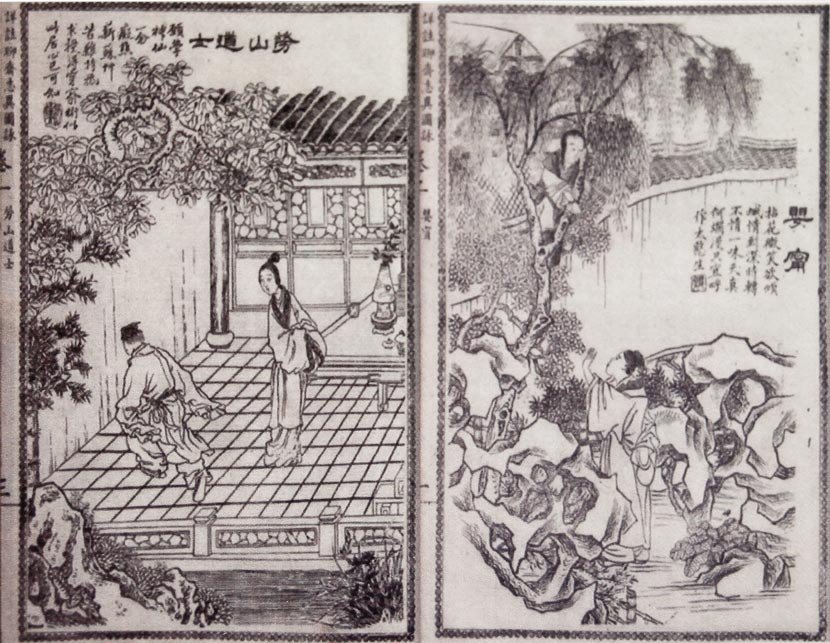
The story appears in Liaozhai Zhiyi, commonly translated as Strange Tales from a Chinese Studio, a collection of supernatural stories written by Pu Songling during the Qing dynasty. Completed in the seventeenth century, the collection explores ghosts, fox spirits, strange encounters, and the complicated relationship between the human and supernatural worlds. In The Painted Skin, a scholar encounters a mysterious young woman who appears to be in distress. Believing that she needs help, he welcomes her into his home. At first, she seems like an ordinary woman. But there is little reason to suspect she hides something sinister.
The scholar eventually encounters a Taoist priest who warns him that the woman is not what she appears to be. Driven by curiosity, he follows the priest’s warning and discovers a horrifying truth. The beautiful woman is actually a supernatural creature wearing a human skin as a disguise. The skin is not its true body but a carefully maintained appearance concealing a monstrous reality. The creature does not announce itself through an obviously monstrous appearance. Instead, it survives by looking like someone who can be trusted. The story has been adapted numerous times, but the mystery remains. What if the most frightening creature is not the one hiding in the darkness, but the one that looks completely human?
Source: The Painted Skin: A Chinese Folktale
2. The Jiangshi: The Hopping Corpse of Chinese Folklore
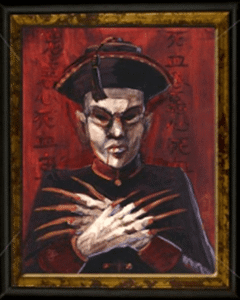
Chinese folklore contains numerous stories about restless spirits and the dead returning to disturb the living. Among its most recognisable supernatural figures is the jiangshi, often translated as a hopping corpse or Chinese hopping vampire. Traditional depictions commonly show a stiff-bodied corpse wearing the formal clothing associated with the Qing dynasty. Its arms extend forward, and it moves with an unnatural, rigid gait rather than walking normally. The folklore surrounding the jiangshi draws on older fears concerning death, burial, spiritual imbalance, and the boundary between life and the afterlife.
One explanation frequently discussed in connection with the legend involves the historical practice of transporting deceased people back to their ancestral homes for burial. Over time, tales about corpses that could move on their own became part of a larger supernatural tradition. Some stories portray it as a creature that drains the life energy of the living. Some stories also feature yellow paper talismans placed on a corpse’s forehead. In popular depictions, these talismans can restrain or control the creature, giving the stories an additional connection to ritual practices and supernatural beliefs.
3. The Huli Jing: The Fox Spirits That Walk Among Humans
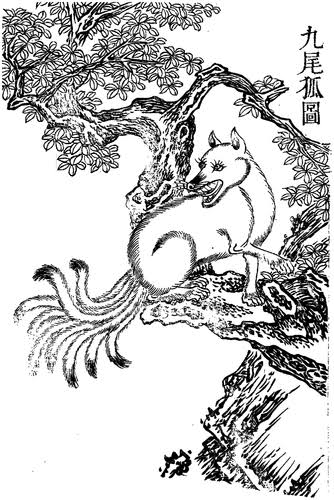
A fox is not always an ordinary animal in Chinese folklore. Some foxes are believed to possess supernatural abilities, including the power to transform into human beings. These beings are known as huli jing, or fox spirits. Some are dangerous tricksters, others are wise or helpful, and some become involved in complicated relationships with humans. In some stories, a fox spirit gains the ability to assume human form after years of cultivation. It may then enter human society, concealing its identity from people who have no reason to suspect that anything is unusual.
One recurring feature of fox-spirit stories is uncertainty. A mysterious stranger might appear generous and compassionate, only to reveal an unexpected nature later. In other tales, the supposedly dangerous supernatural being displays more kindness than the humans around it. Some later popular interpretations portray fox spirits as seductive figures, but this is only one part of a much broader tradition. This complexity makes the huli jing particularly interesting. The stories do not always divide the world neatly into monsters and innocent victims.
4. Minghun: The Strange Tradition of Spirit Marriage
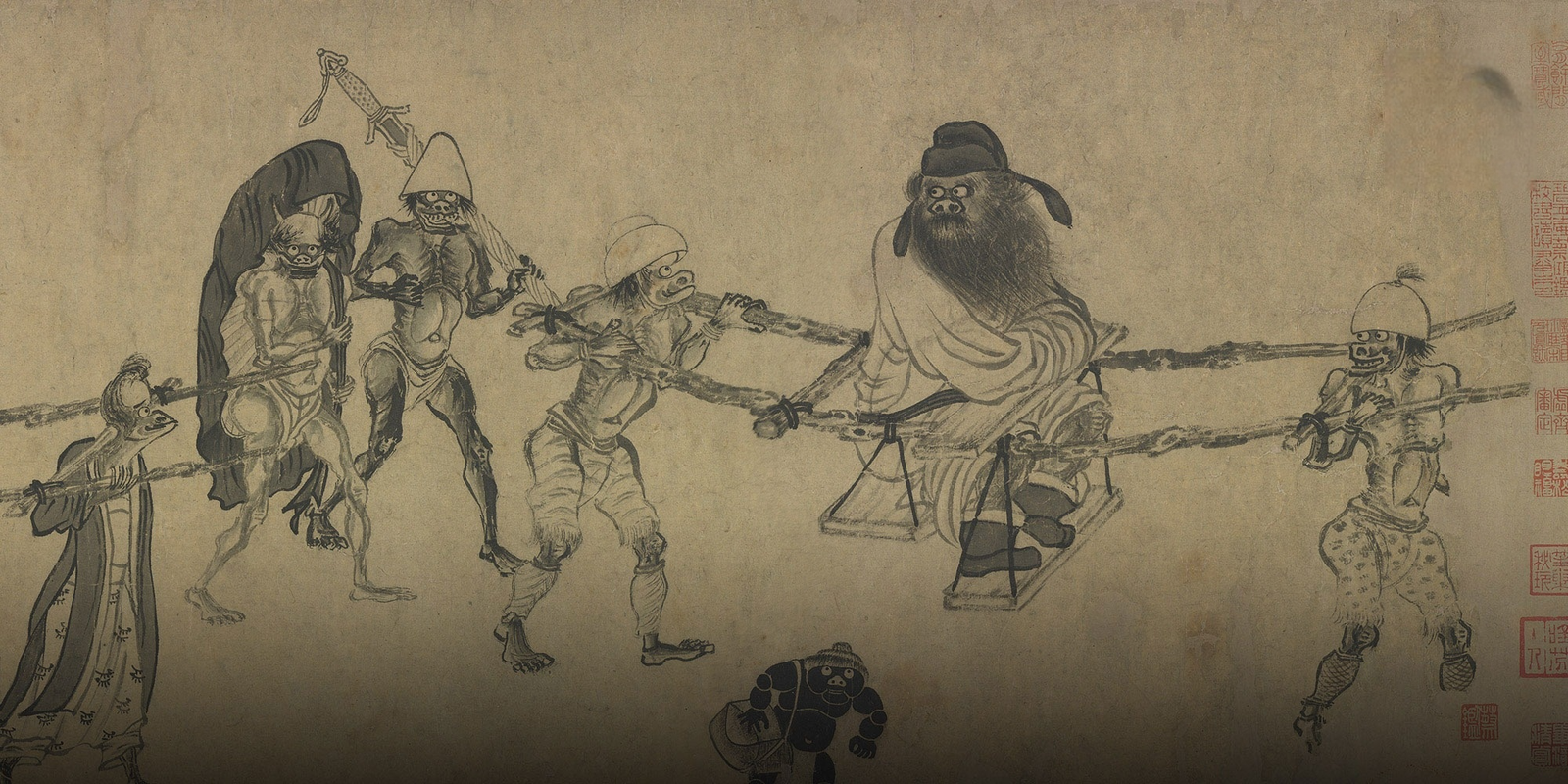
Some traditional customs sound as unsettling to modern readers as minghun, commonly translated as spirit marriage or ghost marriage. Historically, the practice has existed in various forms in parts of China. It involves arranging a marriage for a deceased person. For a few communities, such practices were connected to beliefs about family obligations, ancestry, and the social position of the deceased. A family might believe that an unmarried person who died young had left an important social or spiritual matter unresolved. Spirit marriage could therefore be understood as an attempt to address an incomplete family arrangement or provide the deceased with a recognised marital relationship in the afterlife.
In some cases, the arrangement involved two deceased people. Other historical accounts describe marriages between a deceased person and a living individual. Some stories from folklore also portray families haunted by an unmarried relative, mysterious wedding arrangements, or spirits believed to be dissatisfied with the way their lives ended. Spirit marriage is especially compelling because it connects the world of folklore with real human attempts to make sense of death, family duty, and unfinished lives.
Source: Dead When Wed: Ghost Marriages in China
5. Xuanwu: The Mysterious Black Tortoise and Serpent
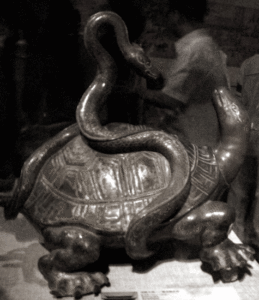
Not every mysterious figure in Chinese Folklore is an enemy of humanity. Some are protectors associated with cosmic order and spiritual power. One such figure is Xuanwu, whose name is often translated as the Dark Warrior or Black Warrior. In traditional iconography, Xuanwu is commonly represented as a tortoise entwined with a snake. The unusual image is striking. Two creatures combined into a single emblem of spiritual authority. Xuanwu is associated with the north and with water in traditional Chinese cosmological systems.
The figure is one of the Four Symbols, a group of celestial guardians associated with the cardinal directions. The other three are the Azure Dragon of the east, the Vermilion Bird of the south, and the White Tiger of the west. The tortoise has long been associated with longevity and endurance in Chinese cultural traditions, while the serpent contributes to the figure’s distinctive visual identity. Together, they form an emblem that is both protective and mysterious. In later traditions, Xuanwu was also known as Zhenwu, or the Perfected Warrior, and became a powerful protective deity.
Also Read: 5 Unsolved Mysteries That Continue to Baffle the World