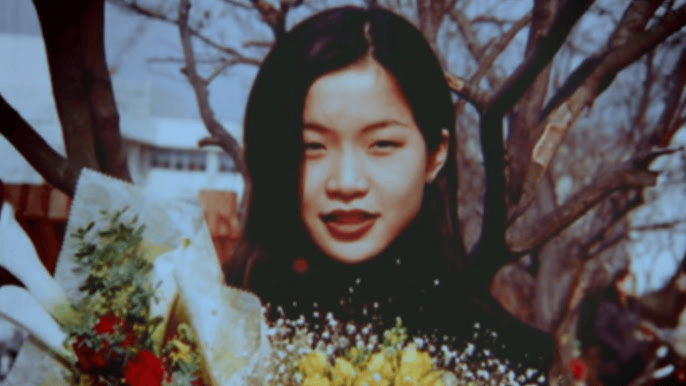
In the early hours of June 6, 2006, 28-year-old veterinary student Lee Yun-hee vanished from her apartment in Jeonju, South Korea, under circumstances that continue to puzzle investigators nearly two decades later. Despite extensive police investigations, forensic examinations, and renewed public interest over the years, no one has been charged in connection with her disappearance, and Lee has never been found.
Unlike many missing person cases, there was no confirmed sighting of Lee after she returned home from a gathering with her classmates. The lack of clear evidence, combined with several unusual findings inside her apartment, has made her case one of South Korea’s most enduring unsolved mysteries.
Also read: Austin Yogurt Shop Murders Gets a New DNA Breakthrough After 34 Years
Before the Disappearance

Lee Yun-hee was a fourth-year veterinary student at Jeonbuk National University, Jeonju, South Korea. Those who knew her described her as diligent, responsible, and focused on completing her studies. She was preparing for her future career as a veterinarian and had no known history of running away or cutting off contact with family and friends.
Just four days before her disappearance, Lee was the victim of a purse-snatching incident. On June 2, 2006, she was walking home after a tutoring session when A man on a motorcycle stole her handbag. The bag contained her valuables such as her mobile phone, wallet, official identification, daily schedule, and personal notes. Although investigators have never established a definitive link between the theft and her disappearance, the timing and the sensitive information contained in the organiser have kept the incident at the centre of discussions surrounding the case.
The Night Before She Vanished
On the evening of June 5, 2006, Lee attended an end-of-semester gathering with her fellow veterinary students. After spending several hours with classmates, she returned to her one-room apartment at around 2:30 a.m. in Jeonju during the early hours of June 6. One of her friends, “Kim” as named in some sources, walked her back to apartment that night to make sure she got home safely. After returning to her apartment, Lee briefly used her computer between 2:58 a.m. and 3:01 a.m., searching terms including “sexual harassment” and “112,” South Korea’s emergency police number. The computer remained on until 4:21 a.m. before shutting down.
When Lee could not be reached for several days, a group of concerned classmates went to her apartment to check on her. Inside, they found her dogs unattended and the room in disarray, with signs that she had left unexpectedly. Alarmed by the situation, they contacted both Lee’s parents and the police. Believing she was simply missing and unaware that the apartment might later be treated as a potential crime scene, the students cleaned parts of the room and removed some waste left by the dogs. Investigators later expressed concern that these well-intentioned actions may have inadvertently disturbed or destroyed valuable forensic evidence that could have aided the investigation.
Source: At 90, father resumes fight to find missing daughter
An Apartment Filled with Unanswered Questions
When investigators searched Lee’s apartment, they found no obvious signs of a violent struggle. However, several details immediately stood out. The apartment door was reportedly locked, and there was no indication that she had packed for a trip or intended to leave for an extended period. Investigators also noticed that a small tea table and a hammer were missing from the apartment. Another unusual discovery involved Lee’s computer. Investigators found that portions of her internet browsing history had been deleted after she returned home. Whether Lee deleted the records herself or someone else accessed the computer has never been established, adding another layer of uncertainty to the case.
The Investigation
Police launched an extensive search throughout Jeonju and interviewed classmates, professors, neighbours, and acquaintances in an effort to reconstruct Lee’s final known movements. Her phone records, financial activity, and personal relationships were carefully reviewed. Investigators found no evidence that she had planned to disappear voluntarily. There were no unusual bank withdrawals, travel arrangements, or messages suggesting that she intended to leave her life behind.
Authorities also examined the forensic evidence collected from her apartment, hoping advances in technology would provide new leads. However, despite repeated reviews over the years, none of the evidence has been sufficient to determine exactly what happened after Lee returned home. As time passed, the investigation gradually became a cold case, though police have periodically revisited it as forensic techniques have improved.
A Father’s Unwavering Search for Answers
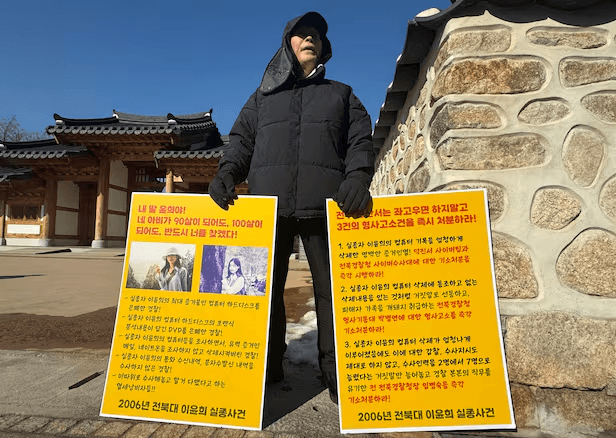
Nearly two decades after Lee Yun-hee disappeared, her family continues to fight for the truth. Her father, Lee Dong-se, now in his 90s, has refused to let the case fade from public memory. In 2024, he obtained access to portions of the police investigation records through a court order, believing they could reveal shortcomings in the original investigation. More recently, he resumed his one-man street protests in Jeonju, displaying a life-sized cutout of his daughter and carrying signs urging authorities to reopen the case with fresh eyes and modern forensic techniques.
One of his placards reads, “My daughter, Yun-hee. I will find you even when I’m 90, even when I’m 100.” He has also appealed to South Korea’s leadership to order a renewed investigation, maintaining that unanswered questions and alleged flaws in the initial inquiry deserve another look. Nearly twenty years on, his unwavering determination continues to symbolise a family’s enduring hope that someone, somewhere, still holds the key to solving Lee Yun-hee’s disappearance.
Also read: The Bradford Bishop Case: The Diplomat Who Vanished