For more than five years, John Darwin was believed to have drowned in the North Sea. His wife had mourned him, his sons believed their father was no more, and insurance claims had been made in the aftermath of his disappearance. Then, in December 2007, Darwin walked into a London police station and claimed he was a missing person suffering from amnesia.
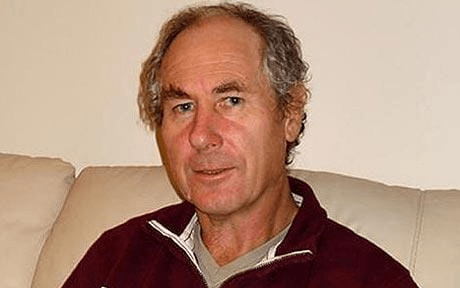
His unexpected return quickly became one of Britain’s most extraordinary fraud cases. Behind the story of a supposedly dead canoeist was a carefully maintained deception involving a staged disappearance, a secret life and a photograph that would eventually expose the truth.
Also Read: Son of Sam: How David Berkowitz Was Caught
The Disappearance That Fooled Everyone

On 21 March 2002, John Darwin disappeared while canoeing off the coast of Seaton Carew, near Hartlepool, in northeastern England. Search teams were deployed, but no body was recovered. A paddle was found in the sea, and the damaged remains of his canoe later washed ashore. The circumstances appeared to support the belief that Darwin had drowned.
In 2003, an inquest recorded an open verdict, and Darwin was officially declared dead. His wife, Anne Darwin, subsequently received money from life insurance policies, while the couple’s financial difficulties appeared to be behind them. But John Darwin had not died.
The disappearance was reportedly part of a scheme devised to escape mounting financial problems and obtain money through fraudulent insurance claims. While the outside world believed he was gone, Darwin remained hidden in a bedsit next door to the family home. His wife played a role in maintaining the deception, allowing the couple to sustain the appearance of a bereaved family.
Source: Timeline: John Darwin Scandal – The Conman and the Canoe
A New Life in Panama and a Photograph That Changed Everything

As the deception continued, the couple began planning a future away from Britain. They eventually turned their attention to Panama, where they hoped to build a new life together. Their plans, however, depended on keeping their secret intact. In 2006, a photograph showing John and Anne together at a property agency in Panama was taken. In hindsight, it would become the evidence that unravelled their carefully constructed story.
On December 2007, Darwin walked into Central police station in London and told officers that he believed he was a missing person. He claimed to have no memory of the preceding years, presenting his return as an unexplained break in his life rather than a deliberate deception. His appearance attracted enormous public attention. Yet his story soon came under scrutiny, and the investigation uncovered evidence of his life after the supposed drowning.
The Panama photograph proved particularly damaging. Published after being discovered online, it showed that Darwin and his wife had been together long after he was officially presumed dead. It directly undermined the account that had supported the insurance claims and exposed the scale of their deception.
The Investigation, Trial and Consequences
Once the deception was exposed, both John and Anne Darwin faced criminal proceedings. John admitted several charges involving obtaining money by deception and an offence connected with obtaining a passport. Anne denied the charges against her and argued that her husband had coerced her into participating in the scheme. Her defence did not persuade the jury. In July 2008, Anne was convicted of six counts of deception and nine counts of money laundering. John was sentenced to six years and three months in prison, while Anne received a sentence of six years and six months.
Source: Death, fraud and canoes: how a mind-blowing insurance scam became an ITV drama
The case also exposed the personal damage behind the financial crime. Their sons had spent years grieving for a father who was alive, while their mother’s involvement in the deception destroyed their trust. The authorities subsequently pursued the recovery of the money obtained through the scheme. In 2015, the Crown Prosecution Service announced that a further £40,000 had been recovered from John Darwin’s pension, bringing the total recovered from the couple to more than £541,000.
The case became widely known as the Canoe Man scandal, a name that captured its most unbelievable element. A man who had convinced the world he was dead, only to return years later and help reveal his own deception. What ultimately brought the scheme down was not a dramatic confession or a recovered body. It was evidence that contradicted the story the Darwins had spent years maintaining.
Also Read: Sudiksha Konanki: The Disappearance at a Spring Break Trip