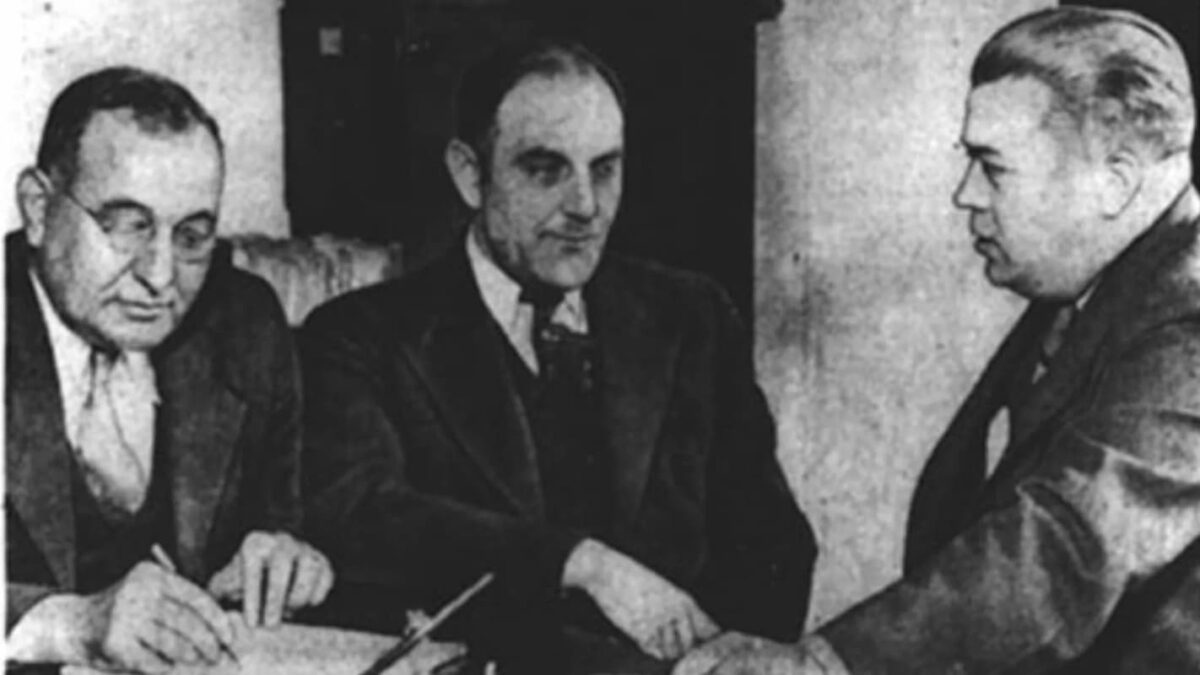
History has seen its fair share of notorious criminals, but few relied on charm and persuasion as effectively as Victor Lustig. Often regarded as one of the greatest con artists of the twentieth century, Lustig became internationally famous for orchestrating one of history’s most audacious frauds by convincing a scrap metal dealer that he had the legal authority to sell the Eiffel Tower. Remarkably, he attempted the scheme twice.
Unlike criminals remembered for violence, Lustig built his reputation through deception, confidence, and an extraordinary understanding of human psychology. His story continues to fascinate historians and criminologists, offering insight into how trust, ambition, and opportunity can be manipulated for personal gain.
Victor Lustig’s extraordinary life has been documented in books, historical archives, and reference works, including James F. Johnson’s The Man Who Sold the Eiffel Tower (1961).
Also read: Where Did Brandon Swanson Go?
Early Life
Victor Lustig was born in 1890, in the Austrian-Hungarian town of Hostinné, now part of the Czech Republic. He was sent to a boarding school in Dresden, Germany by his father where he studied languages. While relatively little is known about his early years, historians agree that he was highly intelligent, well-educated, and fluent in several languages. These abilities allowed him to blend effortlessly into different social circles across Europe. Rather than using threats or violence, Lustig relied on polished manners, impeccable dressing, and convincing conversation to gain the confidence of wealthy businessmen and influential individuals.
As his criminal career evolved, Lustig entered the world of gambling under the guidance of American gambler Nicky Arnstein. The two regularly travelled on transatlantic ocean liners, where Lustig targeted wealthy travellers through gambling scams. However, the outbreak of World War I disrupted these voyages, prompting him to settle in Paris temporarily before later returning to the United States.
Source: EBSCO Victor Lustig
The Eiffel Tower Scam
In the mid-1920s, newspapers in France frequently discussed the rising maintenance costs of the Eiffel Tower. Built for the 1889 World’s Fair, the iron structure required expensive repairs, leading to public debate over its future. Lustig recognised an opportunity where others saw only speculation. In 1925, he forged official government documents and posed as a senior official from the French Ministry of Posts and Telegraphs. He invited several respected scrap metal dealers to a luxury hotel in Paris, disguised himself as a Deputy Director-General of the Ministry Of Posts and Telegraphs, and informed them that the government had secretly decided to dismantle the Eiffel Tower and sell it for scrap.
To make the proposal believable, Lustig insisted that the negotiations remain confidential until an official announcement could be made. The secrecy gave the impression that the dealers were being offered an exclusive business opportunity.
Among those invited was scrap dealer André Poisson, who hoped to establish himself within Paris’s competitive scrap industry. Lustig quickly recognised Poisson’s ambition and subtly suggested that securing the contract would require an unofficial payment. Convinced that he was dealing with a genuine government representative, Poisson paid both the purchase price and the requested bribe. Only after Lustig had disappeared did Poisson realise he had been defrauded. Embarrassed by the incident, he chose not to report the crime immediately, allowing Lustig to leave France without attracting police attention.
Source: The con man who sold the Eiffel Tower — twice
Attempting the Impossible Again
Most criminals would have considered such a remarkable fraud impossible to repeat. Lustig, however, believed otherwise.
Within weeks, he returned to Paris and organised a second attempt using the same strategy. Once again, he contacted a new group of scrap metal dealers, presented forged government credentials, and claimed that the Eiffel Tower was to be sold for demolition. This time, however, one prospective buyer became suspicious and alerted the authorities. Before police could arrest him, Lustig fled France, ending what remains one of history’s most astonishing confidence schemes.
Other Famous Frauds
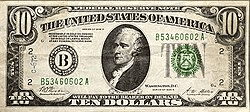
One of his most successful schemes involved selling a machine he claimed could duplicate currency, the Rumanian Box. During demonstrations, the device appeared to produce genuine banknotes after several hours. In reality, the machine had been secretly loaded with authentic bills beforehand. By the time buyers discovered that it could not actually create money, Lustig had already disappeared with their payment. After relocating to the United States, he expanded his criminal activities into large-scale counterfeiting. According to historical records, his organisation produced thousands of dollars in counterfeit currency during the early 1930s, attracting the attention of federal investigators.
Arrest and Final Years
For years, Victor Lustig successfully avoided capture by frequently changing identities and travelling across Europe and North America. Robert V. Miller was however his real name as most commonly recorded by law enforcement and prison officials. His criminal career finally came to an end in 1935, when federal authorities in the United States arrested him. Lustig was convicted on counterfeiting-related offences and sentenced to prison. He was eventually transferred to Alcatraz Federal Penitentiary before later being moved to the United States Medical Center for Federal Prisoners in Springfield, Missouri due to declining health. However, he later died from pneumonia on March 11, 1947, caused by a complication of a brain abscess.
Legacy
Victor Lustig’s life is a fascinating example of how intelligence and persuasion can be used for the wrong reasons. From the meticulously curated counterfeiting operations to the infamous Eiffel Tower scam, his schemes left a lasting mark on criminal history. While his methods were far from admirable, his story remains one of the most unusual and widely remembered cases of fraud ever recorded.
Also read: Bryan Kohberger Case: An Overview