Imagine receiving a letter from an unknown person who seems to know your private conversations, personal secrets, and movements. At first, you might dismiss it as a cruel prank. But what if it contained threats, accusations, and details that only someone close to you could know? For the residents of Circleville, Ohio, this was not a fictional nightmare. For years, an anonymous letter writer turned an otherwise quiet community into a place of suspicion and fear.

Beginning in the 1970s, mysterious letters began arriving at homes, workplaces, and public offices. Their contents were deeply personal, sometimes threatening and often disturbingly specific. The writer appeared to know things about people’s private lives that should never have been public knowledge. This became known as the Circleville Letters case, one of America’s strangest anonymous harassment mysteries. Even more unsettling, the letters did not simply disappear when authorities became involved. They continued for years, drawing new people into a mystery that would eventually involve an alleged conspiracy, a criminal conviction, and questions that remain fascinating decades later.
Also Read: The 1982 Chicago Tylenol Murders
The Beginning: A Town Receives a Disturbing Message


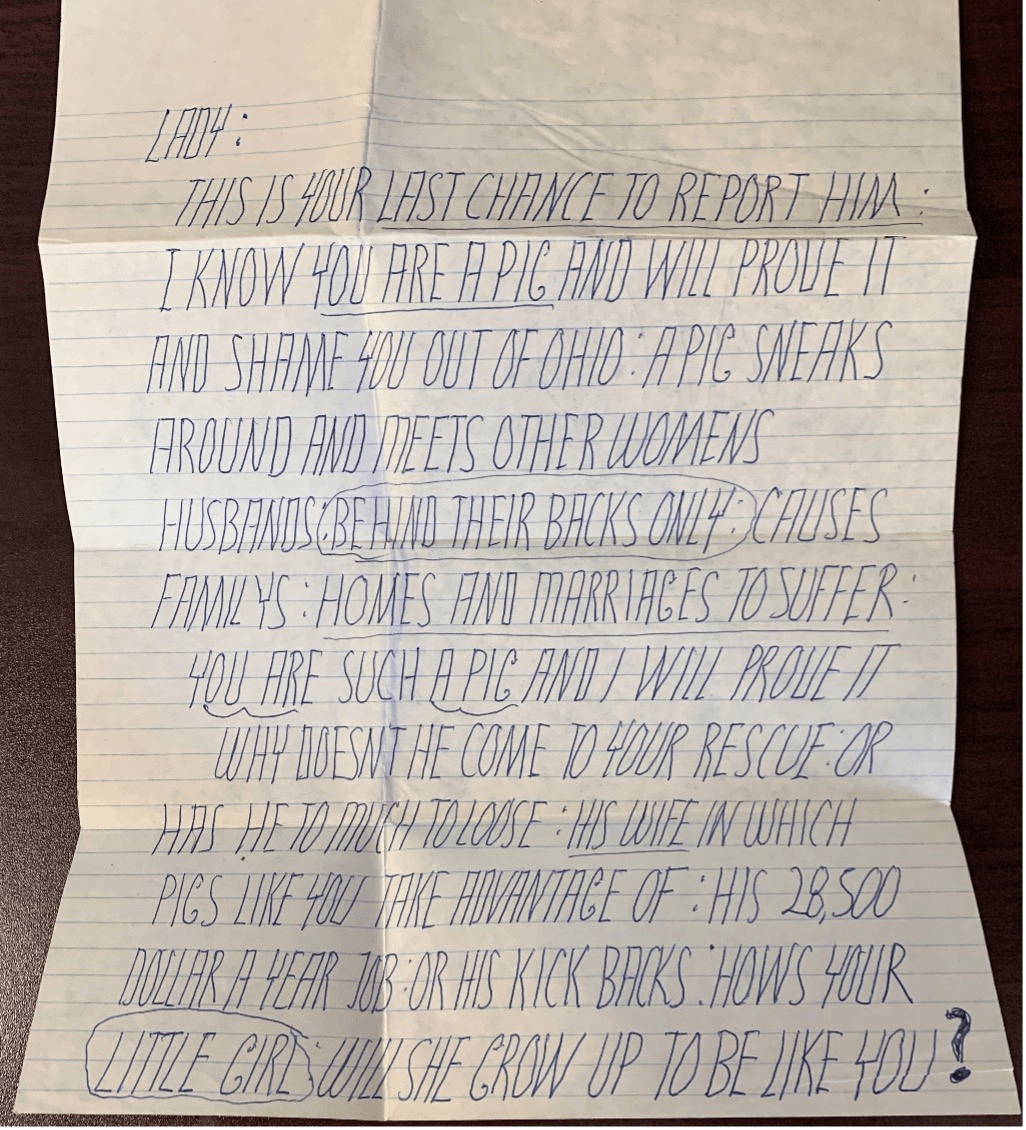
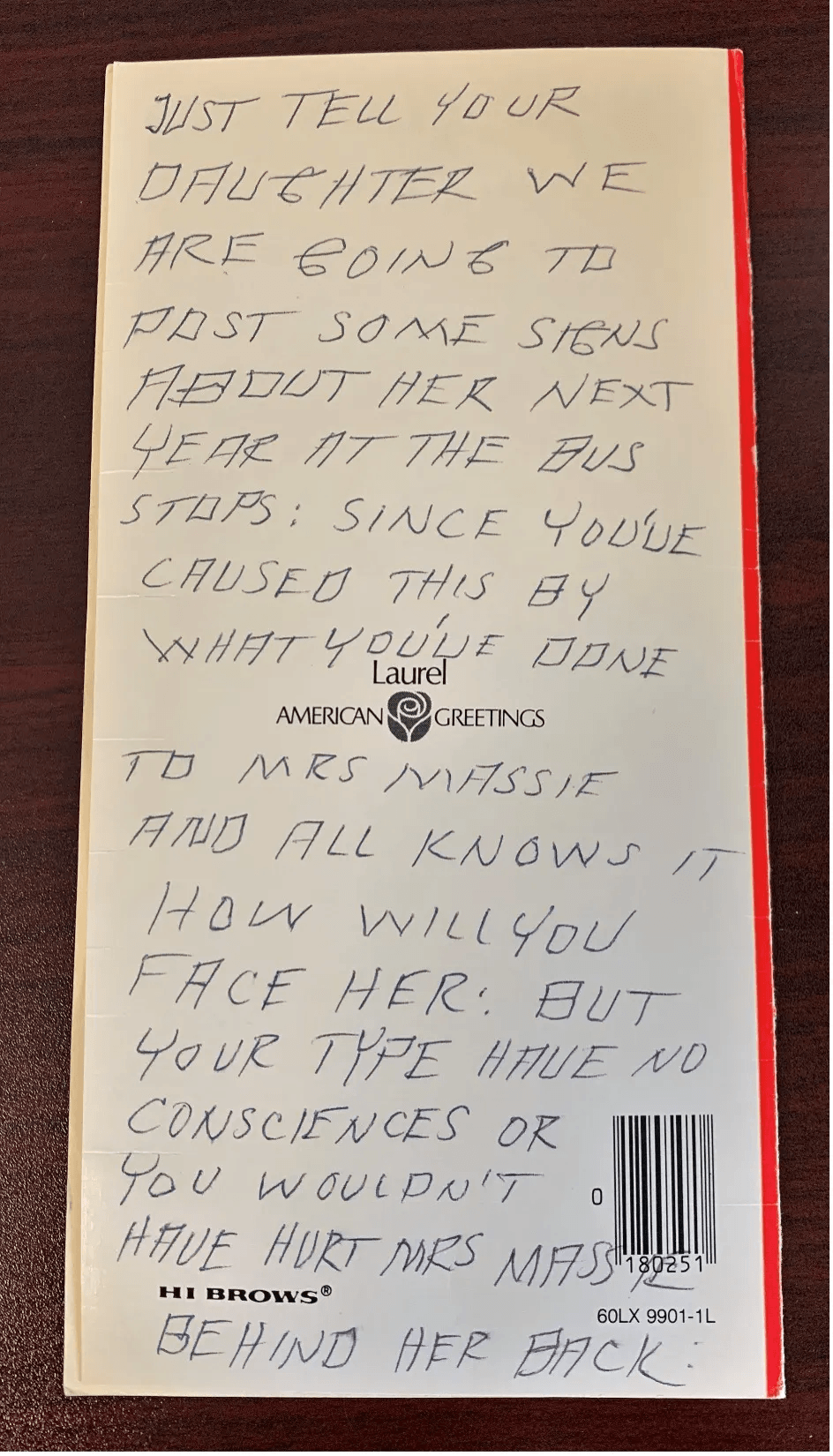
The mystery began around 1976, when residents of Circleville started receiving anonymous letters. These were not ordinary complaints or random pieces of hate mail. The writer seemed to possess intimate knowledge of the people being targeted. One of the earliest and most prominent targets was Mary Gillispie, a local school bus driver. The letters accused Mary of having an affair with Gordon Massie, the superintendent of the local school district. The accusations were deeply personal, and the letters appeared designed to damage relationships within the community. One letter to Mary Gillispie reads:
“Lady:
This is your last chance to report him: I know you are a pig and will prove it and shame you out of Ohio: A pig sneaks around and meets other womens husbands behind their backs, causes families and homes and marriages to suffer:”

They also warned her husband, Ron Gillispie, to investigate his wife’s alleged relationship. The writer wrote to Ronald Gillispie:
“You should catch them together and kill them both.”
Source: INFAMOUS: Circleville Letters
Ron Gillispie’s Mysterious Death

The incident took a tragic turn in December 1976. Ron Gillispie died in a single-vehicle car accident after his vehicle left the road and crashed. His death became closely associated with the letter controversy because of the circumstances leading up to the accident. According to accounts related to this case, Ron had received threatening correspondence and was deeply troubled by the accusations concerning his wife. He reportedly believed he knew who was responsible and was determined to confront the person.

The Letters Become More Threatening
As the years passed, the letters expanded beyond the accusations involving Mary and Ron. Other Circleville residents also became targets. The writer sent messages containing allegations about affairs, family matters, and supposed secrets. Some letters threatened to expose private information, while others appeared intended to frighten recipients into changing their behaviour. This persistent harassment continued over an extended period. Despite the growing attention, the writer remained difficult to identify.
Source: The Circleville letters: You’ve got hate mail
The letter not only created psychological pressure but also created suspicion between people who had previously known one another. The letters appeared handwritten and sometimes typed. Their contents suggested that the writer was not simply interested in one isolated accusation but was determined to maintain a prolonged campaign of intimidation. For Circleville, the question was no longer just who had written the first letter. It was who had been behind the entire campaign.
The Booby-Trapped Sign And An Attempt to Silence Mary

One of the most alarming incidents occurred in 1983. Mary Gillispie noticed a sign along her regular school bus route. The sign contained a message directed at her, and its presence immediately raised concerns because of the threatening correspondence she had received over the years. The situation became even more disturbing when a concealed mechanism involving a firearm was discovered near the sign. The device had reportedly been arranged so that someone interacting with the sign could trigger the weapon. Mary contacted authorities, and the discovery transformed the investigation. The anonymous letters were no longer merely a campaign of harassment. Investigators were now dealing with an apparent attempt to murder. The device became one of the most important pieces of evidence in the Circleville investigation.
Paul Freshour: The Man Accused of Sending the Letters
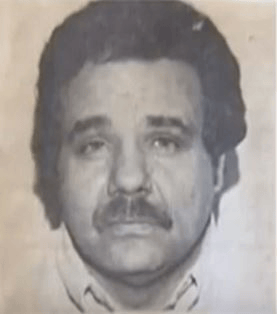
The investigation focused on Paul Freshour, Mary’s brother-in-law, who was married to her sister. Freshour became a central figure in the case after investigators connected him to the booby-trapped device. Authorities believed he was responsible for the attempted attack on Mary and that he was also connected to the anonymous letters. The investigation included evidence relating to the construction of the device and the correspondence.
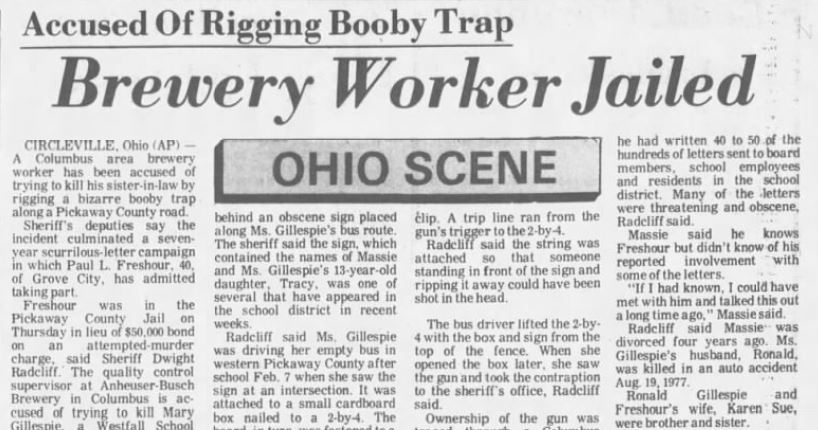
Later, a typewriter associated with Freshour became part of the prosecution’s case. However, Freshour denied being the anonymous writer and maintained that he had been wrongly accused. But the case proceeded to trial. In 1984, he was convicted of attempted murder in connection with the booby-trapped sign and sentenced to prison. His conviction gave the investigation a legal outcome, but it did not resolve every question surrounding the Circleville letters.
Letters Continued After Paul Freshour’s Arrest
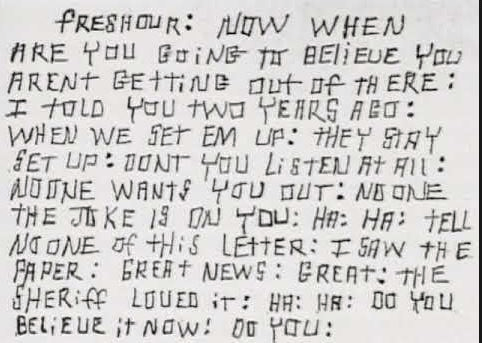
The most fascinating aspect of the Circleville letters case emerged after Freshour was imprisoned. Reports of anonymous letters continued even after his conviction and incarceration. This created an extraordinary problem for investigators. Several possibilities were discussed over the years, which sparked more questions. Either the letters were written by someone else who had access to information about the victims, or Freshour may have been responsible for some incidents without being the sole author. Freshour was eventually released from prison in 1994 after serving approximately ten years. He continued to deny responsibility for the crimes.
What Happened to the Circleville Letters?
For years, the Circleville letters created an atmosphere of suspicion and fear in a small American town. The messages exposed private matters and became connected to an attempted murder investigation. Paul Freshour was convicted in connection with the booby-trapped sign, but the broader mystery of the letters was never fully resolved. The correspondence eventually faded, but it remains unclear when the mysterious writer sent the final message. No definitive explanation has been established about the person responsible for every letter or why the campaign eventually stopped. The Circleville Letters case is a reminder that a mystery does not always begin with a disappearance or an unexplained death. Sometimes, it begins with an envelope arriving in someone’s mailbox.
Also Read: The Dorothy Jane Scott Murder: The Mystery of the Unknown Caller