For more than a year, a gunman moved through New York City at night, shooting people seemingly at random. He often targeted young couples sitting in parked cars, leaving investigators with few clues and a city increasingly afraid of becoming his next target.
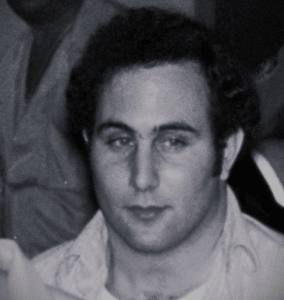
The killer became known as the Son of Sam, a name taken from a strange letter sent to police during the investigation. Behind the nickname was David Berkowitz, a postal worker from Yonkers whose shooting spree ultimately left six people dead and several others seriously wounded.
Also Read: Michelle Martinko Murder: The 39-Year Cold Case Solved
The Son of Sam Shootings
The fatal attacks began on July 29, 1976, in the Bronx. Donna Lauria (18) was sitting in a parked car with her friend Jody Valenti (19) when a gunman approached the vehicle and opened fire. Lauria was killed, while Valenti survived. Over the following months, similar shootings occurred in Queens and the Bronx. Berkowitz generally approached young people sitting in or near parked cars and fired without warning. Several victims survived their injuries, although some were left with permanent disabilities.
The attacks created a growing sense of fear across New York. Police struggled to determine whether the shootings were connected, while newspapers closely followed the case. Because several of the victims were young women with dark hair, some women began changing their hairstyles or avoiding going out at night. On April 17, 1977, Berkowitz killed Valentina Suriani (18) and Alexander Esau (20) in the Bronx. A letter left near the scene was addressed to one of the captains of the NYPD. In it, the gunman referred to himself as the “Son of Sam,” giving the case its infamous name.
Source: David Berkowitz
The Final Attack
The final known shooting took place on July 31, 1977, in Brooklyn. Berkowitz approached a parked car containing Stacy Moskowitz (20) and Robert Violante (20). Moskowitz was fatally wounded and died the following day. Violante survived but suffered devastating injuries to his vision.
However, the attack gave investigators an important new lead. An eyewitness reported seeing a man carrying what appeared to be a gun near the scene and also remembered police officers issuing parking tickets in the area. Investigators began examining the tickets issued that night. One of them had been given to a vehicle belonging to David Berkowitz.
How Police Caught David Berkowitz
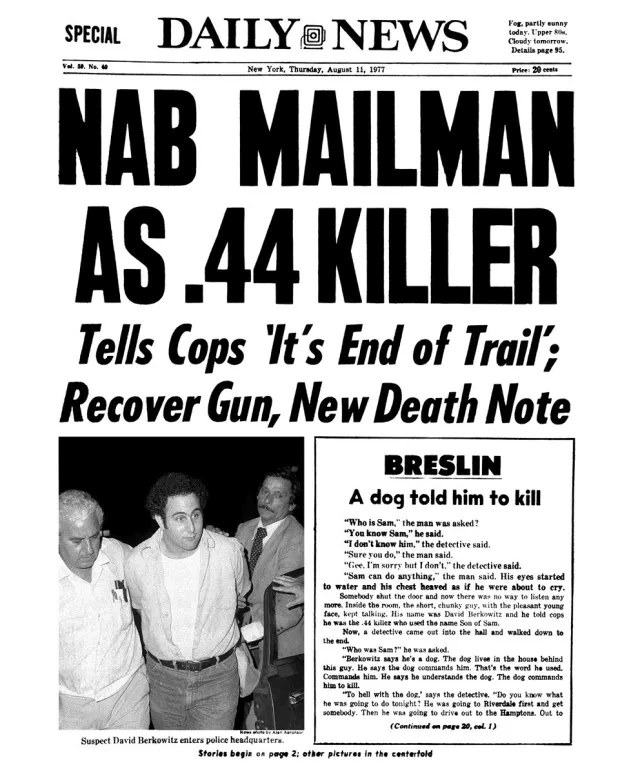
The parking ticket wasn’t the only clue pointing to Berkowitz. Police in Yonkers had also been investigating him because of strange harassment and threatening letters involving his neighbours. One of those neighbours was Sam Carr, whose name would later become central to Berkowitz’s bizarre explanation for the shootings.
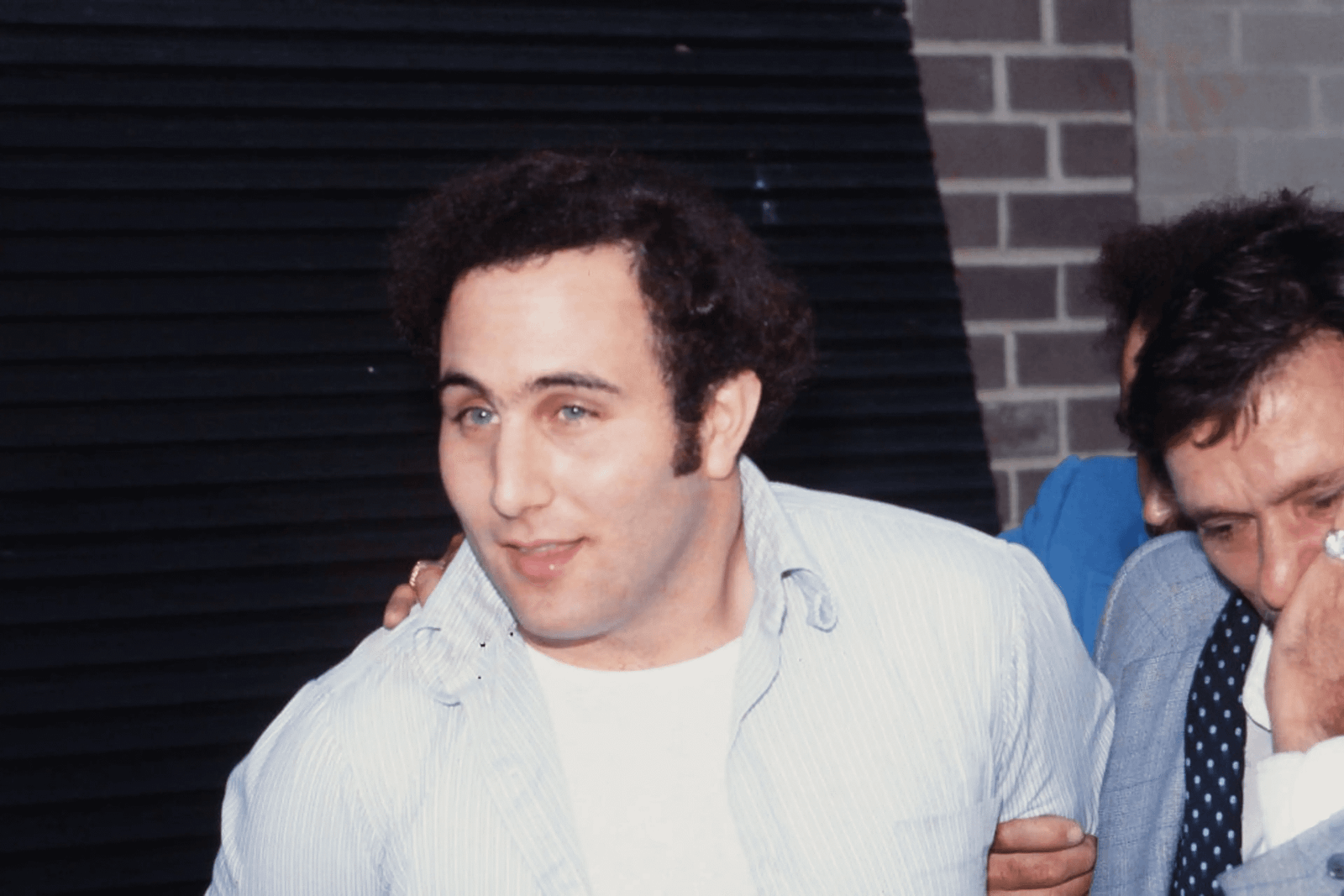
Investigators connected the Yonkers information with the vehicle identified through the Brooklyn parking ticket. On August 10, 1977, police arrested him outside his Yonkers apartment. A .44-calibre revolver was found in his possession, along with other evidence that connected him to the shootings. The year-long manhunt was over.
Source: David Berkowitz
The Strange “Son of Sam” Explanation
After his arrest, Berkowitz initially offered a bizarre explanation for his crimes. He claimed that he had received orders to kill from a demonic force associated with his neighbour Sam Carr and Carr’s black Labrador retriever. The story drew enormous attention and became one of the case’s most notorious aspects. Berkowitz later pleaded guilty to the murders and did not rely on the demonic explanation as a legal defence. During his 1978 guilty plea, he acknowledged that he had known the killings were wrong and said that his purpose had been to kill his targets.
Trial and Sentence
Berkowitz pleaded guilty in May 1978 to the six murders. He was sentenced the following month to six consecutive sentences of 25 years to life, the maximum sentence available for each second-degree murder under New York law at the time. The case also had a lasting effect beyond Berkowitz’s imprisonment. New York’s “Son of Sam” law was designed to prevent criminals from financially benefiting from accounts of their crimes.
More than four decades later, the Son of Sam case remains one of the most recognisable criminal investigations in New York history. What began as a series of seemingly random shootings eventually ended with investigators linking a parking ticket, a suspicious vehicle and a separate investigation in Yonkers to the man behind the attacks.
Also Read: Richey Edwards: The Musician Who Vanished