

In the early hours of June 6, 2006, 28-year-old veterinary student Lee Yun-hee vanished from her apartment in Jeonju, South Korea, under circumstances that continue to puzzle investigators nearly two decades later. Despite extensive police investigations, forensic examinations, and renewed public interest over the years, no one has been charged in connection with her disappearance, and Lee has never been found.
Unlike many missing person cases, there was no confirmed sighting of Lee after she returned home from a gathering with her classmates. The lack of clear evidence, combined with several unusual findings inside her apartment, has made her case one of South Korea’s most enduring unsolved mysteries.
Also read: Austin Yogurt Shop Murders Gets a New DNA Breakthrough After 34 Years
Lee Yun-hee Before the Disappearance

Lee Yun-hee was a fourth-year veterinary student at Jeonbuk National University, Jeonju, South Korea. Those who knew her described her as diligent, responsible, and focused on completing her studies. She was preparing for her future career as a veterinarian and had no known history of running away or cutting off contact with family and friends.
Just four days before her disappearance, Lee was the victim of a purse-snatching incident. On June 2, 2006, she was walking home after a tutoring session when A man on a motorcycle stole her handbag. The bag contained her valuables such as her mobile phone, wallet, official identification, daily schedule, and personal notes. Although investigators have never established a definitive link between the theft and her disappearance, the timing and the sensitive information contained in the organiser have kept the incident at the centre of discussions surrounding the case.
The Night Before She Vanished
On the evening of June 5, 2006, Lee attended an end-of-semester gathering with her fellow veterinary students. After spending several hours with classmates, she returned to her one-room apartment at around 2:30 a.m. in Jeonju during the early hours of June 6. One of her friends, “Kim” as named in some sources, walked her back to apartment that night to make sure she got home safely. After returning to her apartment, Lee briefly used her computer between 2:58 a.m. and 3:01 a.m., searching terms including “sexual harassment” and “112,” South Korea’s emergency police number. The computer remained on until 4:21 a.m. before shutting down. When Lee could not be reached for several days, a group of concerned classmates went to her apartment to check on her. Inside, they found her dogs unattended and the room in disarray, with signs that she had left unexpectedly. Alarmed by the situation, they contacted both Lee’s parents and the police. Believing she was simply missing and unaware that the apartment might later be treated as a potential crime scene, the students cleaned parts of the room and removed some waste left by the dogs. Investigators later expressed concern that these well-intentioned actions may have inadvertently disturbed or destroyed valuable forensic evidence that could have aided the investigation.
Source: At 90, father resumes fight to find missing daughter
An Apartment Filled with Unanswered Questions
When investigators searched Lee’s apartment, they found no obvious signs of a violent struggle. However, several details immediately stood out. The apartment door was reportedly locked, and there was no indication that she had packed for a trip or intended to leave for an extended period. Investigators also noticed that a small tea table and a hammer were missing from the apartment. Another unusual discovery involved Lee’s computer. Investigators found that portions of her internet browsing history had been deleted after she returned home. Whether Lee deleted the records herself or someone else accessed the computer has never been established, adding another layer of uncertainty to the case.
The Investigation
Police launched an extensive search throughout Jeonju and interviewed classmates, professors, neighbours, and acquaintances in an effort to reconstruct Lee’s final known movements. Her phone records, financial activity, and personal relationships were carefully reviewed. Investigators found no evidence that she had planned to disappear voluntarily. There were no unusual bank withdrawals, travel arrangements, or messages suggesting that she intended to leave her life behind. Authorities also examined the forensic evidence collected from her apartment, hoping advances in technology would provide new leads. However, despite repeated reviews over the years, none of the evidence has been sufficient to determine exactly what happened after Lee returned home. As time passed, the investigation gradually became a cold case, though police have periodically revisited it as forensic techniques have improved.
A Father’s Unwavering Search for Answers
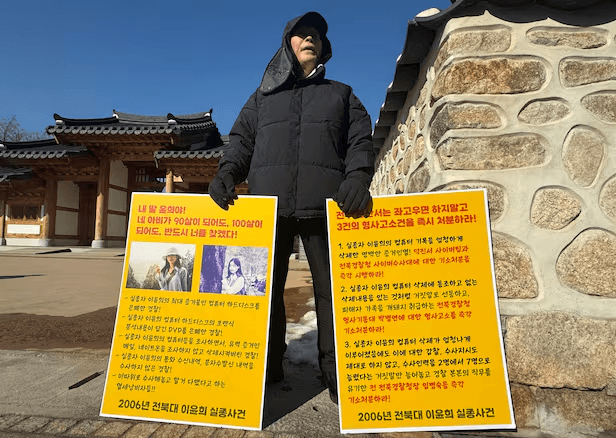
Nearly two decades after Lee Yun-hee disappeared, her family continues to fight for the truth. Her father, Lee Dong-se, now in his 90s, has refused to let the case fade from public memory. In 2024, he obtained access to portions of the police investigation records through a court order, believing they could reveal shortcomings in the original investigation. More recently, he resumed his one-man street protests in Jeonju, displaying a life-sized cutout of his daughter and carrying signs urging authorities to reopen the case with fresh eyes and modern forensic techniques. One of his placards reads, “My daughter, Yun-hee. I will find you even when I’m 90, even when I’m 100.” He has also appealed to South Korea’s leadership to order a renewed investigation, maintaining that unanswered questions and alleged flaws in the initial inquiry deserve another look. Nearly twenty years on, his unwavering determination continues to symbolise a family’s enduring hope that someone, somewhere, still holds the key to solving Lee Yun-hee’s disappearance.
Also read: The Bradford Bishop Case: The Diplomat Who Vanished
Austin Yogurt Shop Murders Gets a New DNA Breakthrough After 34 Years
The Yogurt Shop murders is one of the most complicated and controversial case investigations in Texas history. The investigation involved confessions, overturned convictions, unidentified DNA, and decades of unanswered questions. This article will dive into what really happened inside the shop that night and who was responsible.
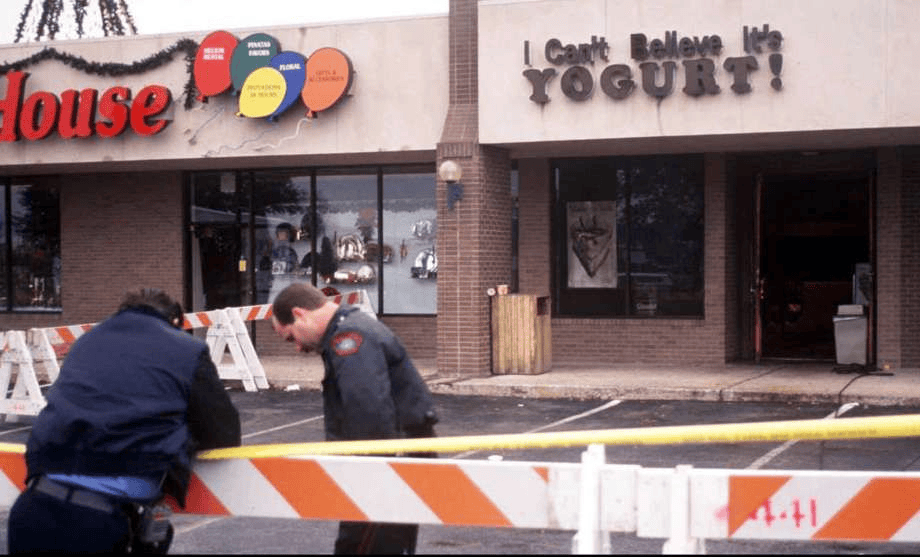
The lights inside the yogurt shop in Austin, Texas, should have gone dark like any other Friday night. Instead, shortly before midnight, smoke began rising from the building. Firefighters entered the I Can’t Believe It’s Yogurt! shop on West Anderson Lane, where they discovered that the fire was hiding something more sinister. Four teenage girls had been brutally killed inside. There was no clear motive, no obvious explanation, no known suspect, and no possible answers.
Also Read: The Bradford Bishop Case: The Diplomat Who Vanished
A Quiet Closing Shift at the Yogurt Shop that Ended in Horror
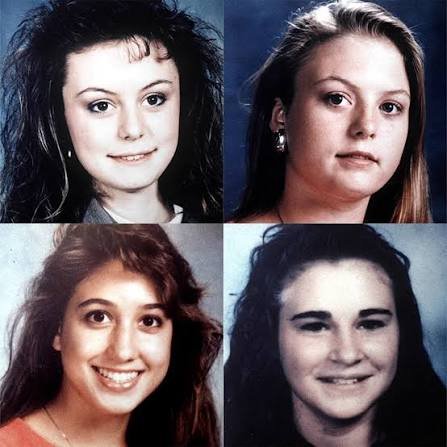
Just like any other ordinary night, on December 6, 1991, 17-year-old Jennifer Harbison and 17-year-old Eliza Thomas were working the closing shift at the I Can’t Believe It’s Yogurt! shop. Jennifer’s 15-year-old sister, Sarah Harbison, and their 13-year-old friend, Amy Ayers, had also come to the shop. But shortly after, something went terribly wrong. At approximately 11:47 pm, emergency services received reports of a fire at the yogurt shop. Firefighters arrived, entered the building, and found out that a major homicide had taken place. Inside, they found dead bodies of four teenage girls. The victims were found together in the rear area of the shop, and the fire had significantly damaged the crime scene.
According to the investigators, all four had been killed before the fire was deliberately started, apparently in an attempt to destroy evidence. This case became exceptionally difficult from the beginning. The fire had badly compromised the crime scene. Heat, smoke, water, and structural damage complicated the recovery of evidence, leaving investigators to reconstruct the final moments inside the shop from what little remained.
Four Men Arrested, But Were They the Real Killers?
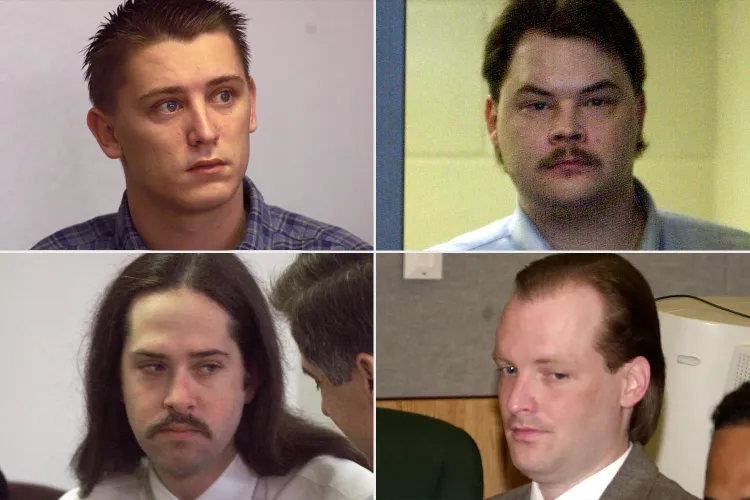
Years after the murders, the investigation took a massive turn. In 1999, Austin police arrested four men, Robert Springsteen, Michael Scott, Maurice Pierce, and Forrest Welborn. Authorities believed the four had been involved in the crime. Two of them, Springsteen and Scott, gave statements after long sessions of interrogation that prosecutors treated as confessions. The strength of that evidence varied significantly between the four men.
Maurice Pierce: Police suspected Pierce after his 1991 arrest on an unrelated weapons charge. A gun associated with him was initially considered potentially significant. Investigators also believed that Pierce and the other three men were connected socially. However, the weapon was not conclusively matched to the murders. Pierce did not provide the kind of confession used against Springsteen and Scott.
Forrest Welborn: Welborn became a suspect because of his association with the others and statements gathered during the investigation. Prosecutors presented the case to two grand juries, but both declined to indict him, indicating that the evidence against him was considered insufficient to move forward. He was eventually released.
Robert Springsteen: The most important evidence against Springsteen was a videotaped confession obtained during a lengthy police interrogation. Investigators said his account contained details connected to the crime scene. However, there was no physical or DNA evidence conclusively linking him to the crime scene.
Michael Scott: Scott also gave a confession after an extended interrogation. His statements became a central part of the prosecution’s case.
Both Springsteen and Scott later withdrew their confessions and claimed they had been pressured during lengthy interrogations. The central problem with the arrests was that the case relied heavily on their confessions rather than forensic evidence. Later, Robert Springsteen was convicted and sentenced to death, and Michael Scott was also convicted and received a life sentence. For a time, it appeared that the Austin yogurt shop murders had finally been solved. But the case began to unravel further. The DNA testing created an even greater complication. Male DNA recovered from evidence connected to the crime scene did not match Springsteen, Scott, Pierce, or Welborn. Eventually, the convictions against Springsteen and Scott were overturned. The charges against them were dismissed in 2009.
Source: How DNA Solved the Yogurt Shop Murders
Mysterious DNA Recovered from the Evidence of the Yogurt Shop Murders
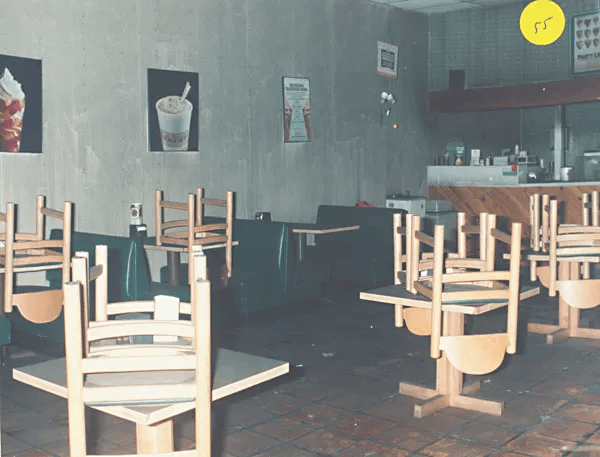
An unidentified male DNA profile became one of the most important remaining elements of the investigation. When the murders occurred in 1991, forensic DNA technology was still developing. The scientific tools available to investigators were far more limited than those used today. However, the evidence from the yogurt shop remained preserved. A detective assigned to the case took an important step. First, a .380-caliber cartridge casing recovered from a drain inside the yogurt shop was submitted to the National Integrated Ballistic Information Network (NIBIN). This national database helps investigators identify possible links between firearms and different crimes. Investigators also requested that biological evidence from the case undergo newer and more sensitive DNA testing.
The DNA Breakthrough That Reveals a New Suspect
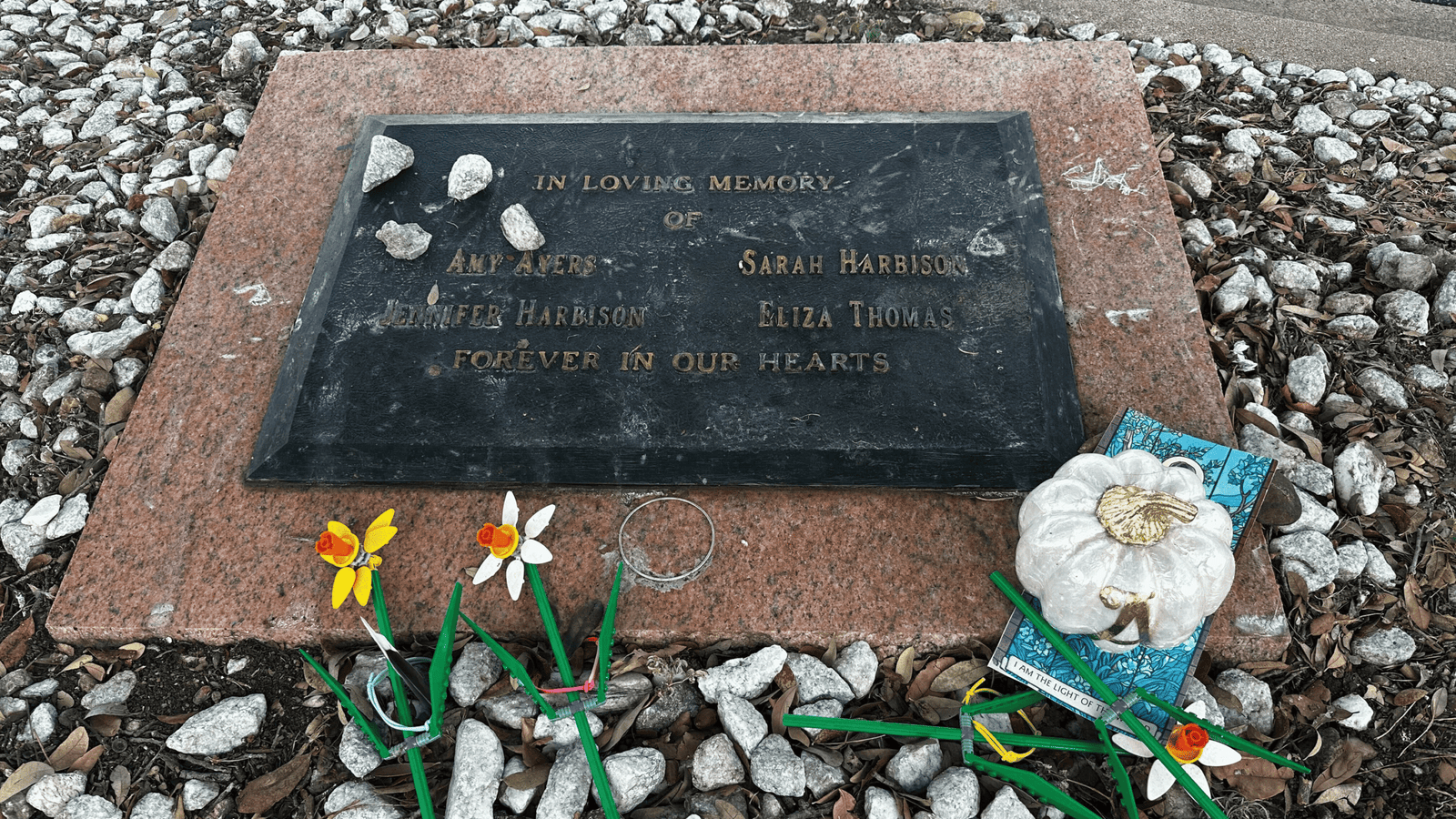
A massive breakthrough came on August 22, 2025. Forensic scientists matched DNA recovered from underneath Amy Ayers’ fingernails to a genetic profile connected to a 1990 sexual assault and murder in South Carolina. The profile was identified as belonging to Robert Eugene Brashers, a suspected serial offender who died in 1999. The investigators also had another piece of evidence. The .380-caliber casing recovered from the yogurt shop was forensically linked through distinctive markings to a handgun associated with Brashers. The weapon had been recovered following his death in Missouri in 1999.
The DNA that helped identify Brashers had survived beneath Amy’s fingernails for more than three decades. Authorities believe it was preserved because she had fought her attacker. After the breakthrough was announced, Detective Dan Jackson credited Amy with providing the evidence that ultimately helped investigators reach an answer. He said that her resistance during the attack had preserved the crucial DNA evidence that pointed investigators toward Brashers. After more than three decades of false leads, the case had finally been transformed by evidence that had been present from the beginning.
Who was Robert Eugene Brashers?
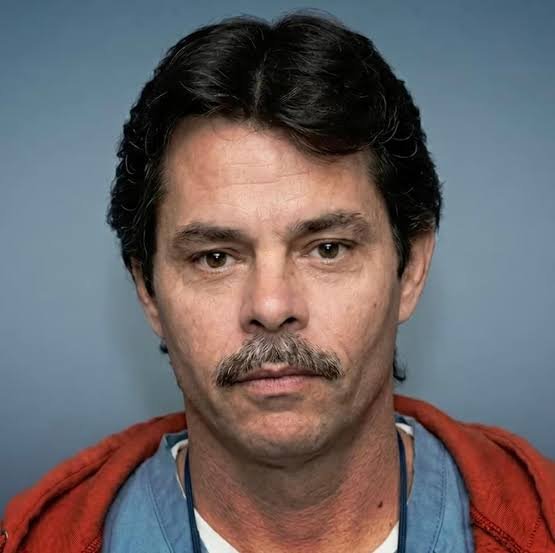
Robert Eugene Brashers was an American serial offender and suspected serial killer whose crimes stretched across several U.S. states during the 1990s. He was born in 1958 and had a long history of horrifying crimes. Investigators connected him through DNA and other forensic evidence to multiple murders and sexual assaults committed between 1990 and 1998. His known or suspected crimes occurred across states including South Carolina, Missouri, Tennessee, and Texas. He often targeted women and girls, and investigators believe he moved frequently, making it difficult for law-enforcement agencies to track him. For years, he was not publicly identified as the person responsible for several of the crimes later attributed to him.
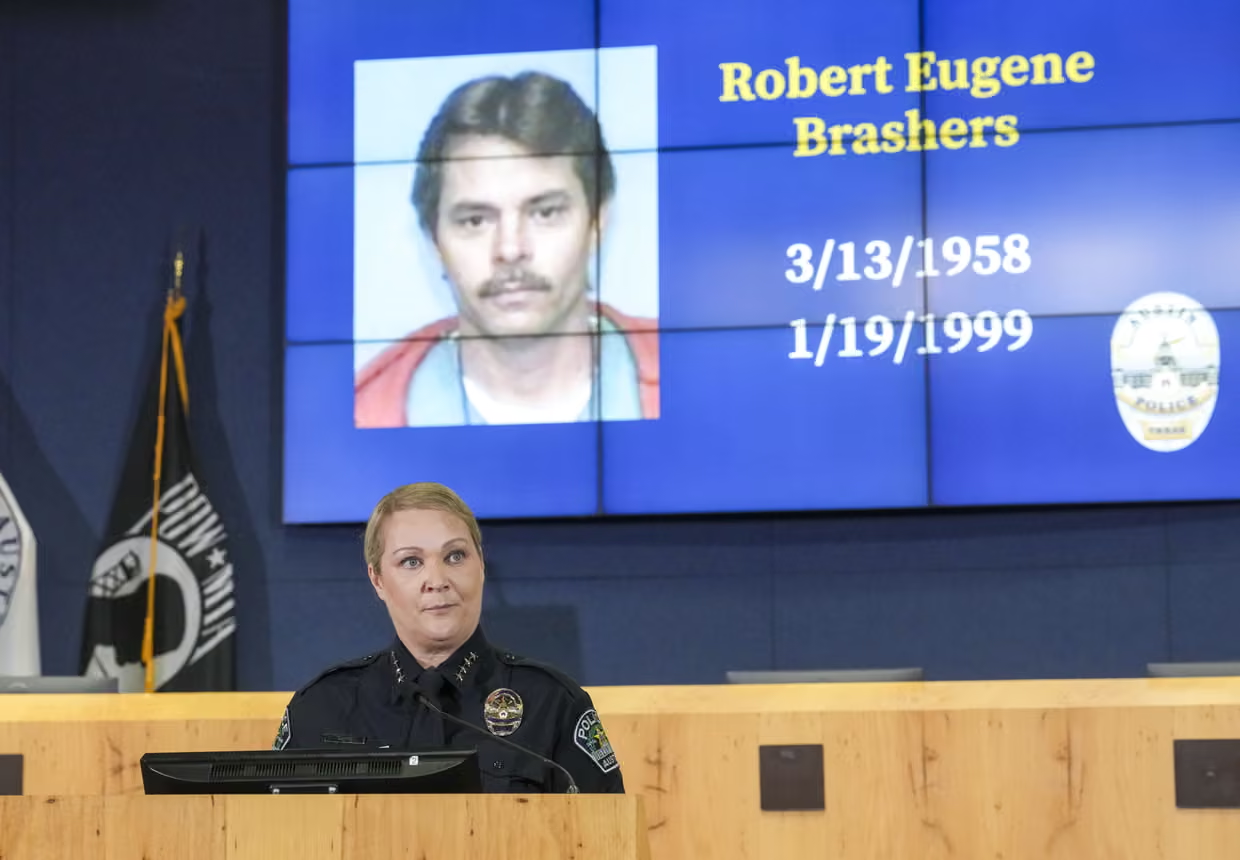
His criminal history included a 1985 shooting in Port St. Lucie, Florida, where he entered a woman’s home and shot her when she confronted him. Luckily, she survived, and Brashers was later convicted and imprisoned. After his release, Brashers was linked to a series of violent crimes. Modern DNA testing eventually connected him to cases including the 1990 murder of Genevieve “Jenny” Zitricki in South Carolina and the 1998 murders of Sherri and Megan Scherer in Missouri. Brashers later died in 1999, during a confrontation with police in Missouri.
Also Read: Victor Lustig: Master Of The Con
The Bradford Bishop Case: The Diplomat Who Vanished
On the surface, William Bradford “Brad” Bishop Jr. appeared to have everything. He was a highly educated U.S. Foreign Service officer, spoke several languages, had a promising diplomatic career, and lived with his wife, mother, and three sons in Bethesda, Maryland. To friends and colleagues, he was intelligent, reserved, and successful. But behind that carefully maintained image, investigators believe Bishop was struggling with professional disappointment, financial pressure, and deteriorating mental health.
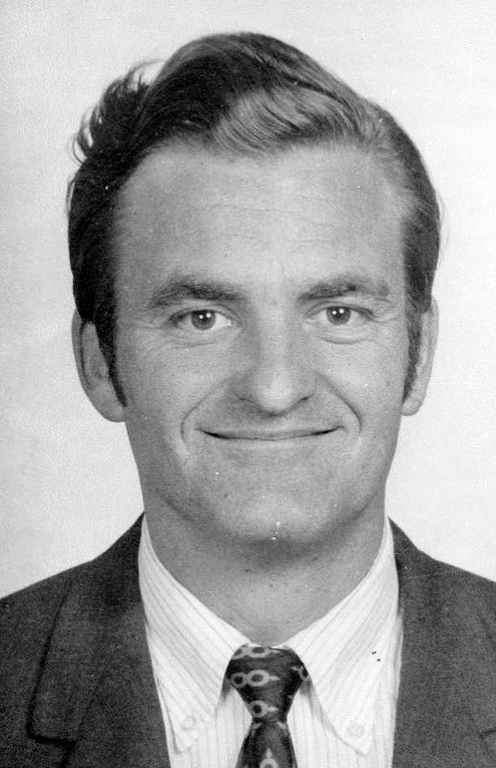
On the evening of March 1, 1976, those hidden tensions allegedly erupted into one of America’s most chilling family annihilation cases, before the suspected killer disappeared without a trace. Nearly fifty years later, the Bradford Bishop case remains officially unsolved, and Bishop himself is still wanted by authorities.
Also read: Victor Lustig: Master Of The Con
Who Was Bradford Bishop?
William Bradford Bishop Jr. was born on August 1, 1936, in Pasadena, California. A graduate of Yale University with additional postgraduate degrees, he served in the U.S. Army before joining the U.S. State Department as a Foreign Service officer. His work took him to several countries, and he reportedly spoke multiple languages fluently. He married his high school sweetheart, Annette Bishop (37), and together they raised three sons: William Bradford Bishop III (14), Brenton Germain Bishop (10), Geoffrey Corder Bishop (5). Also living with the family was Bishop’s mother, Lobelia Bishop (68). From the outside, the Bishops looked like an accomplished, close-knit family. Few people suspected the tragedy that was about to unfold.
The Day Everything Changed
On March 1, 1976, Bishop learned he had been passed over for a promotion at the State Department, a setback that reportedly devastated him. Witnesses later recalled that he appeared unusually upset before leaving work early. Instead of returning to work later, investigators believe Bishop spent the afternoon making several calculated purchases. He withdrew cash, bought a small sledgehammer, a gas can, and a shovel before driving home. Police believe these purchases were part of a carefully planned crime rather than a spontaneous act.
According to investigators, Bishop arrived home that evening and began attacking members of his family one by one. Authorities believe he first killed his wife, Annette, followed by his mother and later, his three sons while they were asleep upstairs. All five victims died from blunt-force injuries consistent with the hammer Bishop had purchased earlier that day. The brutality of the crime shocked investigators, particularly because there had been no public indication that Bishop would harm his own family.
Source: ‘The Hunt’: Bradford Bishop
The murders did not end inside the Bishop home. Investigators say Bishop loaded the bodies into the family car and drove approximately 500 miles south to a remote wooded area in the Great Smoky Mountains National Park in North Carolina. There, he dug a shallow grave, placed the bodies inside, poured gasoline over them, and set them on fire before leaving the scene. The following day, forest rangers investigating smoke in the area discovered the partially burned remains along with a shovel and a gasoline can that would later help connect the crime to Bishop.
The Vanishing of Bradford Bishop
For several days, no one reported the Bishop family missing. Concern arose only after a neighbour noticed the family’s unusual absence and contacted the police. Officers entering the Bethesda home found blood throughout the house, immediately indicating a violent crime. Dental records later confirmed that the remains discovered in North Carolina belonged to Annette, Lobelia, and the three Bishop children. By the time authorities realised Bishop was the prime suspect, he had nearly a week’s head start. Investigators located his abandoned station wagon on March 18, 1976, at a campground in the Great Smoky Mountains National Park in Tennessee.
Inside were personal belongings, including a shotgun, an axe, and evidence linking the vehicle to the murders. Despite an extensive search, Bishop was never found.
Why Was He Never Caught?
The mystery surrounding Bishop’s disappearance has fascinated investigators for decades. Unlike many fugitives, Bishop possessed qualities that could have helped him evade capture:
– He spoke several languages.
– He had extensive international travel experience.
– He possessed diplomatic knowledge and overseas contacts.
– His diplomatic passport was never recovered.
Over the years, credible sightings placed him in countries including Italy, Switzerland, and Sweden, though none resulted in an arrest. Authorities have also explored the possibility that he lived quietly under a false identity. Whether Bishop successfully built a new life abroad or died while on the run remains unknown.
The FBI Investigation
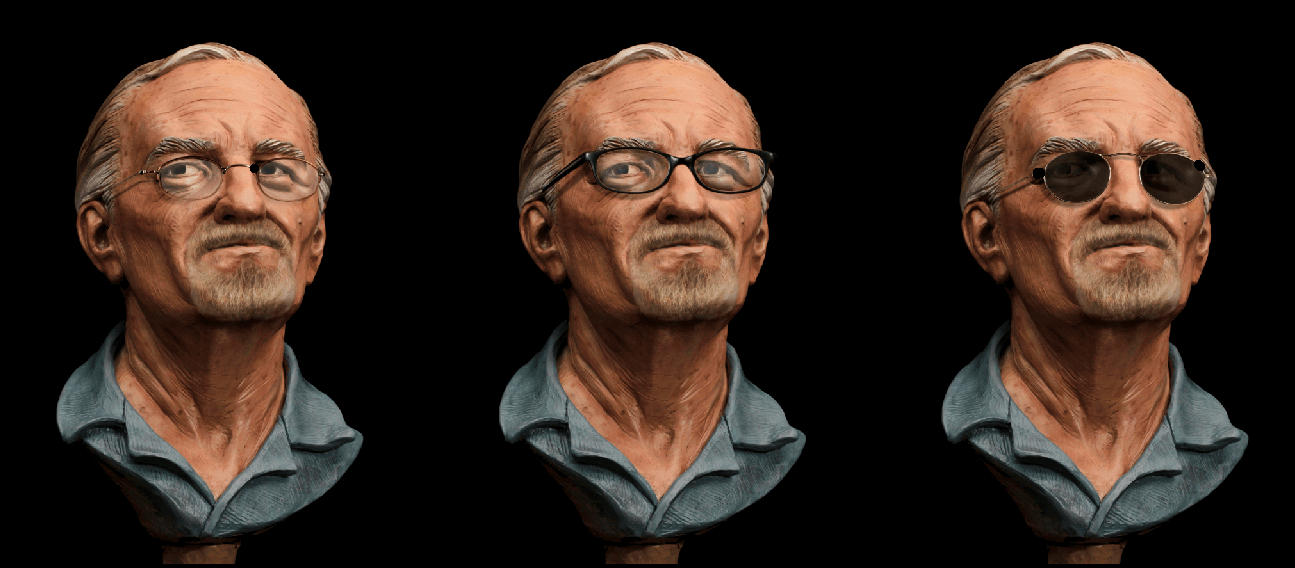
The case never went cold. In 2014, the FBI added Bishop to its Ten Most Wanted Fugitives list to generate new leads and public attention. Age-progression images and forensic facial reconstructions were released, suggesting what he might look like decades after the murders. Although Bishop was removed from the list in 2018 to make room for other fugitives, authorities emphasised that he was not cleared or forgotten. He remains wanted on murder charges, and an INTERPOL Red Notice is still active.
Also read: Where Did Brandon Swanson Go?