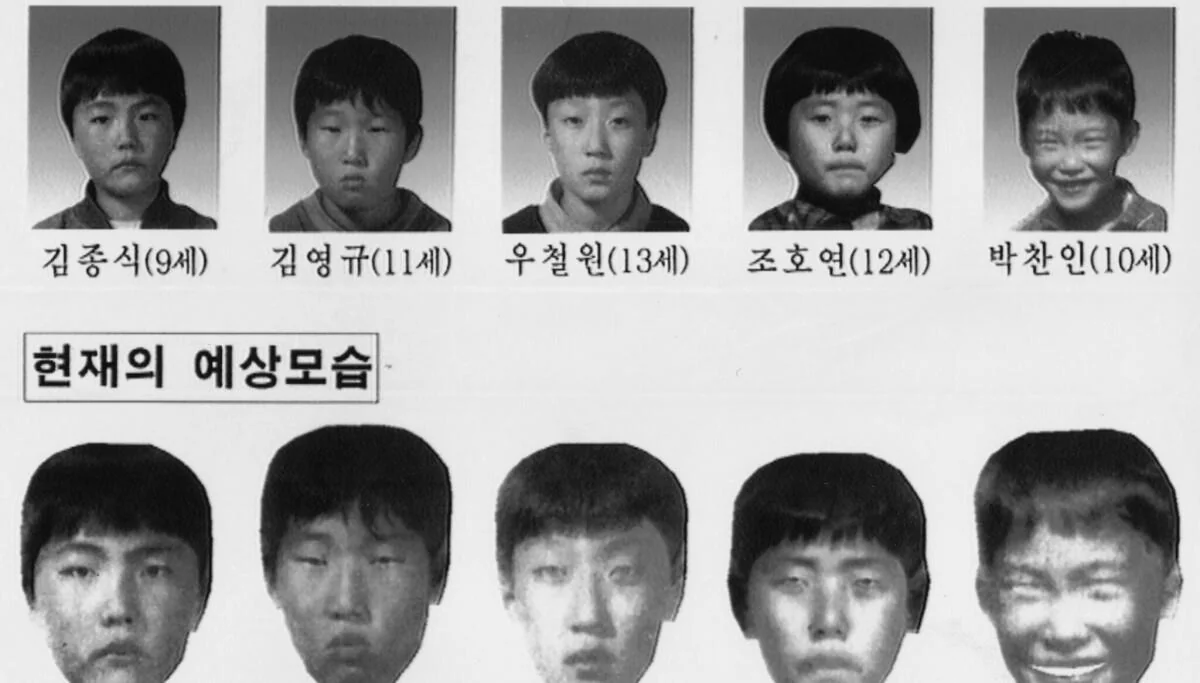
On the morning of March 26, 1991, five young boys, later to be remembered as the “Frog Boys” left their homes in Daegu, South Korea, on what should have been an ordinary day of adventure. Schools were closed due to local elections, and the friends decided to hike up Mount Waryong in search of frog (or salamander) eggs, a popular springtime activity among local children.

As the hours passed, however, the children failed to come home. Concern quickly turned into panic for the parents. Relatives began searching nearby streets, parks, and the lower slopes of Mount Waryong before notifying police that the five friends had disappeared. The boys, namely Woo Cheol-won (13), Jo Ho-yeon (12), Kim Yeong-gyu (11), Park Chan-in (10), and Kim Jong-sik (9), never returned home. Their disappearance soon became one of South Korea’s most widely publicised missing-person cases, and they would forever be remembered as the “Frog Boys.”
Also read: The Hexham Heads That Awakened an Ancient Curse
A Search That Captured the Nation
What began as a local missing-person investigation soon turned into a large search operation and a nationwide news story in South Korea. In the days that followed, police launched an extensive search of Mount Waryong and its surrounding areas, while soldiers, volunteers, and local residents joined the effort. According to contemporary reports, more than 300,000 police officers and military personnel participated in the search over time, making it one of the largest missing-child operations in South Korean history.
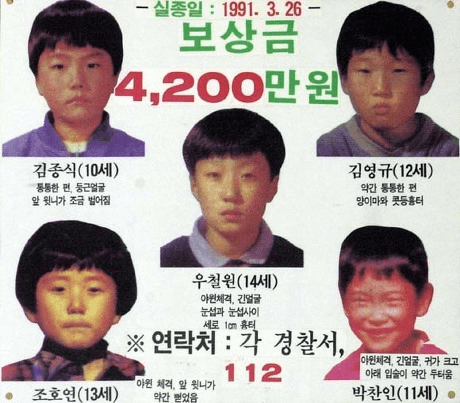
The boys’ photographs were broadcast on television and leaflets were distributed across the country, yet despite the effort, investigators found no confirmed trace of the children. The fathers of the missing boys reportedly received a huge number of tips, which turned out to be false and deceptive.
Eleven Years Without Answers
For more than a decade, the disappearance remained one of South Korea’s most closely followed cold cases. Every reported sighting and new lead was investigated, but none brought investigators any closer to finding the boys. However, on September 26, 2002, two men collecting acorns on Mount Waryong made a grim discovery. Hidden in a wooded area were the skeletal remains of all five boys.
The location was particularly surprising because it was on the same mountain where the children had last been seen. Reports that the area had previously been searched led to renewed scrutiny of the original investigation and whether crucial evidence had been missed.
The Investigation After the Discovery
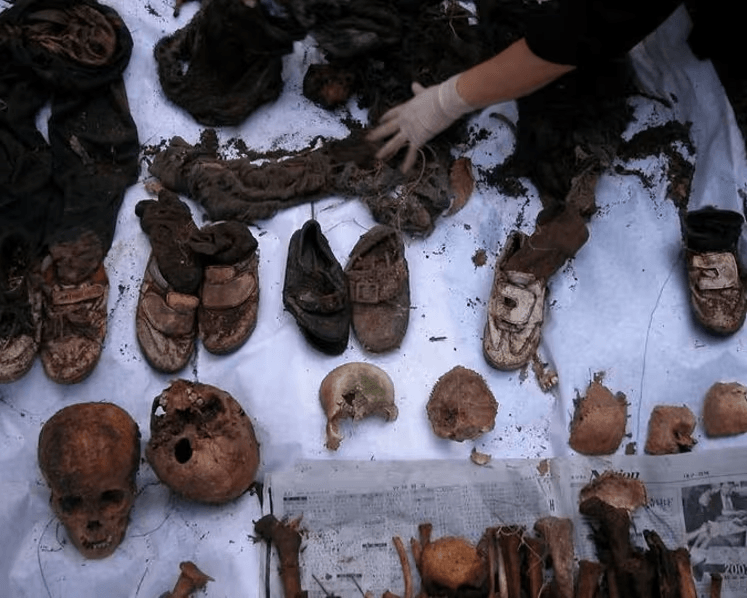
The discovery transformed a long-running missing-person case into a homicide investigation. Early theories about their disappearance, which heavily implied that the boys were runaways or “lost their way”, soon took a completely different turn. Police concluded the cause of their death was hypothermia, due to the cold temperature recorded on the day of the disappearance. Because it took more than eleven years before the remains were found, the available evidence was limited, making it difficult to establish exactly how the boys died or identify whoever was responsible.
In the years that followed, independent forensic specialists and researchers who re-examined the case argued that the boys’ skulls showed injuries inconsistent with a natural death. A forensic expert team of Kyungpook National University reported finding sharp-force injuries on some of the skulls, concluding that at least some of the wounds were inflicted before death. The team also questioned aspects of the original recovery of the remains, noting that some evidence may have been compromised during excavation. Their conclusions reinforced the view that the children had been victims of homicide, although they did not identify a suspect or establish exactly how the crime occurred.
Source: Frog Boys case: Five students vanished in 1991, found dead years later — still no answers
How the Frog Boys Case Changed South Korea
The disappearance of the five boys prompted renewed attention to how missing-child investigations were conducted in South Korea. It also became one of the country’s most recognised cold cases, keeping public focus on the importance of preserving evidence and responding quickly to reports of missing children. In 2015, South Korea abolished the statute of limitations for first-degree murder. As a result, if credible new evidence or a suspect were to emerge, the Frog Boys case could still be prosecuted despite the decades that have passed.
Also read: Poisoned Candy and the Monster with 21 Faces