Japanese folklore contains many stories in which human emotions and the supernatural coexist. The Legend of Kiyohime is one such tale. Centred around a young woman and a Buddhist monk named Anchin, the events unfold around Dojoji Temple, located in the present-day town of Hidakagawa, Wakayama Prefecture, Japan.
Passed down through different forms of Japanese storytelling, the legend has taken on themes of love, betrayal, anger and transformation. Its connection to the temple, the Hidaka River and traditional Japanese theatre has helped preserve the story across generations. The story has been retold in different forms over the centuries. Details vary between versions, but the central events remain remarkably consistent: a promise, a broken expectation, a desperate pursuit, and a woman transformed into a serpent.
Also read: Flannan Isles Lighthouse: A Mystery Lost at Sea
Kiyohime Meets Anchin
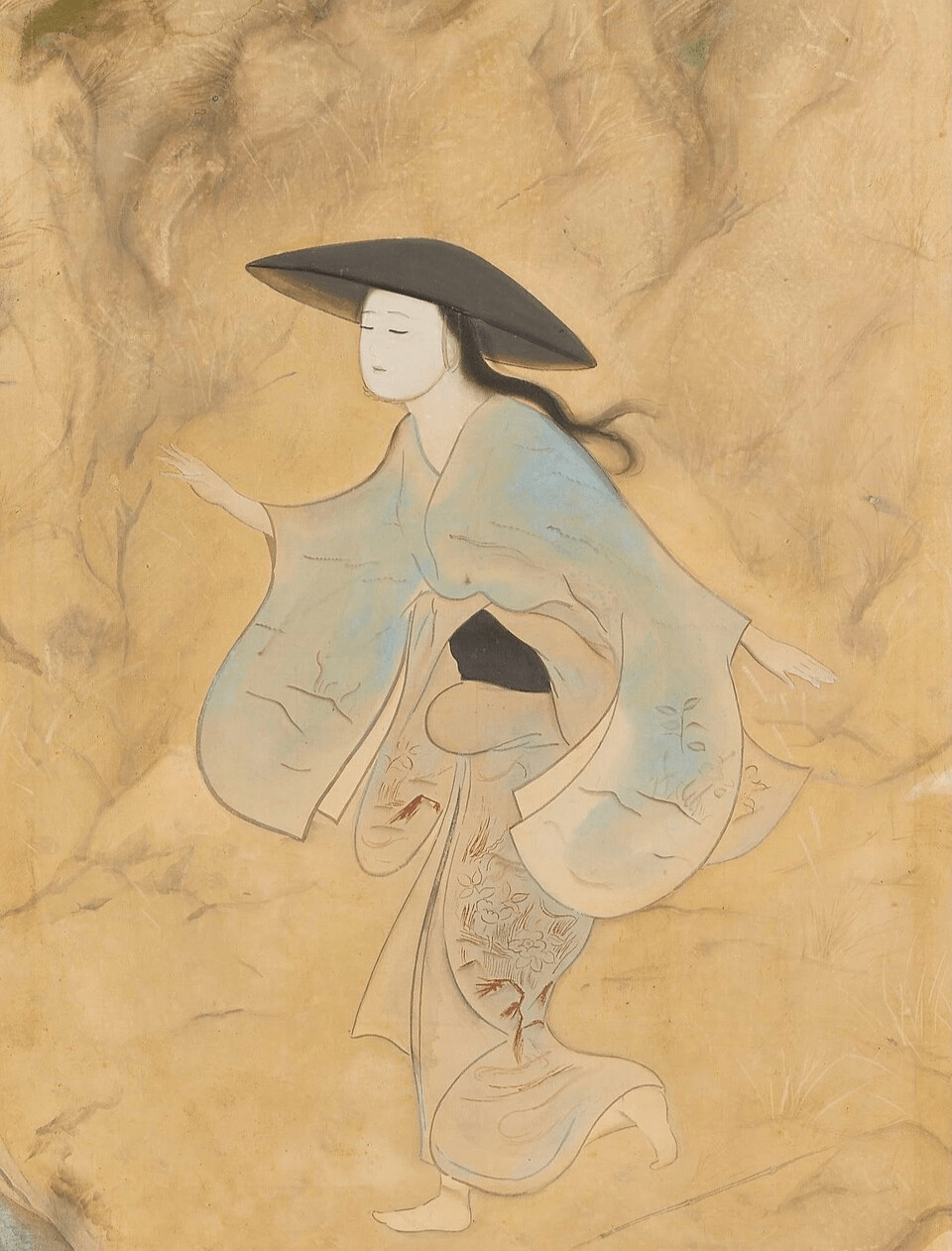
According to the traditional legend, Anchin was a young monk travelling on a pilgrimage. During his journey, he stayed at the manor of the wealthy Masago no Shoji. There he met Kiyohime, the daughter of the household. Kiyohime became fascinated by the monk and soon developed strong feelings for him. According to some records, Anchin would also joke with Kiyohime that he would marry her once she grew up.
However, the monk was committed to his religious life. In some versions of the story, Kiyohime asks him to marry her or remain with her. Anchin, wanting to avoid confronting her feelings directly, tells her that he will return after completing his pilgrimage. Kiyohime believes him. Anchin leaves, but when the time comes, he does not return. Kiyohime eventually realises that the monk has continued on his journey. Feeling deceived, she sets out after him.
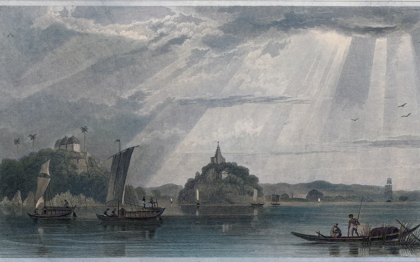
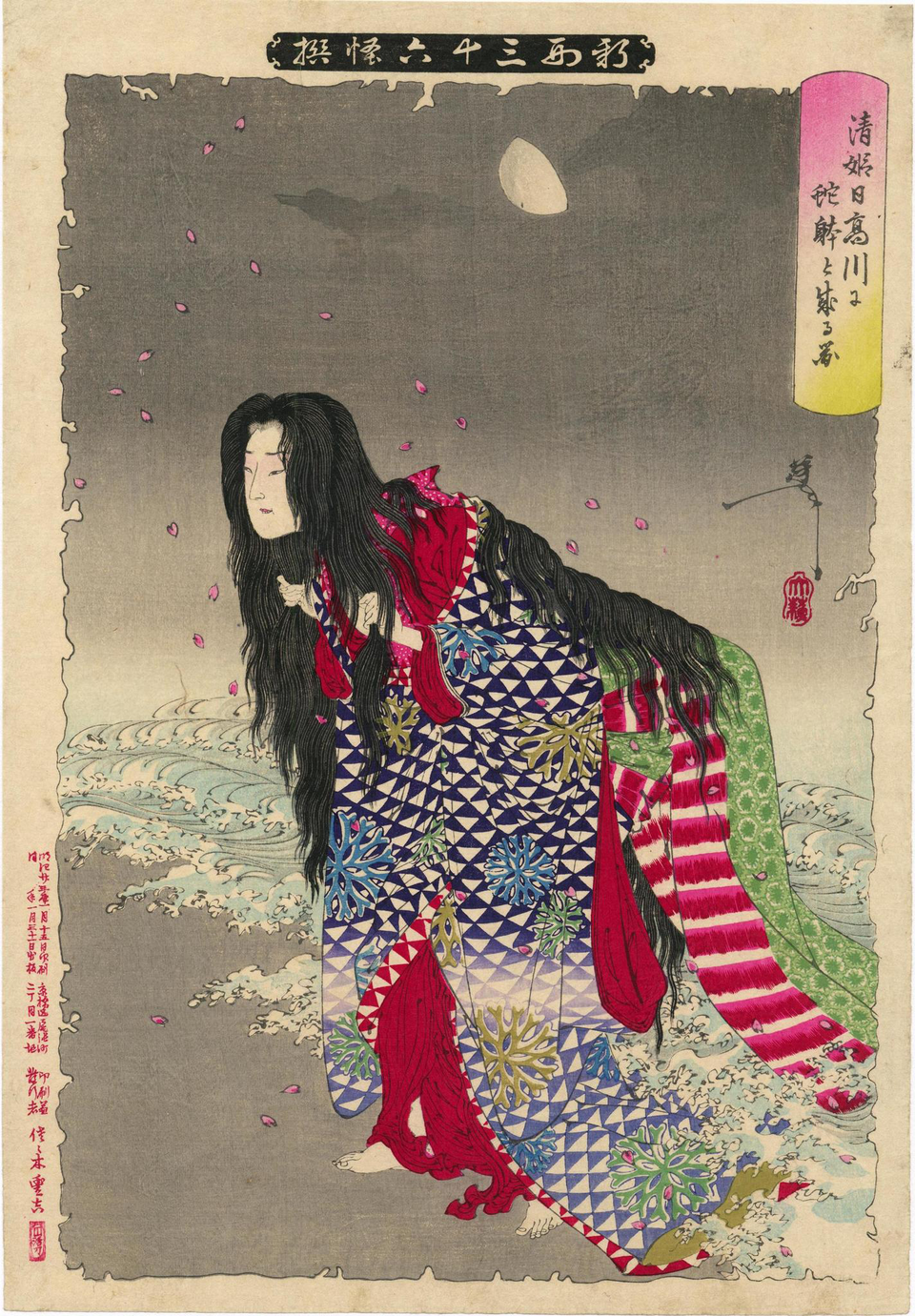
Her pursuit takes her toward the Hidaka River, where she eventually catches sight of Anchin. Seeing her approach, Anchin asks the boatman to refuse her passage. The boatman becomes an unwilling catalyst in the deception. She pleads to be taken across, but the boatman refuses. This allows Anchin to gain more distance. For Kiyohime, the refusal confirms that Anchin was deliberately trying to escape her. Unable to cross by boat, she throws herself into the river.
But by this point, something has changed.
Source: Kiyo hime
The Serpent

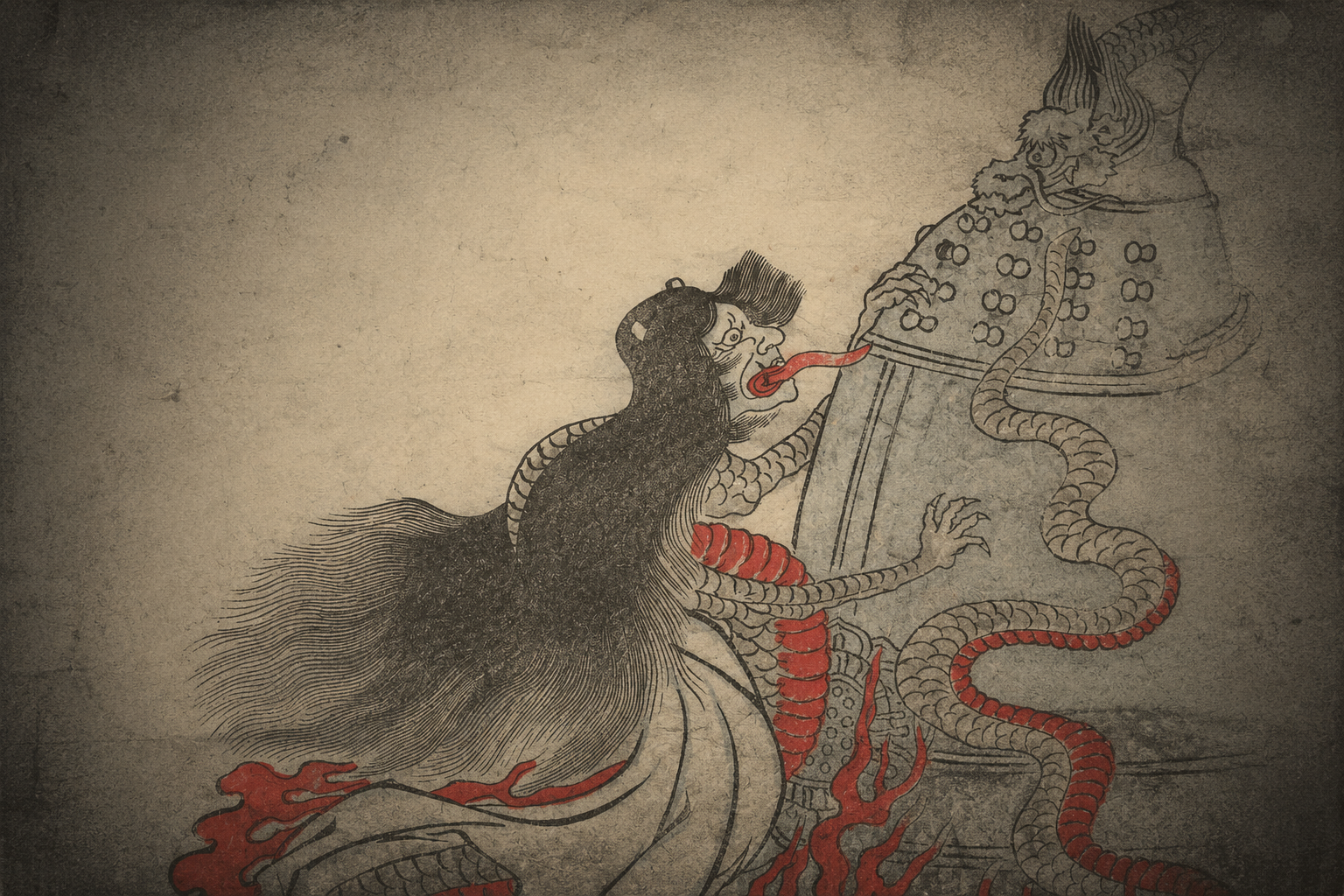
As Kiyohime’s anger and desperation grow, the legend takes a supernatural turn. She transforms into a huge serpent, sometimes described in later versions as a dragon-like creature. The newly transformed Kiyohime crosses the Hidaka River and continues after Anchin. Anchin eventually reaches Dojoji Temple. Terrified that Kiyohime will find him, he asks the temple’s monks to hide him. They conceal him beneath the temple’s large bronze bell. For a moment, Anchin believes he is safe. However, Kiyohime soon arrives at the temple. The enormous fire-breathing serpent searches for Anchin and eventually discovers where he is hiding. She coils her body around the bell, trapping the monk inside.
Then she breathes fire onto it.
The bell becomes intensely hot, and Anchin is unable to escape. In the traditional telling, he dies beneath the burning bell. Kiyohime’s transformation does not bring her happiness or reunion with the man she pursued. Instead, the story ends in destruction. In many versions, Kiyohime then returns to the Hidaka River and dies by drowning, overcome with sorrow. The two are ultimately united only in death.
One important early source associated with the story is the Hokke Genki, a collection of Buddhist miracle tales compiled in 11th-century Japan. Another important tradition developed through the Dōjōji Engi, which was later represented in illustrated picture scrolls. Through these adaptations, the image of the woman transforming into a serpent and appearing beneath or around the temple bell became one of the most recognisable elements of the Dojoji tradition.
Source: The legend of Anchin and Kiyohime — A sad and pathetic love story of a monk and a village girl
What Does Kiyohime Represent?
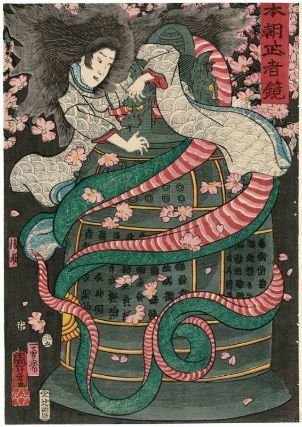
Kiyohime translates to “Pure Princess” or “Pure Lady”. Her transformation can be interpreted as a supernatural representation of emotions that have become uncontrollable. Love turns into anger, disappointment becomes obsession, and eventually the human Kiyohime is replaced by the monstrous serpent. Representing the duality of human nature.
At the same time, different retellings place different emphasis on Anchin’s behaviour and Kiyohime’s emotional state. This means that Kiyohime can be viewed not only as a monster but also as a tragic figure whose feelings and expectations ultimately lead to her destruction. On the other hand, Anchin can be viewed as a symbol of flawed religious devotion and the overall karmic consequence.
A Legend That Changed Over Time
There is no single version of the Kiyohime story that can be treated as the definitive account. The tale developed over centuries, moving from Buddhist storytelling into illustrated narratives and eventually into Noh, Kabuki and other artistic traditions. As it travelled between these forms, characters, motivations and details were altered. What has remained constant is the haunting core of the legend: a broken vow and betrayal. The legend of Kiyohime survives because it is more than a simple monster story. It is a tale about how love, deception and uncontrolled emotion can transform a human tragedy into something supernatural.
Also read: Utsuro-bune: The Strange Woman Who Arrived From the Sea