
Imagine living in a quiet town where an unexplained sound follows you from room to room, disturbs your sleep and refuses to disappear. You search your home for its source, only to discover that your neighbours cannot hear anything at all. For some residents of Taos, New Mexico, this unsettling experience became a reality in the early 1990s. Known as the Taos Hum, the mysterious sound attracted scientific investigators, media attention, and numerous theories, yet no one could identify its precise cause.

What made the phenomenon particularly unusual was that only a small proportion of people reported hearing it. Despite an investigation involving scientists and engineers, no definitive explanation emerged for the sound or why certain individuals appeared to be affected while others noticed nothing.
Lesen Sie auch:5 Unsolved Mysteries That Continue to Baffle the World
The Strange Sound Reported by Taos Residents
The mystery gained widespread attention around 1991 and 1992, when residents of Taos began publicly discussing a persistent, low-frequency noise that seemed to have no identifiable source. Located in northern New Mexico, Taos is known for its scenic surroundings, artistic community and relatively peaceful atmosphere. However, for residents who reported hearing the hum, the tranquillity of the town was disrupted by a sound that seemed impossible to escape.
People described the noise in different ways. Some compared it to a diesel engine running in the distance, while others likened it to a tractor, a generator or the continuous vibration of electrical equipment. For certain listeners, it was a steady rumble. For others, it had a pulsing or throbbing quality. The reports were concerning because the noise was not merely an occasional annoyance. Some residents said it interfered with their concentration, prevented them from sleeping comfortably and made it difficult to enjoy the quiet surroundings they had chosen to live in.
Yet there was an important complication: many people living in the same area could not hear anything unusual.
The 1993 Scientific Investigation
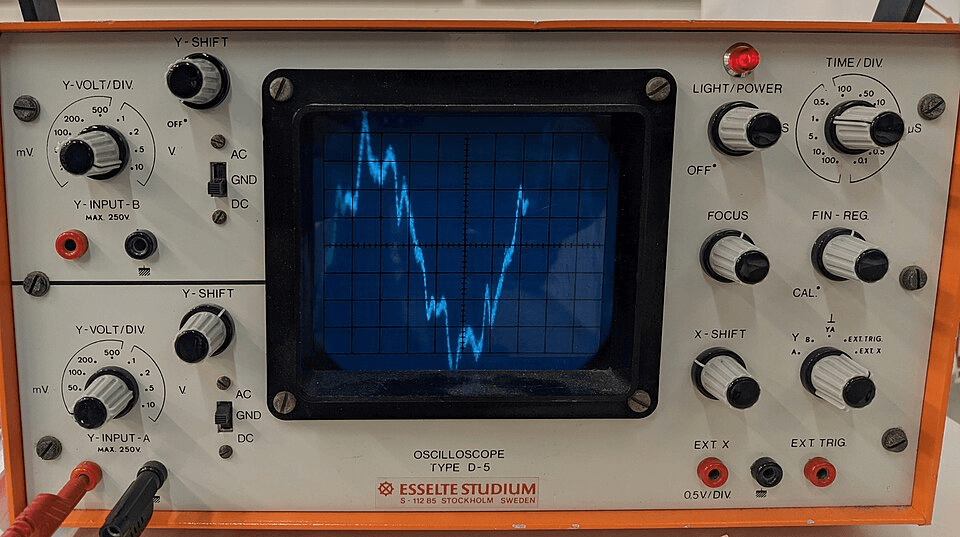
As reports of the Taos Hum spread, the mystery attracted the attention of local politicians and scientific researchers. In 1993, a team of investigators was assembled at the request of New Mexico’s congressional delegation. The investigation involved specialists associated with the University of New Mexico, Sandia National Laboratories, Los Alamos National Laboratory and the Phillips Air Force Laboratory.
Rather than relying solely on residents’ descriptions, the researchers attempted to identify a measurable physical source. They examined acoustic signals, electromagnetic activity and ground vibrations. Their equipment included ultra-sensitive low-frequency microphones, instruments for measuring electromagnetic fields and geophones capable of recording vibrations in the earth. However, the investigation failed to identify an unusual external signal that could explain the complaints.
Quelle:The Unusual Humming Noise In New Mexico That Still Baffles Scientists
Researchers did not find an anomalous sound, vibration or electromagnetic phenomenon that convincingly accounted for the experiences reported by residents. This did not establish that the individuals were imagining the noise. Instead, it left investigators without a confirmed explanation.
According to contemporary reporting by the Los Angeles Times, researchers asked people who heard the hum to reproduce its pitch using a signal generator. The frequencies selected generally fell between approximately 33 and 80 hertz, within the low-frequency range of human hearing. The results offered investigators something to examine, but they did not solve the mystery. Identifying the approximate frequency people perceived was not the same as establishing where the sound originated.
Theories Behind the Taos Hum
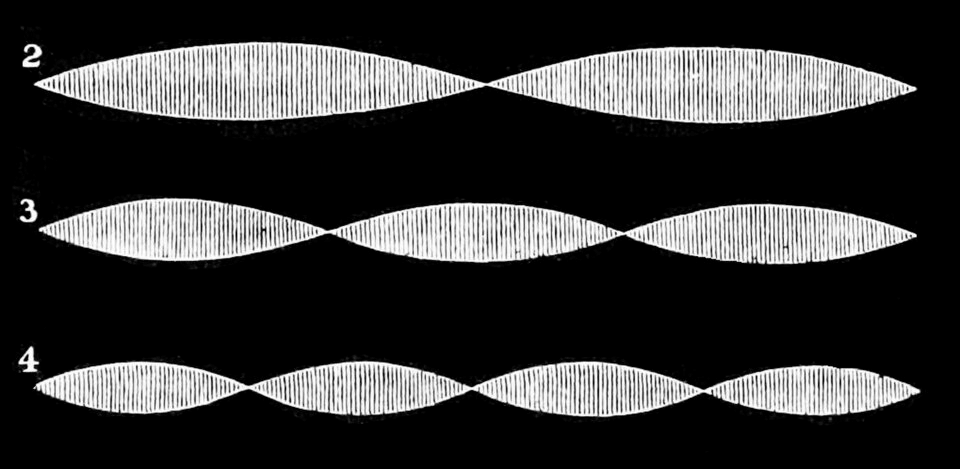
Over the years, several explanations have been proposed for the Taos Hum. Although some are more scientifically plausible than others, none has been conclusively established as the explanation for the original reports.
Industrial equipment and electrical infrastructure
One of the earliest possibilities was that the hum came from machinery, generators, power systems or other equipment operating in or around Taos. Low-frequency noise can travel considerable distances, and some industrial equipment produces continuous vibrations that are difficult to locate by ear. Buildings and surrounding terrain can also affect how such sounds are perceived.
Tinnitus and unusual hearing sensitivity
Another possibility involves the human auditory system. Tinnitus is commonly associated with hearing sounds such as ringing, buzzing or humming when no corresponding external sound is present. Because the Taos Hum was not consistently detected by acoustic instruments, researchers considered whether physiological factors might contribute to the experience.
Other discussions focused on differences in hearing sensitivity and otoacoustic emissions, which are sounds produced by the inner ear under certain circumstances. These possibilities raise an important distinction: a sound can be a genuine perceptual experience without necessarily originating from an external machine. The consistency of some accounts also left questions about why particular individuals associated their experiences with the same geographical area.
Electromagnetic signals and military activity
Theories involving military communications and extremely low-frequency signals attracted attention partly because the cause of the hum remained elusive. However, suspicion alone could not establish a connection. The 1993 investigation included electromagnetic measurements, but researchers did not identify a signal that explained the reported sound. There is no verified evidence demonstrating that a military operation was responsible for the Taos Hum and therefore remains unlikely.
Quelle:The Taos Hum: New Mexico’s Unexplained Acoustic Phenomenon
Is the Taos Hum Still Unsolved?
The Taos Hum remains a well-known example of an unexplained auditory phenomenon because the investigation failed to establish a definitive cause for the original reports. The 1993 study was significant because it attempted to examine the mystery using scientific instruments rather than relying exclusively on speculation. Nevertheless, the absence of a measurable explanation left investigators with more questions than answers.
One of the most intriguing aspects of the case is the difference between experiencing a sound and identifying its physical origin. Residents reported a persistent noise that affected their everyday lives, yet researchers could not connect those experiences to a specific external source. The mystery also illustrates the difficulties involved in investigating phenomena that cannot be consistently reproduced or measured. Without a clearly identifiable signal, determining whether the sound comes from machinery, environmental conditions, the auditory system, or a combination of factors becomes considerably more challenging.
Decades after the reports first attracted widespread attention, the central question remains: what were the residents of Taos hearing, and why could some hear it when others could not?
Lesen Sie auch:Who Put Bella in the Wych Elm?