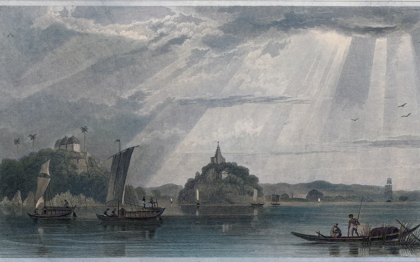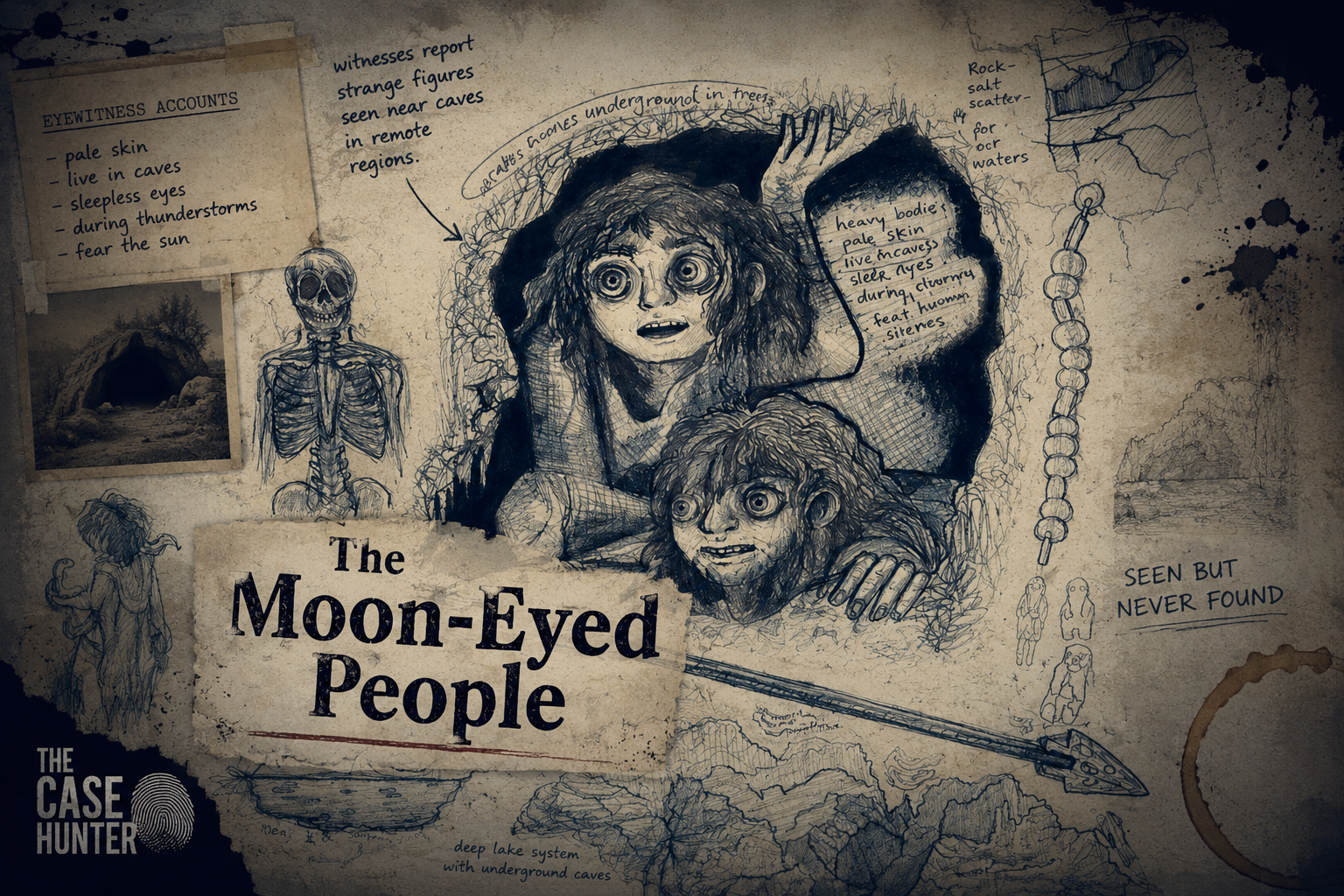
Deep in the forests of North Carolina, an old story has survived for generations. The local name given to them was unforgettable: The Moon-Eyed People. It speaks of a mysterious people who lived among the mountains long before modern settlers arrived. They were said to be unusually pale, short in structure, and so sensitive to sunlight that they could only venture outside after dark.
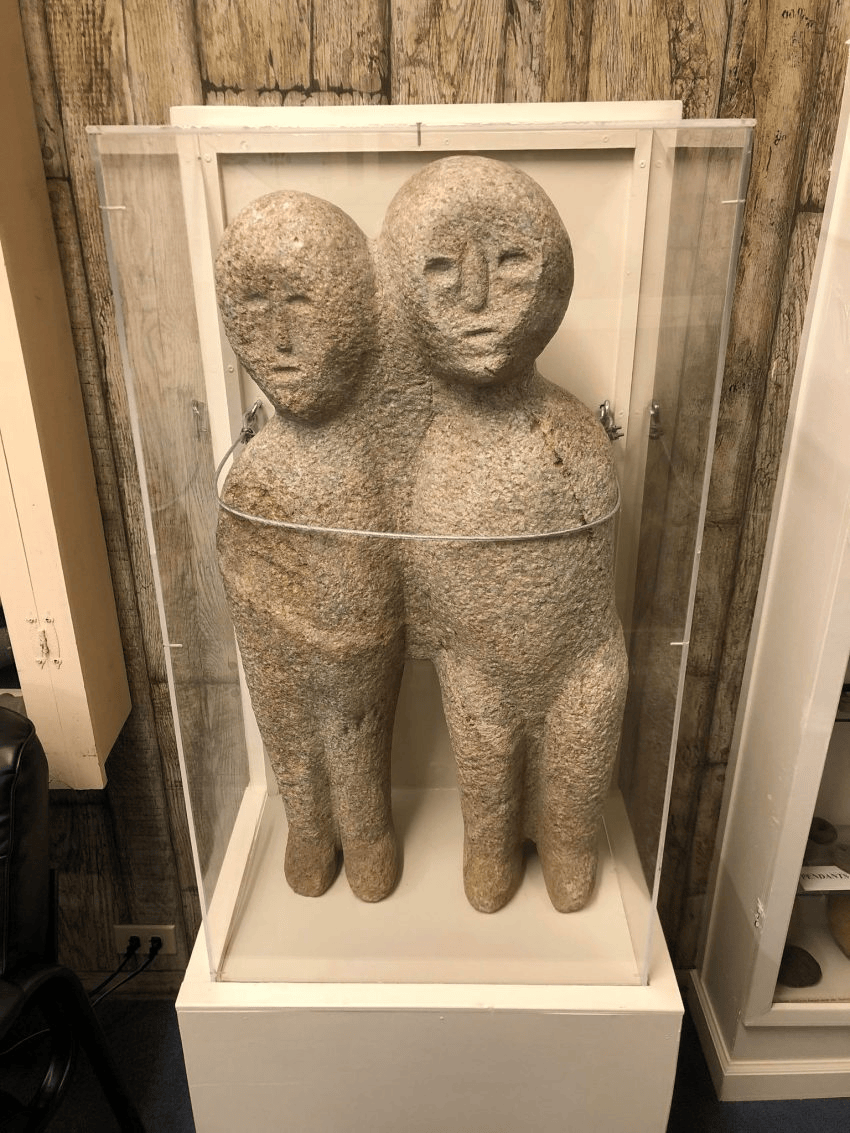
Some versions of the legend describe them as a strange tribe that inhabited caves and remote valleys around the Appalachian region. Others claim they were driven underground by Native American groups or later settlers. But there is a problem. There is no archaeological evidence proving that such a mysterious race ever existed.
So where did the story come from?
Also Read: Shocking Dyatlov Pass Incident: The Chilling Truth
People Who Belonged to the Night
According to popular versions of the legend, the Moon-Eyed People were noticeably different from the surrounding population. They were described as having extremely pale skin, light-colored eyes, and an unusual aversion to sunlight. Some stories even claimed that their eyes were so sensitive that they could barely tolerate daylight. They supposedly lived in caves, rock shelters, and secluded areas of the mountains. At night, they were said to emerge from hiding.
The story is particularly associated with the Appalachian region, including areas around western North Carolina. But this is where the mystery becomes complicated. The legend has often been presented as an ancient Native American tradition. The historical evidence for that claim, however, is far less certain.
The Uwharrie Connection with the Moon-Eyed People
The Uwharrie Mountains are among the oldest mountain ranges in North America. Located in central North Carolina, the region contains forests, rocky terrain, caves, and archaeological sites associated with Indigenous peoples who lived in the area long before European settlement. That landscape provides the perfect setting for a legend about a hidden population. But the Uwharrie connection requires caution.
The Moon-Eyed People story is frequently linked online to the Uwharrie region. Yet, there is no confirmed archaeological discovery of a distinct “Moon-Eyed” population there. In other words, the landscape is real. The Indigenous history is real. But the mysterious people remain unproven.
Source: The Moon-Eyed People
The Cherokee Legend
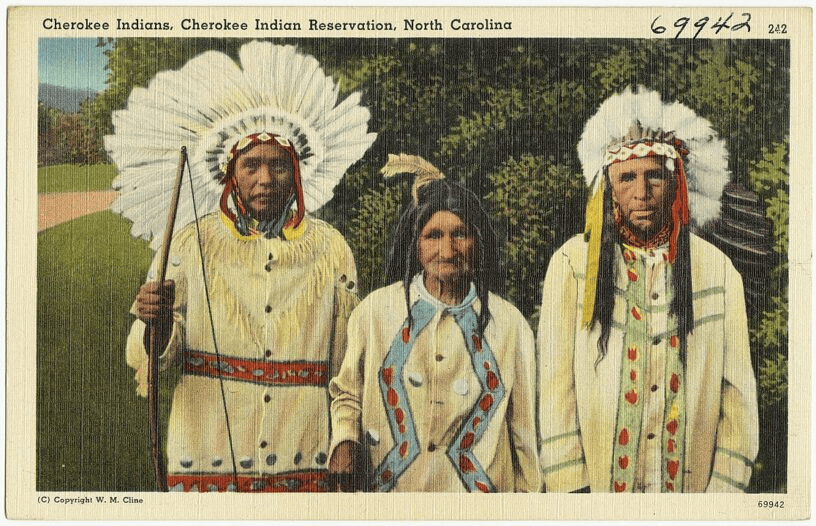
One of the most repeated versions of the story connects these People with Cherokee traditions. According to popular retellings, the Cherokee encountered a pale-skinned population already living in the mountains. The two groups supposedly came into conflict. Eventually, the Moon-Eyed People were said to have been driven westward or forced into hiding. Some versions claim they disappeared completely. Others say they retreated into caves and continued living underground.
There is even a popular story claiming that some of them escaped toward Tennessee. But historians have found an important problem with these accounts. The story does not appear consistently in early Cherokee records. Much of what is now described as “Cherokee tradition” comes from later retellings, folklore collections, and modern books. That doesn’t necessarily mean every element was invented recently. It does mean that the legend cannot safely be treated as established Cherokee history.
The White People of the Mountains
The mystery became even stranger when people began connecting the legend to reports of European settlers encountering unusually pale inhabitants of the mountains. Some writers proposed that these people could have been descendants of ancient Europeans who reached North America before Columbus. Others suggested they might have been descendants of an isolated prehistoric population.
Over time, increasingly elaborate theories appeared. Welsh explorers became part of the story. So did Vikings. Some versions even suggested that these people represented a completely unknown ancient civilization. But there is currently no reliable archaeological evidence demonstrating that a mysterious pre-Columbian European population matching the Moon-Eyed legend lived in the Appalachian Mountains.
The Mystery of the Fort
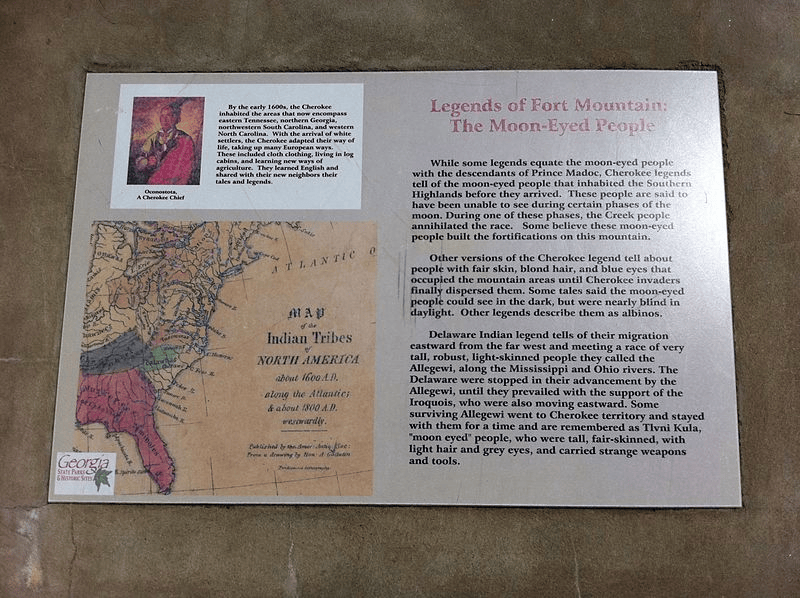
One of the most famous objects associated with the legend is a supposed “Moon-Eyed People” stone structure or fortification. Accounts of mysterious stonework in the Appalachian region have occasionally been presented as evidence that an unknown population once occupied the area. But ancient stone structures in the eastern United States do not automatically point toward a lost race.
The Cryptid That Became a History Mystery
Today, the Moon-Eyed People occupy an unusual space between folklore and cryptozoology. They are sometimes described as a cryptid. Other times, they are presented as a lost human population. And occasionally, they are portrayed as evidence of ancient European contact with North America. There is currently no accepted archaeological evidence for a separate race of Moon-Eyed People. But why does the legend refuse to disappear?
It isn’t necessarily the question of whether pale, nocturnal people actually lived beneath the mountains. It’s the question of how a story can become so deeply rooted that, generations later, the boundary between folklore and history becomes difficult to see. The Uwharrie forests are real. The mountains are ancient, and Indigenous cultures have inhabited the region for thousands of years. What do you think? Was the Moon-Eyed People legend simply Appalachian folklore that grew more elaborate with time? Or could the story preserve a distorted memory of a real group of people who once lived in the mountains?