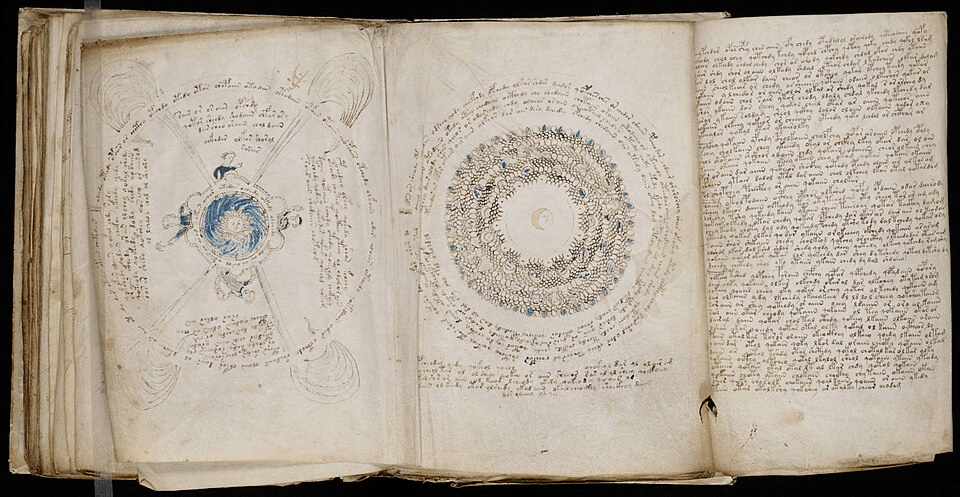
In 1912, a rare-book dealer acquired a strange manuscript filled with writing that he could not read. The pages contained unfamiliar words alongside drawings of plants, stars, zodiac symbols, and peculiar human figures. The manuscript was clearly the work of someone who had gone to considerable effort to create it, but what that effort was meant to convey remained unclear.
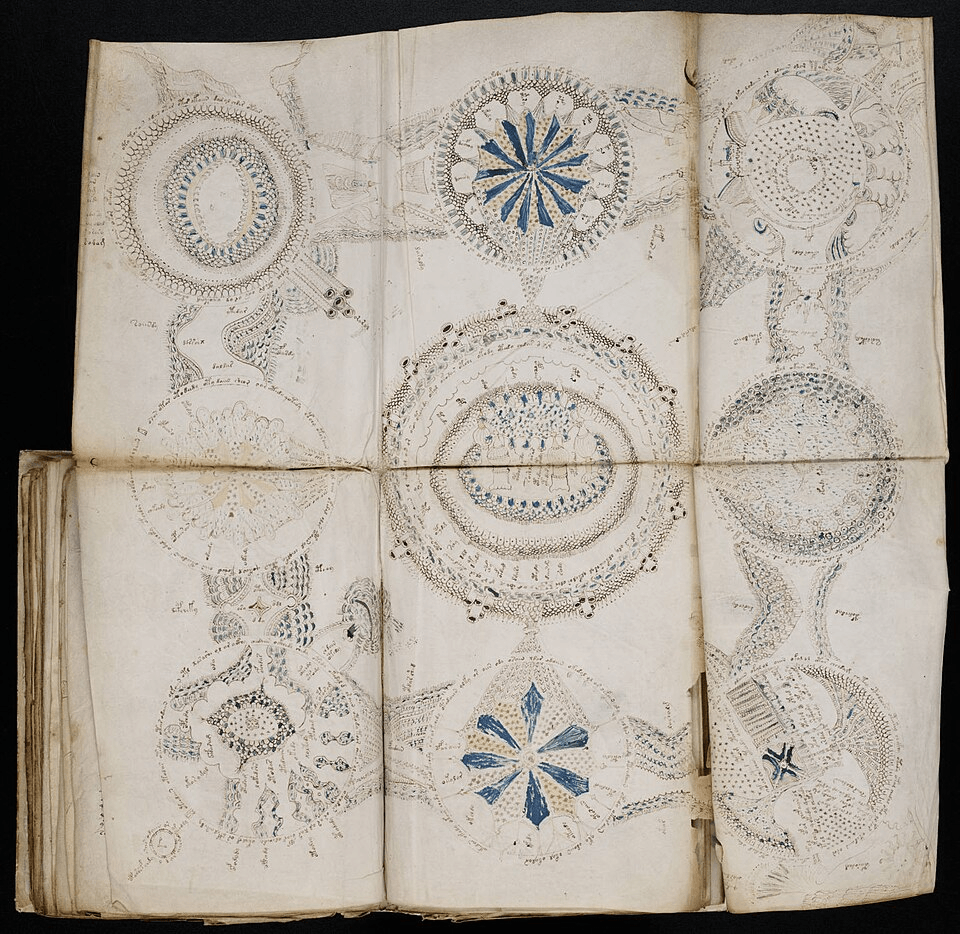
The manuscript is real, old, and extensively documented. What remains uncertain is its meaning. Is it written in an unknown language, a deliberately constructed code, or something else entirely? That unanswered question has made the Voynich Manuscript one of the world’s most enduring literary mysteries.
Lesen Sie auch: Solway Spaceman Mystery: The 1964 Photo
A Mysterious Book Appears
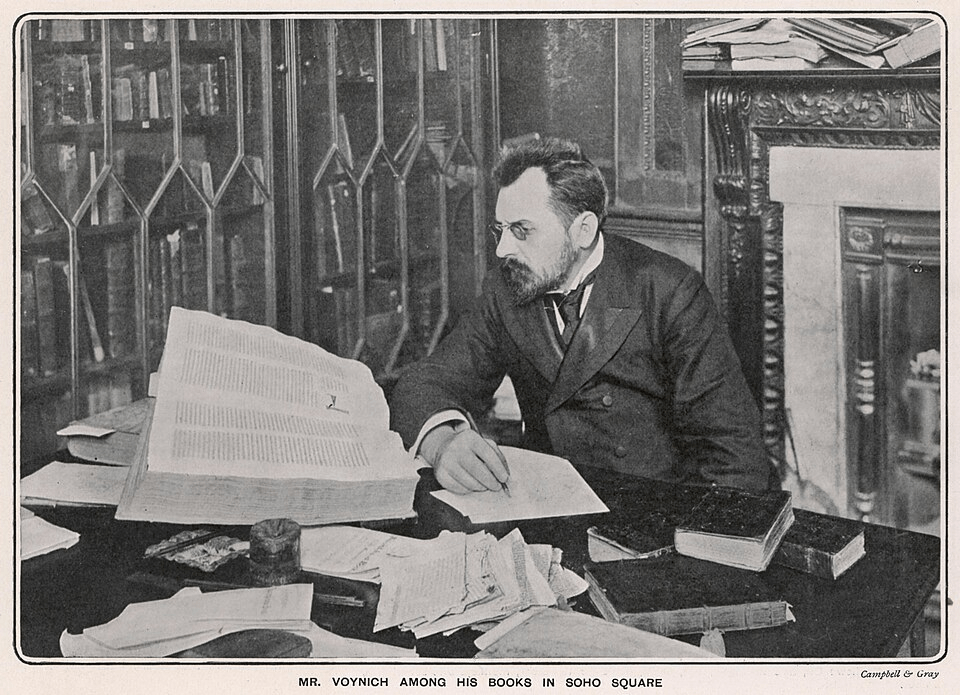
The manuscript takes its modern name from Wilfrid Voynich, a Polish rare-book dealer who acquired it in 1912. Before that, its history is surprisingly difficult to establish with certainty. Radiocarbon testing has shown that the parchment dates to the early 15th century, placing the manuscript firmly in the medieval period. Earlier ownership claims have connected it to figures including Emperor Rudolf II of the Holy Roman Empire, alchemist Georg Baresch, scientist and physician Johannes Marcus Marci, Jesuit polymath Athanasius Kircher and many more inheritors and purchasers. Although parts of this early history remain uncertain. Today, the manuscript is preserved at Yale University’s Beinecke Rare Book and Manuscript Library.
Quelle: Voynich manuscript
The Strange Voynich Script
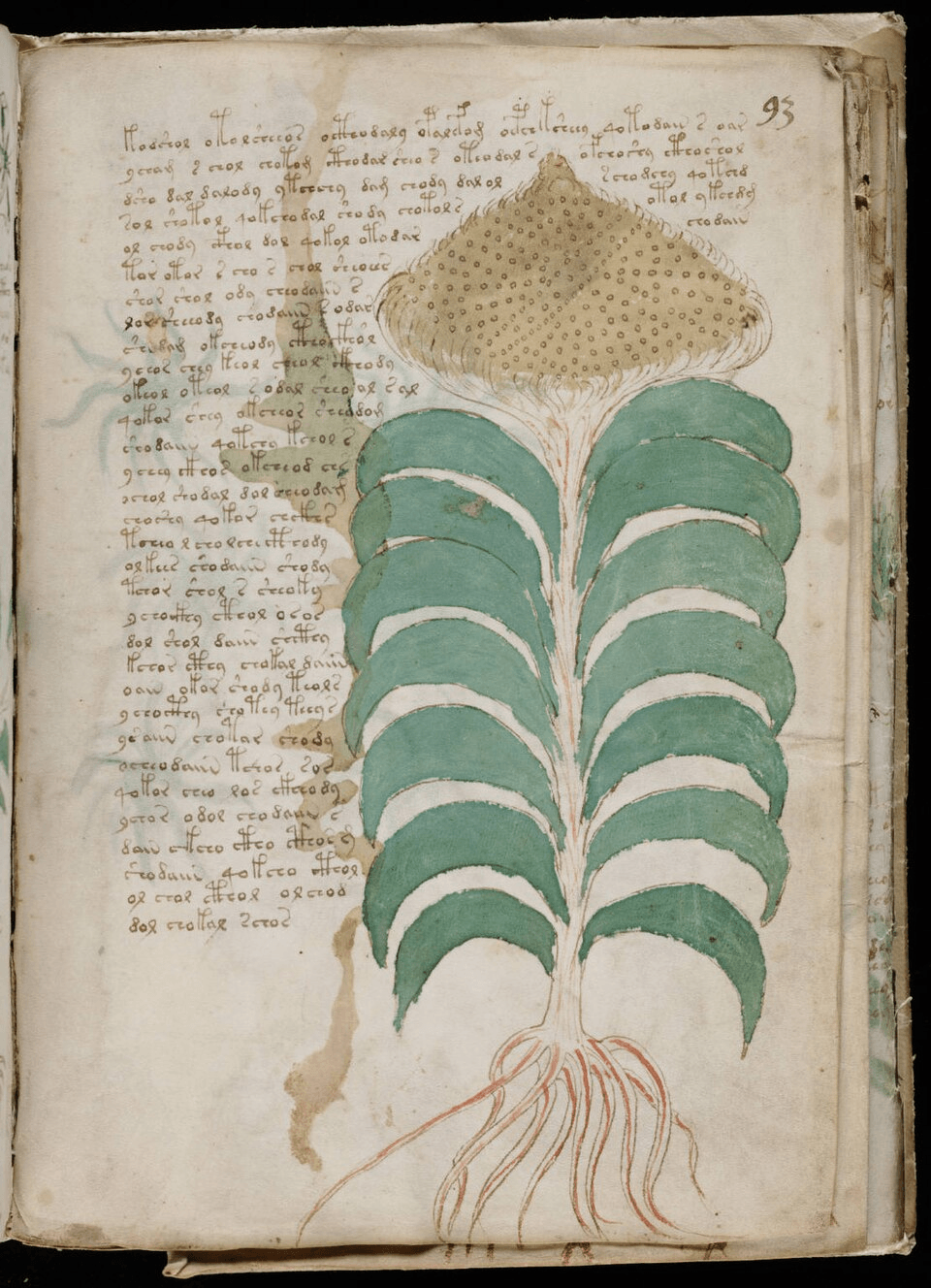
The most famous feature of the manuscript is its writing. Across hundreds of pages, the text is written in a consistent-looking script that does not correspond to any known writing system. Researchers commonly refer to it as “Voynichese”. The characters are repeated in recognisable patterns, and the writing appears to follow rules rather than being completely random. This has encouraged generations of researchers to search for a hidden language, cipher, or writing system.
Cryptographers, linguists, historians, computer scientists, and amateur codebreakers have all proposed interpretations. Some have claimed to identify particular languages or meanings within the manuscript, but none has gained broad scholarly acceptance. That leaves one fundamental question unanswered: What does the text actually say?
Strange Plants, Stars and Human Figures
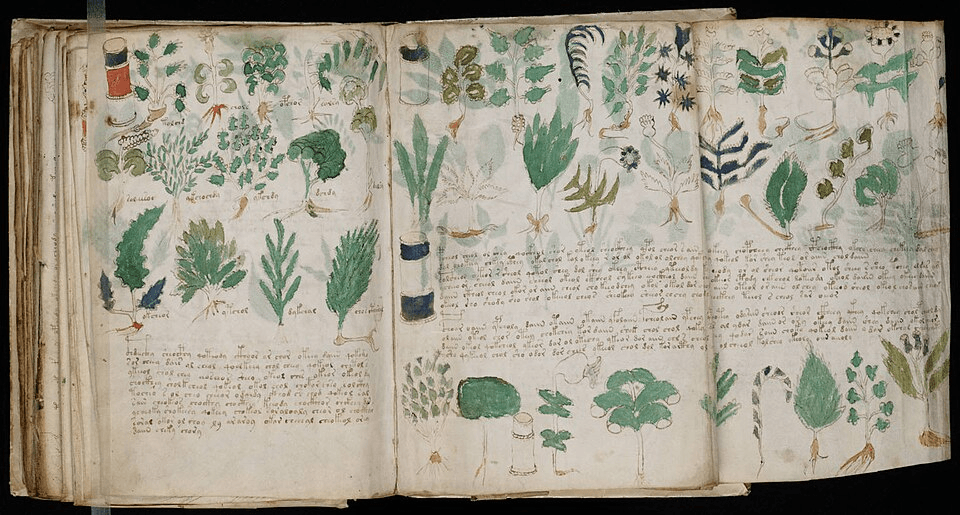
The mystery isn’t limited to the writing. The illustrations make the manuscript even more unusual. Its pages are generally divided into several broad sections based on their imagery. These include:
- Botanical illustrations: Drawings of plants which cannot be confidently identified with known or existing species.
- Astronomical and astrological imagery: Circular diagrams containing stars, zodiac symbols, and other celestial elements.
- Biological imagery: Unusual drawings featuring human figures and tube-like structures.
- Pharmaceutical imagery: Illustrations of plants, roots, jars, and other objects that may have been connected to medicine.
- Cosmological diagrams: Elaborate circular illustrations whose exact purpose remains uncertain.
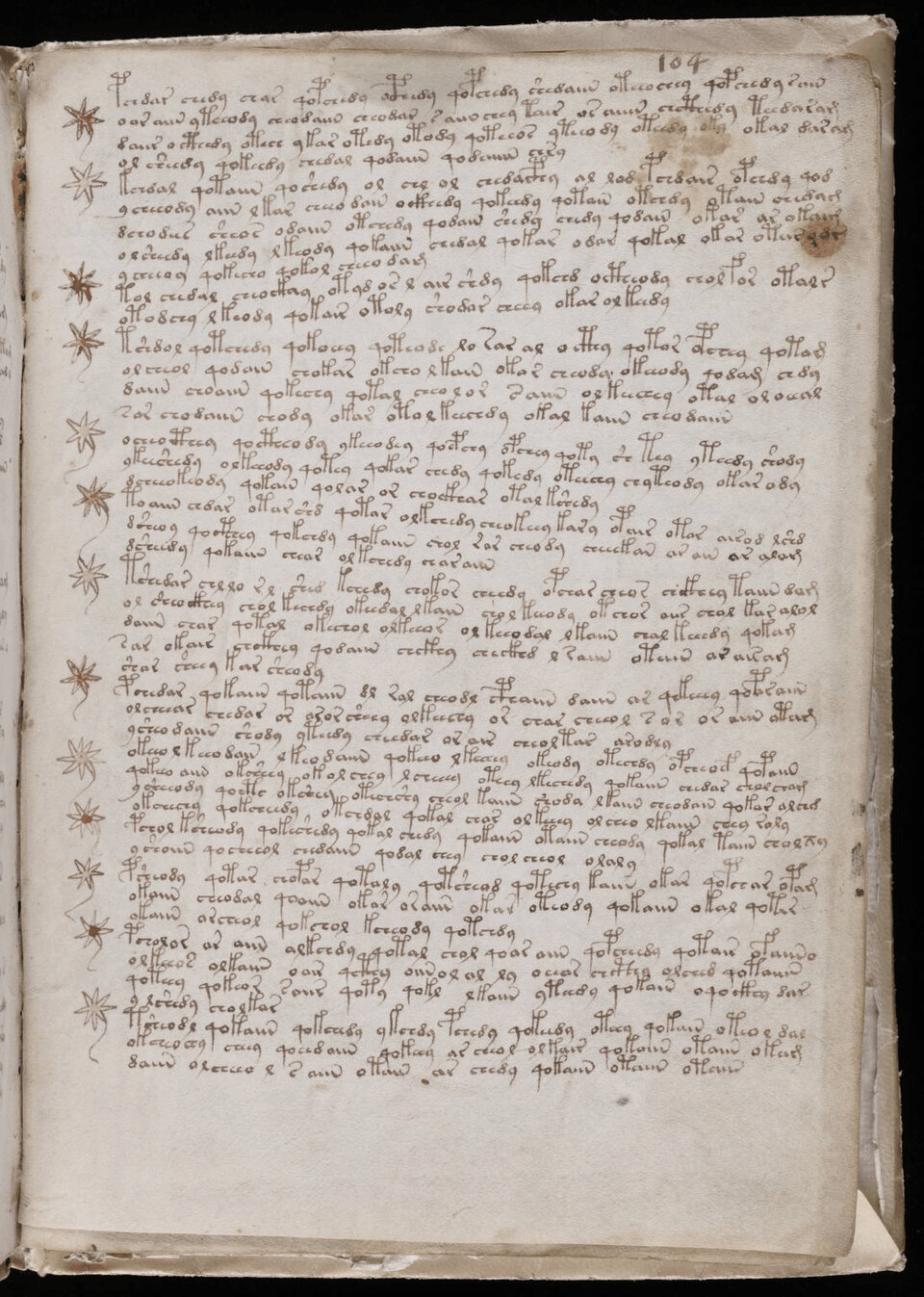
- Recipes section: Text-dominated part of the entire manuscript showing continuous paragraphs marked with star-shaped bullet points.
Quelle:Why the Voynich Manuscript May Be the World’s Most Mysterious Book
Theories Behind the Voynich Manuscript
The lack of a confirmed translation has produced several competing explanations for the manuscript. Some have been investigated and subsequently rejected, while others remain possible because there is still no agreed way to read the text.
A Cypher or Encoded Message
The manuscript has long been treated as a possible cipher. The unfamiliar script appears highly systematic, with recurring symbols and patterns that resemble an encoded writing system rather than random marks. Cryptographers have repeatedly attempted to find such a system, but no proposed cipher has produced a generally accepted translation. Hence, cryptographic approaches have failed to decipher the text, assuming that it is encoded in the first place.
A Constructed or Artificial Language
Another possibility is that the manuscript’s writing represents an intentionally constructed language rather than a naturally evolved one. This idea received particular attention from American cryptanalyst William F. Friedman, who studied the manuscript with a team during the 20th century. A constructed language could explain why the writing appears systematic while failing to correspond clearly to a known historical language. However, without a confirmed translation or identification of the system, this remains a hypothesis rather than a solution.
The Roger Bacon Theory
One of the manuscript’s earliest famous theories connected it to the English philosopher and scientist Roger Bacon. Holy Roman Emperor Rudolf II reportedly purchased the manuscript believing it was the work of Bacon. However, Yale’s Beinecke Library explicitly describes this association as speculation, and modern dating places the vellum (the writing material of the manuscript) in the early 15th century, after Bacon’s lifetime.
A Medieval Hoax?
One possibility is considerably less mysterious: perhaps the manuscript was deliberately created to look meaningful. This theory suggests that the writing could be an elaborate fake designed to deceive or impress its original owner. A convincing-looking invented script, combined with strange illustrations, could potentially have been used to sell a supposedly valuable book or perhaps to communicate secret knowledge. However, this remains a hypothesis rather than an established explanation.
The Mystery Remains
The Voynich Manuscript is unusual because so many basic facts about it are known while its central mystery remains unsolved. Researchers know that the manuscript is centuries old. They examined its parchment, ink, illustrations, handwriting, and physical construction. They analysed the statistical patterns in its text. Yet the most obvious questions remain unanswered. What does the script say?
That uncertainty has allowed countless theories to emerge, from forgotten languages and secret codes to elaborate hoaxes. Some are more plausible than others, but no proposed explanation has conclusively solved the manuscript’s mystery. For now, the Voynich Manuscript remains exactly what has made it famous: a medieval book whose pages can be examined in extraordinary detail, while the meaning hidden within its strange script remains out of reach.
Lesen Sie auch: The Perfect Neighbor (2025): Review